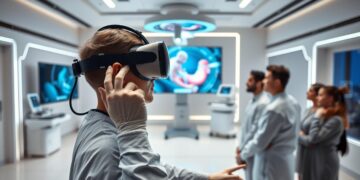
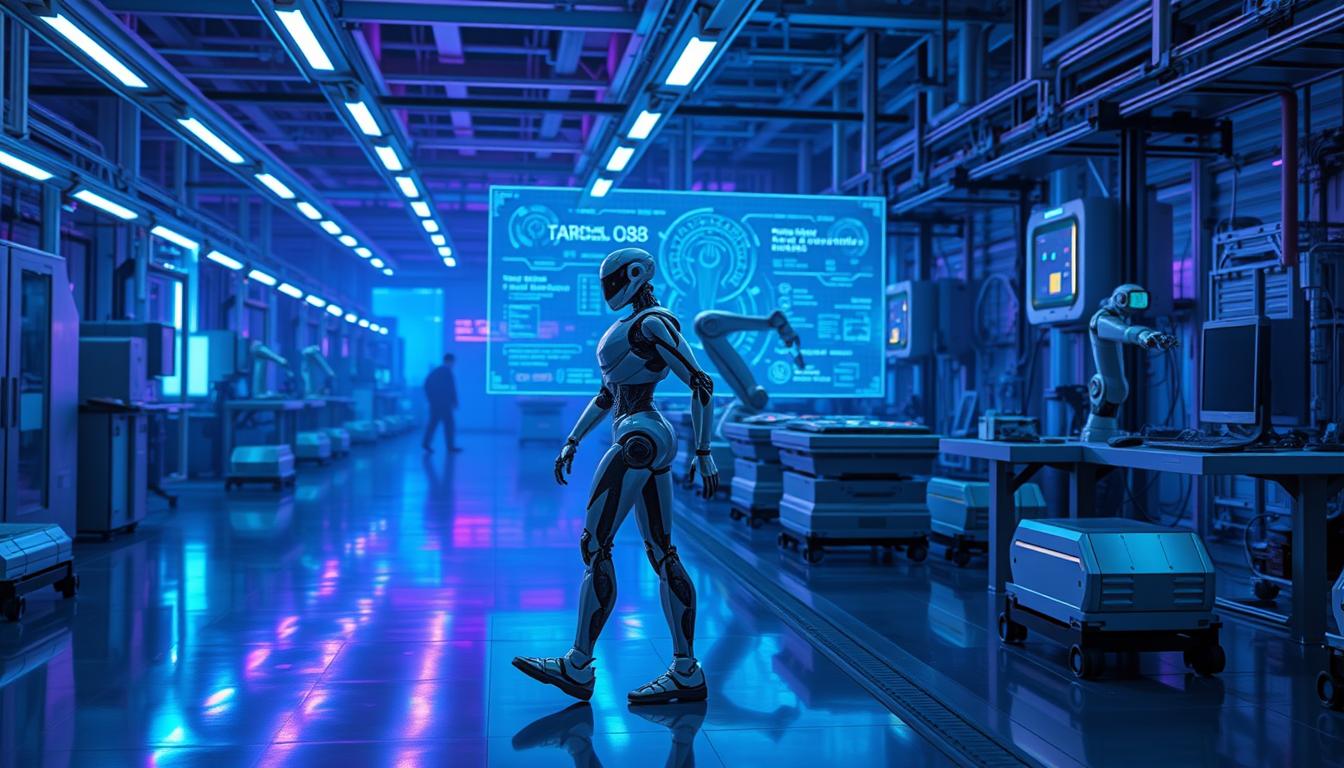
Robotics advancements are changing industries quickly. Today, over 3.9 million robots work around the world. They do tasks that were once thought impossible.
Robots are used in many places, like car factories and hospitals. They make things more efficient and save money. For example, they can save $1.3 million an hour by reducing unplanned downtime.
Automation technology is also solving labor shortages. Collaborative robots, or cobots, help with tasks that need human skills. This is a big help in places where workers are hard to find.
Robot innovation is about more than just numbers. Companies like Xenex use robots to clean medical areas with UV light. Asus Zenbo can move around homes by voice command.
The Chinese government wants to make many humanoid robots by 2025. This shows a move towards robots that look and act like humans. The International Federation of Robotics talks about robots with wheels and arms. These robots make logistics and aerospace work easier.
These machines are not just tools; they also create jobs. While some jobs might be replaced, new ones are created. For example, AI engineers in the U.S. can earn up to $164,769 a year.
Robots improve precision in making things and make jobs safer. The future depends on finding a balance between innovation and real-world benefits.
An Overview of Robotics Advancements
Robot evolution has sped up a lot in recent years. This is thanks to robotics innovations that change what machines can do. Now, robots can move and be precise at the same time.
Mobile manipulators, or MoMas, show this progress. They can move and be dexterous, changing industries like automotive and aerospace. They can do complex tasks on their own, showing a big step forward in robot capabilities.

New sensor tech, like LiDAR and depth cameras, lets robots see and move better. Surgical robots, like the Da Vinci, help with less invasive surgeries, cutting recovery times. Agribots also improve farming by analyzing soil, increasing yields by up to 30%.
These examples show how advanced robotics are changing industries worldwide.
AI makes robots smarter and more adaptable. In factories, cobots work with humans, boosting productivity by 20%. AMRs and drones also help, cutting down on logistics times and improving crop monitoring.
These advancements show a shift towards smarter, more intuitive machines. They aim to help humans, not replace them.
The robotics industry is growing fast. It’s expected to reach $210 billion by 2025, thanks to AI and IoT. Robots are now helping in healthcare, agriculture, and space, playing a bigger role in society.
The goal is to create systems that work with humans. This way, human-robot collaboration will drive progress in many areas.
The Role of Artificial Intelligence in Robotics
AI in robotics is changing how machines learn and adapt. Now, users can program robots with simple voice commands, not complex code. This makes advanced tech easy for everyone, sparking new ideas in many fields. For example, machine learning robots in factories can spot when equipment might fail, saving lots of money.

“AI turns robots into thinkers, changing how we solve problems and make decisions.”
Artificial intelligence is now behind many robot tasks, from guiding in warehouses to helping in surgeries. In healthcare, AI robots help doctors do surgeries more accurately, making patients recover faster. Also, robot AI systems in farming use cameras to find the best crops, helping farmers get more from their land. Companies like Tesla use AI to make their assembly lines better, and drones with AI watch over farms, reducing waste.
Robots can also learn from their surroundings thanks to AI. For instance, factory robots work better with people, making work safer and more efficient. NASA’s Perseverance rover uses AI to explore Mars on its own, showing AI’s power in unknown places. As AI gets better, robots will become even more useful and essential in our world.
Robotics in Manufacturing: A Game Changer
Manufacturing is changing fast, thanks to industrial robotics. Cobots work alongside people, doing heavy lifting or precise tasks. They help make factories safer and more productive.
Big names like Tesla use cobots for painting and welding. Electronics makers like Foxconn use them for tiny parts assembly.

Digital twin technology is also changing things. Companies like Siemens create virtual copies of production lines. This lets them test and improve workflows without real-world costs.
One car plant cut downtime by 30% with digital twins. They predicted when equipment might fail.
“Cobots aren’t replacing workers—they’re elevating human talent.” — FANUC Robotics, 2023
Automation also helps the environment. AI robots at BMW cut energy use by 15%. Small businesses face costs, but training programs are helping.
Workers are learning about robotics and data analysis. This ensures they can keep up with new technology.
In cars and electronics, industrial robotics are more than tools. They’re partners in making factories better. They combine human creativity with machine precision.
Robotics in Healthcare: Innovations Transforming Care
Medical robotics is changing patient care in big ways. Surgical robots like the da Vinci System help doctors make smaller cuts. This means patients recover faster.
These surgical robots also let doctors do complex surgeries with more control. This reduces mistakes. Hospitals use healthcare robots like TUG to make tasks easier. TUG handles over 50,000 deliveries a week, helping staff focus on patients.
Elder care robots, like NAO and Pepper, help with daily tasks. They monitor health and keep patients company. This helps nursing teams who are often too busy.
Elder care robots also remind patients to take their medicine. They support older people in many ways. Rehabilitation robotics help people recover from strokes and injuries. They guide patients through therapy, making recovery faster.
But, there are challenges. Only a few experimental drugs make it to market. This process is very expensive. AI in medical robotics could speed this up by automating tests.
Yet, there’s a shortage of robotics experts. Hospitals need to use these tools wisely. They must balance technology with caring for patients. The medical robotics market is expected to grow to $12.7 billion by 2025. With careful use, it could improve care for everyone.
Autonomous Vehicles: The Future of Transportation
Automated mobility is changing how we move goods and people. Driverless cars and robotic systems are getting better fast. Companies are testing these on roads and in new places.
OceanOneK, made by Stanford, dives 1,000 meters deep to explore shipwrecks. It uses AI and haptic feedback. This shows how versatile robotic transportation can be, beyond just roads.

Self-driving tech aims to lower accidents caused by people. In 2022, 42,514 lives were lost in U.S. car crashes. Autonomous vehicles might spot dangers quicker than humans.
Features like automatic emergency braking and lane-keeping assist are already in many cars. They suggest what’s coming next in self-driving tech.
But, there are challenges. Public trust in driverless cars has dropped 5% in recent surveys. The cost to develop L3 and L4 systems is over $1 billion. This slows down how fast they can be used by everyone.
Yet, by 2035, autonomous systems could make a $400 billion market in passenger cars. Companies are working to make AI better and use less data specific to each vehicle.
Regulators like NHTSA need crash reports for automated systems. This ensures safety while allowing for new tech. Even though 25% of people would pay up to $10,000 for advanced AD features, many are hesitant. As robo-taxis start to appear in cities, the goal is to meet safety, cost, and public acceptance standards.
Robotics in Agriculture: Enhancing Food Production
The global agricultural robotics market is expected to grow from $13.4 billion in 2023 to $86.5 billion by 2033. This growth is driven by precision farming and robotic harvesting innovations. Agricultural robotics now help solve labor shortages by automating tasks like planting, weeding, and monitoring.
Autonomous tractors and drones with AI analyze soil and crops in real time. They optimize resource use and reduce waste.
Companies like Terra Robotics use the OMEGA robot to eliminate weeds without herbicides. This cuts chemical use by up to 90%. Rooted Robotics’ automated seed casters ensure even planting, boosting yields for microgreens.
These agribots work 24/7, harvesting crops faster than humans while reducing damage. Drones with high-res cameras scout fields, identifying pests or nutrient deficiencies before they spread.
Farm automation also aids sustainability. Precision irrigation systems powered by AI adjust water use based on crop needs, saving resources. Awentia Agritech’s vineyard monitors track plant health, preventing disease outbreaks.
Though initial costs remain high, scalable solutions are emerging to help small farms adopt these tools. As technology advances, robotic harvesting systems promise to make food production more efficient. They will feed growing populations while protecting ecosystems.
Consumer Robotics: Making Life Easier
Home robots are changing our daily lives, making things easier and more advanced. For example, KIME, a robot from Macco Robotics, can make 253 drinks an hour. It even knows who to serve and pours perfectly. This shows how consumer robotics are taking over tasks that humans used to do, like making drinks and cleaning.
But it’s not just about bartending. Robots like Roomba can map out your home and clean it better. Smart kitchen gadgets, like ovens and coffee makers, work with personal robot assistants. Together, they create a smooth smart home robots system. These systems use AI to learn your habits, saving you time and energy.
But with new tech comes new worries. Cameras and sensors in these robots raise privacy concerns. It’s important for users to make sure their data is safe, as experts advise: “Data protection is key when inviting robots into private spaces.”
The market is growing fast: the global robotics tech sector was $62.75 billion in 2019 and is expected to reach $189.36 billion by 2027. As consumer robotics improve, they offer more than just efficiency. They also provide companionship, like educational toys and care for the elderly. It’s all about finding the right balance between progress and privacy, making our lives smarter.
The Ethical Considerations of Robotics
As robots and AI get smarter, robot ethics and AI safety are big concerns. By 2025, half of all jobs might be replaced by automation. But, 24 million new jobs in AI and robotics could also appear. This raises questions about how to balance innovation with human well-being.
Many people don’t trust AI, even in healthcare. Surveys show that lots of adults doubt AI’s role in medical decisions. This shows we need better robot safety regulations and AI safety frameworks. Japan has rules for care robots that focus on patient freedom. The EU’s AI Act bans certain high-risk uses, like autonomous weapons.
There’s a big push globally, like the UN’s talks on lethal autonomous weapons. The National Institute of Standards and Technology (NIST) is working on standards for AI. These standards aim to make AI more transparent and fair, addressing the social impact of robotics.
“AI’s lack of human experience undermines trust in life-changing decisions,” noted a 2023 study.
As robots start helping in caregiving and manufacturing, we need to make sure we’re doing the right thing. Without clear robot ethics rules, the social impact of robotics could make things worse. It’s important for governments, engineers, and ethicists to work together. This way, technology can help us without causing harm.
The Future of Robotics: What to Expect
Robotics innovation keeps pushing the boundaries, with new robots changing industries. By 2029, humanoid robots could hit a $13 billion market, up from $2.03 billion in 2024. This growth is thanks to AI models tackling tough tasks in healthcare and education.
These new robots promise to be smarter and more human-like. They can adapt to situations like humans do.
Soft robotics are being used for Mars missions and in surgeries. AI and IoT are making work easier. Companies like Ford use exoskeletons to make factories safer, showing how robots can boost productivity.
Nanorobots are being developed for medical use, and AI home assistants are becoming common. These robots show their versatility.
Automation will change jobs, creating both winners and losers. By 2025, 85 million jobs might be lost, but 97 million new ones will be created. Training will be key as robots take over routine tasks, freeing humans for creative work.
It’s important for policymakers to balance growth with safety. They must ensure ethics keep up with technology.
Investments like the Evolve Innovation Index ETF show confidence in robotics. Robots like EMILY are being used for disaster response, and AI is improving caregiving. The focus is on making robots that work with humans, not against them.
As robots get smarter, working together with humans will be key. This will ensure that innovation benefits everyone.