
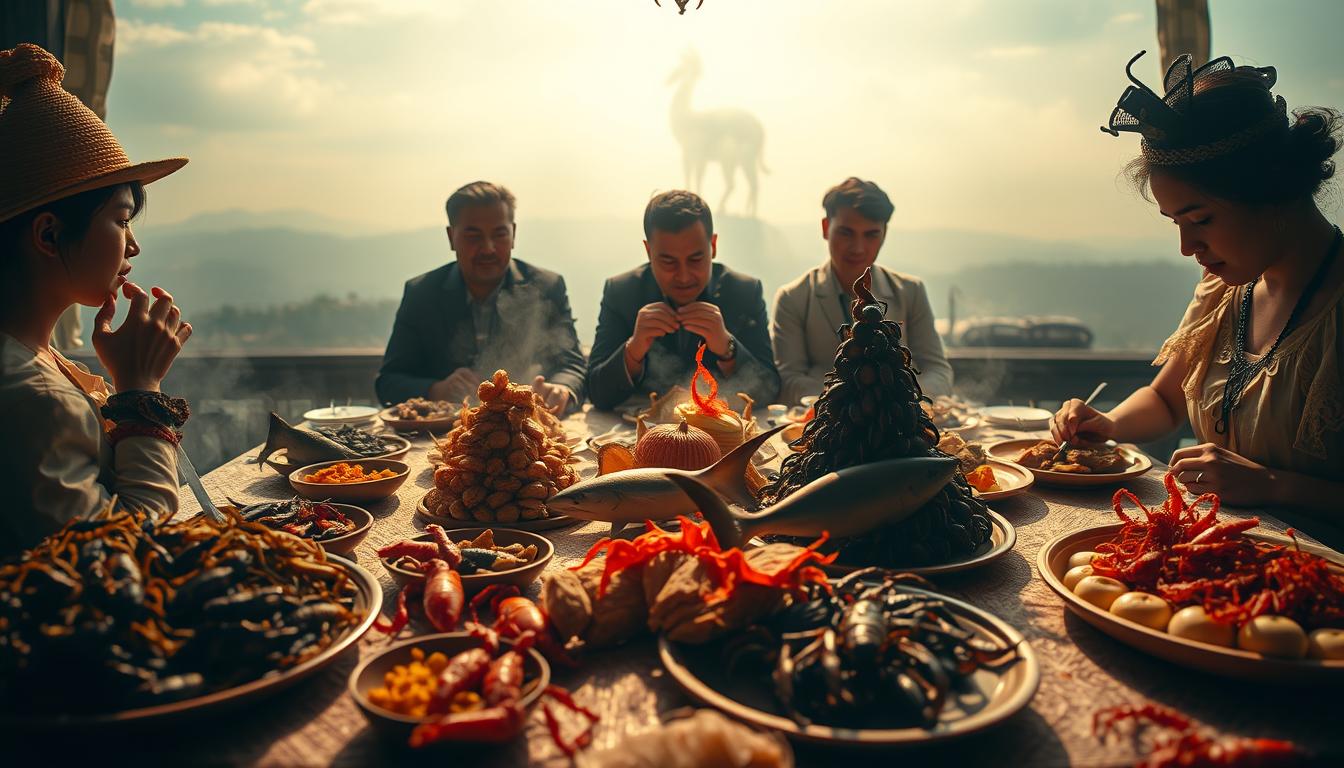
In Japan, Christmas is celebrated with KFC dinners. Spain has wine-throwing festivals. Bizarre food traditions show how meals define us. Britain has strict tea-stirring rules, and Italy bans cheese with seafood. These strange culinary customs highlight food’s role in respect and history.
In Thailand, you must push food onto spoons with forks. China’s chopsticks never stand upright in rice. These unusual food rituals reflect deep beliefs, like Japan’s noodle slurping or Chile’s “no hands” rule. Every culture has its own quirks!
Global food practices are very different. Egypt praises with burps, and the Koryak have mushroom rituals. China’s fish flipping taboo links to ancient myths. Finishing a plate is rude in China but respectful in India. Let’s explore why these customs are important and worth understanding.
The Bizarre World of Insects as Food
For thousands of years, people have eaten insects. Chapulines, or grasshoppers, are a hit in Oaxaca. In Thailand, fried crickets are a tasty snack. These insect delicacies are not just weird—they’re full of cricket protein, more than beef.
History shows insects were a common food. Cave drawings in France and ancient Spanish paintings show this. Even the Bible talks about eating locusts. Romans enjoyed beetles at feasts, calling them tasty.
Today, chefs and scientists are excited about insects. They use much less water than cows. David George Gordon’s Eat-A-Bug Cookbook introduced cricket flour cookies to Americans. But, many in the U.S. eat bugs without knowing it, like in chocolate.
As the world faces food challenges, insects might be the answer. The Entopod, designed in Edinburgh, wants to make crickets as popular as chicken wings. Trying scorpion or roasted silk worms in exotic places is an adventure. It shows that what’s seen as weird can be cultural.
Unusual Food Pairings That Surprise
In many cultures, strange food combinations are common. In Italy, for example, mixing pizza with parmesan or seafood with cheese is a big no-no. People think these flavors don’t go together well.
But in other places, these mixtures are celebrated. They show how different cultures view food in unique ways.
“These two were never meant to be wedded because they combat the flavors of one another.”

Worldwide, unexpected food pairings are popular. In Mexico, mango and chili desserts are a hit. In Greece, watermelon and feta salads are a favorite.
In America, the “Elvis sandwich” with peanut butter, banana, and bacon was once taboo. Now, it’s a classic. Trader Joe’s chocolate potato chips and TikTok’s watermelon-mustard trend show how food traditions evolve.
Think about honey-glazed pizza or salt-dusted watermelon. These pairings show how cultural food rules can change. What’s forbidden in one place might be loved elsewhere. These strange food combinations reveal the history and evolution of taste.
So, when you try new food combinations, remember. What’s taboo for one might be a masterpiece for another.
Extreme Edibles: A Test of Stomach
In Kenya, the Maasai tribe has a tradition of blood cuisine. They mix fresh cow’s blood with milk for protein in tough times. This shows how challenging food customs often have practical reasons.
Fermented delicacies take taste buds on a wild ride. Sweden’s surströmming, fermented herring, is known for its strong smell. Iceland’s hákarl, aged shark meat, and Korea’s hongeo, fermented skate, also have bold flavors.
In Japan, the “dancing squid” and in Korea, sannakji—served semi-live—test your bravery. The squirming texture might shock some, but it shows the importance of freshness. These dishes tell stories of resilience and heritage.
Exploring these challenging food customs opens our minds. What seems strange abroad might be a beloved dish elsewhere. From fermented fish to blood rituals, these foods are more than just a shock. They connect us to history and survival.
Celebratory Eats: Strange Feast Traditions
In Japan, Christmas isn’t a big religious holiday. But it’s a time for strange holiday foods like KFC. Families have been ordering fried chicken dinners there for over 40 years. This has made Colonel Sanders a symbol of Christmas in Japan.

Worldwide, unique celebration meals are linked to good luck. In the American South, Hoppin’ John is a dish full of rice, black-eyed peas, and pork. It’s believed to bring wealth because peas look like coins and collard greens look like money.
In Spain, people eat 12 grapes at midnight to wish for luck. Mexico has tamale-making parties, and Denmark makes marzipan towers called kransekage. Italy’s lentils at New Year’s look like coins, and Icelanders eat fermented shark.
These meals are more than just food. They’re stories passed down through generations. Whether it’s Poland’s pickled herring or the Philippines’ balut eggs, they bring people together. They might seem strange to outsiders, but to locals, they’re a source of joy.
Liquid Oddities: Uncommon Beverages
In Siberia’s far north, the Koryak people make unusual drinks from hallucinogenic mushrooms. They do this during spiritual gatherings. These strange beverages are key to their rituals, connecting them to their ancestors.
In Britain, tea culture has strict rules. For example, never clink your spoon against the cup. These bizarre drinking customs mix tradition with mystery.
Ethiopia’s coffee ceremonies are unique. They roast beans and serve them in tiny cups, often with incense. Peru’s chicha is made by chewing and fermenting corn, enjoyed together. Pacific Islanders drink kava, a brew from pepper roots, for agreements or to honor elders.
Ayahuasca in Amazonian healing rites is psychedelic. Japan has strange beverages like natto-infused cocktails. These drinks carry history, belief, and community.
Next time you have a latte or cocktail, think about this. Somewhere, someone is drinking something much stranger—but just as meaningful.
Unconventional Food Preparations
Unconventional Food Preparations often surprise but carry deep cultural meaning. New Zealand’s hangi and Hawaii’s imu use heated stones in earth pits. These unusual cooking methods give food smoky earth flavors. Mongolia’s boodog, cooking meat inside an animal’s carcass, is a bizarre cooking tradition passed through generations.

China’s century eggs, buried in clay and ash for months, have a gelatinous texture. They use unique preservation techniques. Greenland’s kiviak, fermenting seabirds in seal skin, is another example of strange food preparation. These methods, though puzzling to outsiders, show history and adaptability.
Japan’s natto (fermented soybeans) and Mexico’s nixtamalization of corn show how strange food preparation enhances flavors. These unusual cooking methods and unique preservation techniques prove that necessity breeds innovation. Every step—from fermenting birds to earth-cooked feasts—reflects a culture’s history and resilience.
Festive Foods with a Twist
Food festivals around the world make simple ingredients into big events. In Spain’s Haro, the Batalla de Vino is a tradition where people splash red wine on each other. This has been happening for over 400 years.
In England’s Gloucestershire, there’s cheese rolling. People run after a wheel of cheddar down a steep hill. It’s a mix of sport and symbolic food customs.
Eating competitions add excitement to these festivals. In Finland, there’s a berry eating contest. In Thailand, the Vegetarian Festival includes fire walking.
These events are more than just eating. They celebrate cultural identity. Japan’s mochitsuki, for example, brings families together to make sticky rice into mochi. It connects them to their ancestors.
The Boryeong Mud Festival in South Korea is another example. It combines food festivals with mud-covered treats like bejung (mud-like clay cakes). It shows how traditions evolve.
From wine splashing to cheese chasing, these events create lasting memories. They show us that food connects us to our heritage and each other.
Mind-Bending Snacks from Around the Globe
Snacks that surprise you are waiting for those who love to explore new tastes. Unusual snacks like Thailand’s khanom look choup look like tiny mangoes but are mung bean candies. Japan has bizarre appetizers like chankonabe stew and Taiwan’s xiagao rice cakes, which are blood-red. These unique street food items make meals into puzzles.
Texture also plays a big role. Korea’s live octopus (sannakji) moves on your plate, while the Philippines’ balut is a boiled duck embryo. Mexico’s chapulines (roasted grasshoppers) are spicy, and Peru’s cuy (fried guinea pig) is a special treat. Japan’s wasabi Kit Kats and Brazil’s paçoca (toasted manioc and peanut balls) mix the familiar with the exotic.
Street vendors around the world tell stories through snacks. Colombia’s hormigas culonas (spicy ants) and Bolivia’s chicha de jora (fermented corn beer) share history in every bite. These unusual snacks are more than food—they invite you to taste traditions. Next time you visit a market, try the unique street food that will surprise you. Your taste buds might just thank you.
Historical Foods That Seem Bizarre Today
Historical food customs often surprise us today. Ancient foods like garum, a strong Roman fish sauce, were used in many dishes. It was a big deal in cities like Pompeii, boosting the economy.
In the Middle Ages, food was as much for show as for eating. Chefs made medieval food practices like subtleties, which were edible sculptures. A famous 1626 feast even had a seven-year-old performer jump out of a pie.
Old-fashioned dishes from later times are also interesting. Victorians gave calf’s foot jelly to the sick. In the 1950s, Jell-O salads mixed gelatin with meats and pickles. These dishes show how past views on food and health changed.
Some traditions are timeless. Iceland’s Thorrablot festival includes fermented shark and lamb heads, keeping Norse traditions alive. Japan’s KFC Christmas meals show how traditions evolve over time.
Looking into these meals shows how tastes change. What was once normal, like live-animal pies or gelatin desserts, now seems strange. But who knows what our snacks will seem like to future generations?
A Taste for the Unusual: Personal Preferences
“Food is a language that speaks directly to who we are.”

Acquired tastes shape how people feel about food. Blue cheese or dark chocolate might seem strange at first but can become a favorite. Cultural food preferences also play a big role. In Japan, raw horse meat is a delicacy, while durian’s smell is off-putting to many.
These preferences aren’t random. Childhood and genetics matter. Some people are supertasters, meaning they can taste bitterness more. This makes them avoid spicy or fermented foods.
Unusual taste preferences often spark debate. Celebrities like Andrew Zimmern have shown 147+ bizarre foods on TV. From Ecuador’s guinea pig to Japan’s octopus ice cream, it’s all about exploring. Yet, not everyone is curious.
Take the “dirty soda” from Hulu’s series. It’s loved by some but baffles others. Ethiopia’s roasted almond-flavored ants also get mixed reactions. These differences show how upbringing and biology shape our tastes.
Genetic differences explain why some love stinky mollusks, while others don’t. Moose nose jelly, a delicacy in Scandinavia, shows how tastes vary worldwide. Yet, trying new foods can broaden our horizons. What’s strange to one might be comfort food to another.
Conclusion: Embracing Culinary Diversity
Exploring the world’s unusual foods shows how meals shape cultural identities. From Japan’s washoku philosophy to Mexico’s vibrant street tacos, each dish has a story. This diversity enriches our understanding of the world, connecting us through food.
Respecting food traditions means being curious about new cuisines. Japan’s itadakimasu—a phrase of gratitude—shows this curiosity. Even big names like McDonald’s adapt their menus to local tastes, showing respect for different cultures.
Global trends like plant-based sushi or fusion tacos show culinary diversity is always changing. The growth of Beyond Meat and the $74 billion plant-based market highlight innovation in tradition. As travel picks up again, exploring local foods safely and respectfully connects us to new perspectives.
Whether trying Tokyo’s kaiseki or India’s turmeric-infused curries, every bite is a chance to learn. Culinary diversity is more than just eating; it’s about honoring our shared hunger for connection through food.