
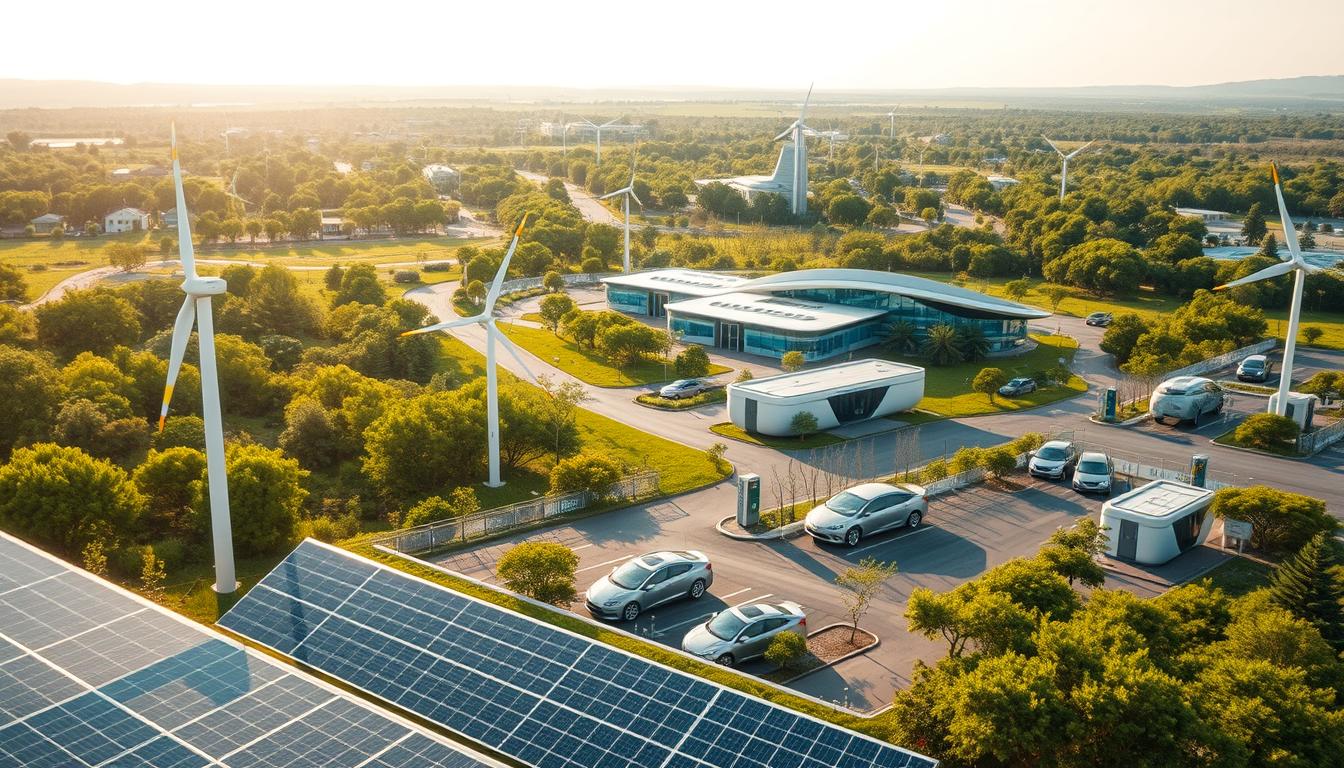
Eco-friendly tech and green innovations are changing how we protect our planet. They include AI-driven energy grids and smart water systems. These technologies help reduce waste and emissions.
Over 47% of construction companies now use green building methods. This cuts CO2 by 34% and saves 40% of water. Drones and satellites monitor ecosystems, while AI improves wildfire detection and farming efficiency.
Renewable energy investments are growing fast. Wind turbines are 30-45% efficient, and solar projects are expanding quickly. By 2025, renewables could be the biggest electricity source worldwide.
Even digital tools like 5G and AI reduce emissions by 17%. This shows eco-friendly tech can support innovation and sustainability. These advancements are essential for a healthier planet, combining smart systems with ethical practices.
What is Eco-Friendly Tech?
Eco-friendly tech is all about tools and systems that help protect our planet. This green technology aims to use less energy, rely on renewable resources, and cut down on waste. For instance, Energy Star standards have been in place for over a decade. They require electronics to use 40% less power, which helps reduce carbon emissions.
Environmental tech basics include cool innovations like Google’s renewable energy projects. Their 2012 Oregon wind farm powers 235,000 homes, showing how sustainable innovation can grow. Even big companies like Dell are using mushroom-based packaging. This turns farm waste into biodegradable materials in just days.
These changes are important. Digital tech could cut global emissions by 15% by 2030. From solar chargers to apps that track carbon footprints, eco-friendly tech is changing how we live. Every step we take, from making devices smarter to using greener data centers, helps create a cleaner future.
Renewable Energy Solutions
Renewable energy technology is changing our planet’s energy future. Solar innovations like SUNbots, inspired by sunflowers, track sunlight to boost energy capture. These solar forests and panels use solar 3.0 tech, needing 10 to 1,000 times less material than old silicon cells. This reduces costs and increases efficiency.

Wind power tech is also improving. Offshore turbines catch stronger breezes, and companies like Turbulent create small, affordable turbines for rivers. These advancements make wind power workable even in distant places. Solar and wind power additions are expected to double by 2028, reaching 710 GW worldwide.
These green energy solutions are both affordable and effective. Solar costs have fallen 85% from 2010, and wind energy is now cheaper than fossil fuels in most places. By 2025, renewables will be the leading electricity source globally, the International Energy Agency says. This change benefits the planet and creates jobs. Every dollar spent on renewables creates three times more jobs than fossil fuels.
Communities around the world are embracing these technologies. From solar-powered villages to offshore wind farms, clean energy is proving profitable. With renewable capacity set to double by 2030, the future looks bright for both people and the planet.
Sustainable Transportation Options
Electric vehicles (EVs) are at the forefront of sustainable transportation. They can go over 300 miles on a single charge, making them a clean choice. Sweden’s roads that charge cars as they move show how tech can help.
Even the sounds EVs make are important. In Uruguay, a system called Ayax uses sounds to keep drivers safe and plants healthy.
Hydrogen fuel cells are another green option, producing only water vapor. They’re great for big trucks and buses, refueling them fast. Recycling EV batteries, like Redwood Materials does, helps reduce mining waste.
Autonomous and connected cars could cut traffic by 20%. This would save fuel and time. Public transit is getting greener too, with solar charging and maglev trains.
Even planes and ships are changing. United Airlines plans to use electric planes by 2026. Autonomous cargo ships might arrive by 2028. These changes aim to lower emissions from air and sea travel.
Smart traffic systems and MaaS apps are also important. They help reduce emissions and make travel more efficient. As technology improves, green transportation tech will become the norm for cleaner roads.
Smart Home Technologies
Smart home eco tech is changing how we live. Energy efficient homes now have smart thermostats from Google Nest and Savant Multistat. These devices learn our habits and adjust the temperature to save up to 15% on heating and cooling.
Automatic shades also help by letting in natural light. This cuts down on the need for artificial light. LED lights, which use 75% less energy than old bulbs, last up to 25,000 hours.
Water conservation is also key in sustainable homes. Altered’s mist nozzle cuts water use by 98% by making fine droplets. Greywater recycling systems and smart irrigation sensors also save water, up to 60% in dry areas.
Green building solutions are now used in 47% of new projects. These buildings use recycled materials and have living walls that clean the air. They also have advanced insulation, reducing heating needs and cutting CO2 by 34%.
Smart home automation can lower energy use by 15%. This is like saving 200 million tons of CO2 every year. New tech like predictive maintenance and LED lights could save $30 billion by 2027.
These smart systems manage 90% less heat waste than old bulbs. This shows that living sustainably doesn’t mean giving up. It’s about making smarter choices.
Waste Management Innovations
Waste management technology is changing how we deal with trash. In China, JD.com’s app uses AI to help people sort recyclables and waste with a photo. In the UK, Teemill turns old clothes into new ones without waste. These efforts show a global move toward zero waste tech that keeps materials in use.
In the U.S., Waste Management (WM) is leading the charge. Their single-stream recycling makes sorting easier. Trucks with GPS and smart software also save fuel. WM works with Major League Baseball™ to provide sustainable waste solutions at games, reducing landfill waste. Now, food scraps are turned into biogas, powering WM’s trucks.
Hospitals produce a lot of waste, about 6 million tons a year. New systems like hands-free disposal and reusable containers cut down on contamination. Even small clinics recycle up to 80% of their waste with smart sorting. France banned throwing away unsold goods in 2021, saving $900M and inspiring the U.S.
WM’s work on organic waste and medical tech shows how innovative recycling can solve problems. As we get better at reducing waste, it’s clear it’s good for the planet and business.
Water Conservation Technologies
Water conservation tech is changing how we handle water. Now, homes can collect and purify rooftop runoff for drinking water. This helps reduce the strain on aquifers.
Smart water management systems find leaks fast, saving U.S. utilities $7.6 billion a year. They also help households save money—DrizzleX users see 25–45% less bills.

“Sunlight-powered photocatalysts can eliminate 99% of waterborne bacteria, making contaminated water safe.”
Water saving innovations like UV sterilization and activated carbon filters make brackish water safe. Modern toilets use just 1.28 gallons per flush, saving 80% compared to old models.
Smart irrigation sensors cut outdoor water use by half by avoiding overwatering. Energy-efficient dishwashers use only 3 gallons per load, much less than handwashing’s 27 gallons.
Nanomaterials, expected to reach $53 billion by 2031, offer cleaner solutions. Farmers also benefit from soil moisture sensors, which reduce water use in agriculture. Every drop is precious, and these technologies help protect our ecosystems and ensure fair access to water.
Eco-Friendly Packaging Alternatives
Malaysian company Green Hope is at the forefront with biodegradable materials from cassava roots. Their method doesn’t compete with food crops, making eco-friendly packaging that naturally breaks down. This shows a big trend: sustainable packaging alternatives now include plant-based options like seaweed films and mushroom containers.
Companies like EcoEnclose use algae ink and 100% recycled Kraft for shipping boxes. Packlane’s Econoflex mailers also cut down on waste. Even Amazon offers Pratt’s recycled cardboard boxes for businesses. These green packaging solutions help reduce plastic use—96% of corrugated cardboard can be recycled up to ten times.
Seaweed-based packaging is growing fast, expected to increase by 16% annually until 2027. Mushroom packaging, made from agricultural waste, replaces Styrofoam harmlessly. Even small changes help, like water-activated paper tape and cornstarch peanuts that decompose.
Consumers are pushing for change—61% of UK shoppers avoid single-use plastics. Brands that adopt these solutions gain customer trust. Refillable containers and digital shipping labels also reduce waste, showing eco-friendly packaging is both good for the planet and practical. From farm to store, these innovations turn waste into valuable resources, not landfills.
Green Computing
Green computing is changing how we use digital tools. It focuses on using energy wisely to protect the environment. For example, Hong Kong University found a way to turn computer heat into electricity. This cuts down on waste and saves money.
Microsoft aims to be carbon neutral by 2030. Google uses waste heat to warm nearby buildings. These efforts show how tech can help the planet.

Data centers, which use a lot of energy, are getting greener. Ireland’s centers get 80% of their power from clean sources. The Green500 list ranks supercomputers by how little energy they use.
Using Energy Star-certified devices can also help. These devices use less power by adjusting settings automatically. Choosing laptops over desktops and cloud computing over hardware can also save energy.
Machine learning helps predict when equipment will fail, saving energy. Companies like Dell make laptops from recycled plastics. Refilling printer cartridges instead of buying new ones also reduces waste.
But, there are challenges. ICT is responsible for 3.9% of global emissions. Tech companies must find a balance between speed and being green. By choosing green computing, companies can reduce waste and save money. It’s good for the planet and their bottom line.
Urban Gardening and Agriculture Tech
As cities expand, new ways to garden are emerging. Atlanta’s 7-acre edible forest is a prime example. It features over 100 fruit trees and planter boxes, turning unused land into food sources. This approach reduces the need for food from far-off farms.
Vertical farming, like Infarm’s systems in Marks & Spencer stores, cuts down on emissions. These small setups allow cities to grow herbs all year without needing a lot of land. AeroFarms, for instance, uses 95% less water than traditional farming, showing that vertical farming can be both productive and water-efficient. Smart agriculture solutions now include IoT sensors that monitor soil and moisture. These sensors help use water and fertilizer more precisely.
“Our tech uses 95% less water than traditional farming, proving sustainability is possible.” – AeroFarms
Hydroponics and aquaponics, like GrowUp’s fish-and-salad system, use 90% less water. Gotham Greens’ greenhouses in cities grow greens all year round. These innovations make urban spaces into eco-friendly food centers, reducing emissions and increasing local food access.
Sustainable urban farming is more than just growing plants; it’s about building communities. Programs like Farmizen’s mini-farms let people grow food in small spaces. By 2050, 6.68 billion urban residents will need these methods to eat sustainably. With drones and robots, urban farms are becoming smarter and greener. Every balcony or rooftop is now part of the effort to feed cities.
Eco-Tourism Technologies
Eco-tourism technology is changing how we travel, protecting our natural wonders. Imagine trips that leave no trace—sustainable travel tech makes it real. W Hotels lets guests rent clothes, reducing the need for heavy luggage.
This small change helps the environment a lot. It’s a great example of green tourism solutions that mix fun with responsibility.

WildTrack’s AI is helping save wildlife by identifying endangered species through footprints. This conservation monitoring method is non-invasive. Resorts are also using solar panels and smart water systems to cut down on waste.
Solar energy reduces emissions, and smart irrigation saves water by using it only when needed. These actions match what travelers want—70% prefer eco-friendly stays. By 2030, eco-tourism could make up 25% of the travel market.
Apps like Flockéo help track carbon footprints, guiding us to cleaner travel choices. From AI in wildlife tracking to solar-powered lodges, technology is making travel a force for good. By using these tools, we can protect our planet while exploring it.
Innovations in Clothing and Textiles
The fashion world is changing with sustainable textile technology. Wrangler now uses foam dyeing, cutting water use by 96%. This means only 4 gallons are needed for a pair of jeans. It shows that fashion can be both stylish and green.
Teemill is leading with a circular model. Their t-shirts start with recycled materials and end up back with customers. This way, they keep materials in use and reduce waste.
Brands like Patagonia and Nike are also making a difference. They turn plastic bottles into polyester. This shows that green clothing production can be big.
Tencel, made from eucalyptus, uses 50% less water than cotton. Econyl turns fishing nets into nylon. Piñatex and Mylo use pineapple leaves and mushroom roots instead of leather. These materials help reduce waste and chemicals.
3D printing and AI are also changing the game. H&M’s Looop machine lets customers turn old clothes into new ones. People are choosing to buy from brands that care about the planet. The future of fashion is sustainable and exciting.
The Role of Policy in Eco-Tech Adoption
Good environmental policy can make eco-technologies common. France’s 2023 law against destroying unsold goods is a great example. It forces businesses to use sustainable innovation incentives like the circular economy.
This law makes eco-friendly practices the norm. It creates markets for green tech.
California’s rules on board diversity also help eco-tech adoption. These rules encourage companies to make ethical choices, including going green. Studies by Georgia Perakis show that subsidies for electric vehicles need to be realistic.
For example, aiming for 3,500 EVs might require double the subsidies expected. This shows the importance of making sustainable innovation incentives realistic.
Research in Austria, Germany, and Switzerland found that subsidies work best for solar and energy systems. In Germany, solar subsidies have grown the industry but could be better. Austria’s subsidies are more effective than taxes, and Switzerland’s demand-driven policies are successful.
This research shows that green tech regulations need to be tailored. One-size-fits-all policies don’t work.
Surveys in the UK also support this. Subsidies, not just rules, encourage investment in green tech. When policies offer both mandates and financial support, adoption increases.
The key is to make environmental policy fit real-world challenges. This makes sustainable tech affordable and accessible for everyone.
Future Trends in Eco-Friendly Tech
New green tech trends are changing how we tackle climate issues. Microsoft wants to erase all its past emissions by 2030. This move from cutting down to removing emissions marks a big step forward.
Stanford’s plan shows 143 countries could use 100% renewable energy by 2050 with $73 trillion. This shows that sustainable solutions are possible.
Advances in energy storage and materials science are creating systems where tech works together. Quantum computing will improve climate models. Turning waste into chemicals is another breakthrough.
These steps align with global goals, like Germany’s 45% renewable energy use in 2022. The IEA says costs for clean energy like geothermal and nuclear will fall by 80%. This makes clean energy more affordable.
Companies and governments need to grow these innovations. Microsoft and Stanford’s efforts show the importance of working together. As tech merges, we can move towards a carbon-negative future.
This journey requires investment and quick action. But the tools are available. We’re not just slowing harm; we’re rebuilding and regenerating ecosystems. With each step, a healthier planet becomes closer.