
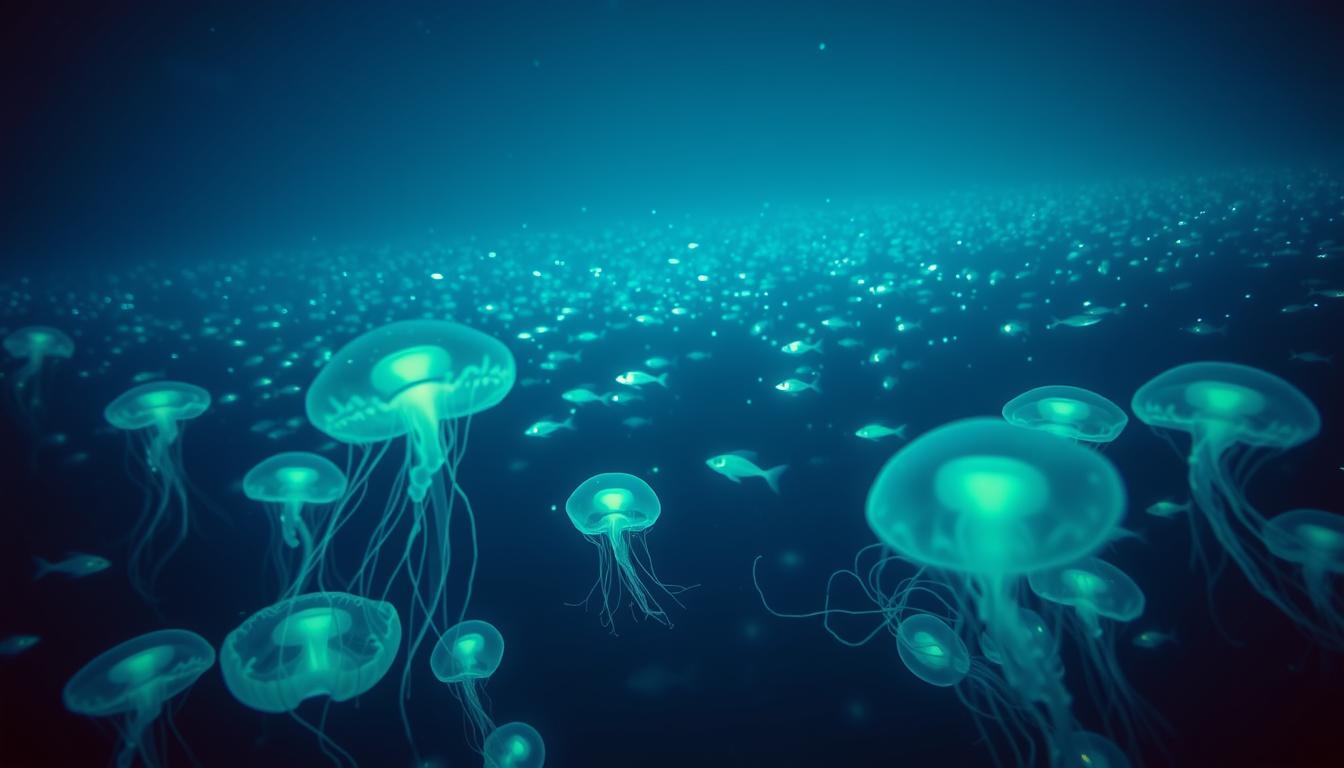
Nature’s glow is all around us. Fireflies light up summer nights, and deep-sea fish glow in the dark. Over 2,000 firefly species flash their own patterns. And 76% of ocean animals light up the sea.
This light isn’t just a trick of the dark. It’s a way for them to survive and thrive.
Bioluminescence is like a chemical magic show. Fireflies and deep-sea fish use it to light up the dark. Even fungi, like Brazil’s Neonothopanus gardneri mushrooms, glow with a soft green light.
The ocean is home to 80% of these glowing creatures. There are over 1,500 bioluminescent fish species. They use their light to hunt, hide, or talk to each other in the dark.
From the Motyxia millipede’s warning flash to the eerie glow of Puerto Rico’s Vieques Bay, this phenomenon spans land and sea. Let’s dive into how glowing creatures use light to catch prey and avoid predators. And why it’s so important to the ocean’s balance. The science behind these glowing wonders begins here.
Understanding Bioluminescence: An Overview
The bioluminescence definition is about light made by living things through chemical reactions. This is a special kind of chemiluminescence, where energy turns straight into light. The light it makes is cold light, which doesn’t get very hot. This makes it much more efficient than regular light.
Unlike fluorescence vs bioluminescence, bioluminescence doesn’t need light to shine. It comes from inside the organism through chemical reactions.

Most bioluminescent life is found in the ocean, with 76% of deep-sea fish having light organs. Freshwater is much rarer, with New Zealand’s Latia neritoides being a notable exception. Sailors long ago talked about “burning seas,” which we now know are caused by dinoflagellates blooms.
These tiny creatures create amazing lights in places like Puerto Rico’s bioluminescent bays.
Scientists are studying these reactions to help with medical imaging and green lighting. Bioluminescence is special because it’s efficient and unique. It helps creatures survive in dark ocean depths and fascinates researchers all over the world.
Types of Bioluminescent Life Forms
Bioluminescence is found in many places, from deep oceans to rainforests. Over 1,500 types of fish light up the sea. Anglerfish use glowing lures to catch food, and lanternfish confuse predators with light.
Aequorea victoria jellyfish helped win a Nobel Prize. Their green fluorescent protein changed genetic studies. 
Bioluminescent animals like the Hawaiian bobtail squid adjust their glow to match the moon. Deep-sea dragonfish hunt in the dark with red light. On land, fireflies flash to communicate, and bioluminescent fungi like Omphalotus nidiformis attract insects.
“Bioluminescence isn’t just a survival tool—it’s a blueprint for evolution.”
Bioluminescent fungi glow in tropical forests, with over 70 species lighting up at night. Ninety percent of deep-sea creatures use light to survive. From squid to centipedes, nature’s glow shows its cleverness in the dark.
The Mechanism of Bioluminescence
Every glow starts with a bioluminescent chemical reaction. This begins with luciferin, a molecule that lights up when it meets oxygen. Luciferase enzymes make this happen fast, turning chemical energy into light without heat.
When oxygen meets luciferin, it creates oxyluciferin. This is what makes creatures like fireflies and deep-sea fish glow.

Some creatures use photoproteins instead. These proteins need oxygen and luciferin to glow, and a trigger like calcium ions to start. The green fluorescent protein (GFP) from jellyfish even won a Nobel Prize for its lab uses.
Light-producing organs like fireflies’ lanterns or lanternsharks’ belly lights act like flashlights. They can turn on and off with muscles or chemicals.
Fireflies are very efficient, wasting almost no energy. Dinoflagellates in Puerto Rico’s bioluminescent bays flash when disturbed, creating waves of light. These tiny chemical dances help life forms survive in the dark, whether to hunt, hide, or communicate.
The Purpose of Bioluminescence
Bioluminescence has many uses, but its main goal is survival. Marine creatures use it to avoid predators. For example, the vampire squid releases glowing mucus to confuse attackers.
Brittle stars shed glowing limbs to distract predators, giving them time to escape. Some squid and fish emit light to blend in with the surface, hiding from predators below.
Predators like anglerfish use light to lure prey. Their glowing lure tricks fish into coming closer. Dragonfish emit red light, invisible to most deep-sea creatures, to hunt without being seen.
Fireflies flash light to find mates, avoiding confusion with other species. Even ostracods in the Caribbean flash light during courtship, showing light’s role in romance.
Over 1,500 fish species glow in the dark oceans. Bioluminescence is not just for show; it’s a vital survival tool. As scientists learn more, like the “green bomber” worm’s explosive light, the story of evolution’s creativity shines through.
Bioluminescence in the Ecosystem
Marine ecosystems rely on bioluminescent habitats where light is a key language. In places like Puerto Rico’s Mosquito Bay, dinoflagellates light up the water when moved. These environments are home to symbiotic relationships that help creatures survive.
The Hawaiian bobtail squid is a great example. It has a light organ that hosts Vibrio fischeri bacteria. These bacteria help the squid blend in by lighting up its body. This shows how nature works together.

Deep-sea animals use light to survive in the dark. Over 76% of deep-sea animals in the eastern Pacific have bioluminescence. This includes anglerfish and jellyfish like Aequorea victoria that flash warnings.
Algal blooms, though sometimes harmful, help produce oxygen. Dinoflagellates can make up to 50% of Earth’s oxygen. Their glow tells us about the health of the ocean. Sudden blooms might mean the environment is changing.
Scientists watch these changes to understand the ocean better. Pollution or changes in salt levels can cause unusual glows. This alerts researchers to problems in the ecosystem.
Bioluminescence has been around for 540 million years. But today, pollution threatens these ancient systems. Saving these habitats is important for their beauty and the balance of nature.
Spectacular Bioluminescent Displays
Imagine dipping your hand into water that lights up like electric blue stars. Puerto Rico’s bioluminescent bays—like the one in Vieques—are living nightlights. Tiny organisms called dinoflagellates ignite when disturbed, creating waves of glowing ocean phenomena. Visitors can kayak through these waters, leaving trails of light that feel otherworldly.
Far beyond these bays lie even stranger sights. The milky seas, seen in parts of the Indian Ocean, glow continuously for miles. Caused by bacteria, these vast patches shine so brightly they’ve been spotted from space. Unlike fleeting flashes, these phenomena transform entire ocean surfaces into shimmering canvases.
On land, New Zealand’s Waitomo Caves host another marvel. Glowworm larvae cling to cave ceilings, dangling sticky threads tipped with light. Their blue-green glows lure insects into traps, creating an illusion of a starry sky underground. California’s shores sometimes sparkle with glowing waves during summer blooms, as algae light up with every wave crash.
These displays aren’t just magical—they’re delicate ecosystems. Mosquito Bay in Puerto Rico, the world’s brightest bioluminescent bay, faces threats from pollution. Protecting these sites means preserving nature’s most dazzling light shows for future generations to explore.
The Science of Studying Bioluminescence
Bioluminescence research uses advanced tools like high-sensitivity cameras and spectrophotometers. These tools help capture the light patterns and chemical reactions in creatures. This includes everything from fireflies to deep-sea creatures. Scientists also use genetic sequencing to understand the DNA behind light-emitting systems.
The discovery of green fluorescent protein (GFP) has changed biology. GFP lets scientists see gene activity by glowing under UV light. This method is key in medical research, helping study diseases and cell behavior.
Modern methods have revealed new species, like the glowing Xystocheir bistipita millipede. It warns predators by glowing. Underwater drones and satellite imaging now map bioluminescent ecosystems. This has uncovered species never seen before.
Bioluminescence research connects ecology and technology. By studying light-producing enzymes and genes, scientists find new solutions for medicine and conservation. Each discovery brings us closer to using nature’s glow for our benefit.
Human Impact on Bioluminescent Life
Human actions are changing the homes of bioluminescent creatures. Pollution from chemicals and sewage harms places like Puerto Rico’s Mosquito Bay. This bay is famous for its glowing dinoflagellates.
Light pollution from cities and boats also affects these creatures. It hides the flashing signals fireflies use to find mates. Coastal development and boat anchors damage the seabeds. Climate change warms waters, stressing organisms that need specific conditions.
Environmental effects also harm marine life. Toxic algae blooms, often caused by fertilizer runoff, can smother bioluminescent organisms. But, conservation efforts are growing.
In Taiwan, programs monitor “blue tears” algae. They balance tourism with bioluminescent habitat protection. In Japan, firefly sanctuaries protect mating grounds from artificial lights. Scientists work with governments to limit boat traffic in key bays.
This helps species like the Hawaiian bobtail squid. It needs clean waters to host its light-producing bacteria.
Protecting these ecosystems is more than just saving beauty. It’s essential for marine biodiversity. Sustainable practices, like reducing light pollution and stricter sewage controls, offer hope. As one marine biologist said, “Every glowing bay saved is a step toward healing the ocean’s dark, mysterious depths.”
The Future of Bioluminescent Research
Bioluminescent engineering could change our daily lives. Imagine streets lit by glowing trees or crops that shine when they need water. These ideas are already being tested in biotechnology.
Scientists are working on plants that can light up, reducing our need for electricity. This could save us money and help the environment.
GFP applications are also making big strides in medicine. The green fluorescent protein, which won the 2008 Nobel Prize, helps scientists study cells. They use it to track cancer cells or see how drugs work, without needing to cut into people.
Future research could lead to even more discoveries. Bioluminescent imaging might help find diseases early. Bioluminescent engineering could make crops that show when they need water or nutrients through light. This could make farming more efficient and help farmers all over the world.
But there are also ethical concerns. We need to make sure we’re not harming the environment as we innovate. By studying deep-sea creatures and bioluminescent fungi, we can learn more about nature’s secrets. This could lead to new materials or ways to detect pollution.
The possibilities are endless, from medical breakthroughs to green lighting. As we learn more about bioluminescence, we can tackle big challenges in energy, health, and the environment. The next decade will likely bring exciting advancements in how we use nature’s light to improve our lives.