
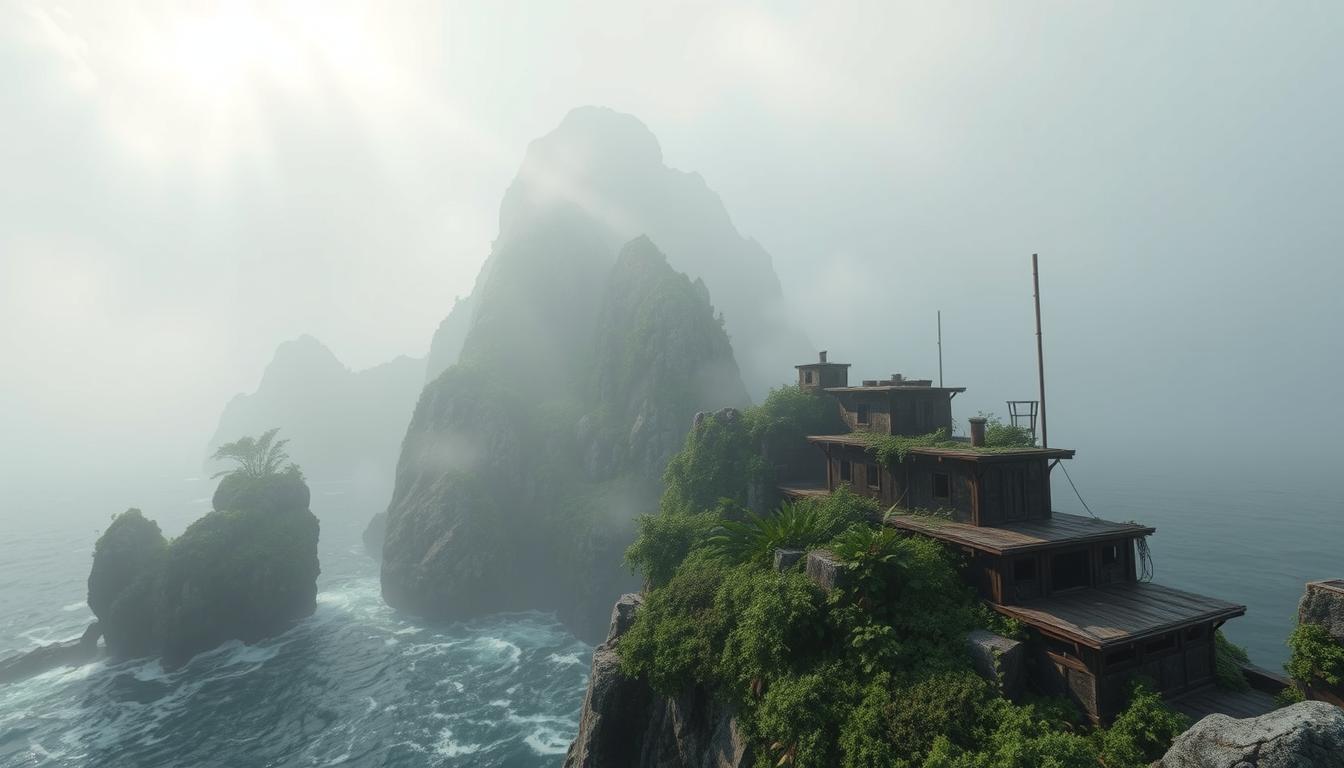
Forbidden islands are hidden where maps stop, keeping secrets and treasures safe. These places are off-limits for many reasons. Governments and cultures protect these islands to keep their mysteries and values safe.
Islands like North Sentinel in the Bay of Bengal are untouched, keeping the Sentinelese tribe safe from outsiders. Places like Brazil’s Snake Island are off-limits because of deadly snakes. Each island has its own rules, balancing curiosity with caution.
No-entry islands spark our curiosity while keeping important things safe. They might protect nature, honor traditions, or prevent danger. These places remind us that some secrets are best left unexplored.
What Are Forbidden Islands?
Forbidden islands are places where nature, culture, or history demand boundaries. These off-limits destinations include islands sealed by governments and privately owned lands. Their restrictions are not random; they are safeguards.
Imagine a world where some islands exist only in satellite photos, untouched by footprints. Island isolation here isn’t just about remoteness. It’s a deliberate choice to preserve ecosystems, protect ancient cultures, or study fragile environments.
Some bans come from ecological fragility. Take Surtsey, a newborn island formed by volcanic eruptions, now a living lab for scientists. Others guard human history, like Gruinard Island, once contaminated by wartime tests.
Even privately owned gems, such as Ni’ihau in Hawaii, enforce strict rules to honor traditions. These islands aren’t just hard to reach—they’re legally shielded, with penalties for unauthorized visits.
Modern tech lets us zoom in on these spots via maps, yet real-world access stays locked. Laws vary: some require permits, others outright prohibit entry. The line between curiosity and conservation is thin.
Next time you spot a “no trespassing” sign on a map, remember it’s often a lifeline for what lies beneath the waves or within the soil.
The Most Notorious Forbidden Islands
Some of the world’s most intriguing places are forbidden. These dangerous islands and inaccessible islands guard mysteries that few will ever see. From tribal territories to venomous hotspots, here are some of the planet’s most elusive spots.

North Sentinel Island, part of India’s Andaman archipelago, has been home to the Sentinelese tribe for over 50,000 years. Outsiders are banned to protect both the tribe’s culture and visitors. A 2018 tragedy saw an American missionary killed after trespassing, reinforcing its no-go status.
Brazil’s Snake Island is a stark example of nature’s dangers. Home to 5,000 golden lancehead vipers per acre, it’s one of Earth’s most lethal dangerous islands. Researchers must wear protective gear to study the snakes’ venom.
Bouvet Island, a Norwegian territory near Antarctica, is one of Earth’s most remote inaccessible islands. Its rugged cliffs and harsh climate make landings nearly impossible, with only occasional scientific visits.
Even volcanic Surtsey, born from 1963 eruptions near Iceland, remains off-limits. Scientists study its growth, ensuring human impact stays minimal. Gruinard Island’s WWII anthrax tests left it contaminated until the 1990s, another example of man-made prohibitions.
These places remind us that some wonders must stay untouched. Whether for survival or preservation, their forbidden status safeguards what lies beyond human reach.
The Reasons Behind Restrictions
Many restrictions are in place to protect indigenous tribes. North Sentinel Island’s Sentinelese people have been isolated for thousands of years. They face dangers from outsiders who may bring diseases.
Laws like India’s 1956 Protection of Aboriginal Tribes Act help keep them safe. They create a 5-nautical-mile buffer around the island. This rule helps protect other isolated groups around the world, keeping their cultures and ways of life intact.
Environmental preservation is also a big reason for restrictions. Protected islands like Bouvet and Niihau have delicate ecosystems. For example, Surtsey in Iceland is left untouched to study how nature evolves.
Rules on Bouvet Island are strict to prevent pollution. This helps keep its landscapes untouched and pristine.
Military activities also lead to restrictions. Places like Diego Garcia, leased by the U.S., are off-limits for military reasons. Private islands, like Ni’ihau in Hawaii, are owned by individuals who limit access to preserve their traditions and land.
Places with dangerous environments, like Snake Island with its high viper population, also have restrictions. Only researchers with special permits can visit.
Island conservation efforts often rely on global agreements. The Convention on Biological Diversity supports these efforts. It helps keep places like Ile Saint-Paul untouched and pristine.
Even historical sites, like Poveglia, once a plague quarantine zone, are closed to protect both visitors and the site itself.
North Sentinel Island: A Closer Look
Nestled in the Bay of Bengal, North Sentinel Island is a small, mysterious land. It covers 59.67 km², with rugged terrain and dense forests. These protect the indigenous tribes living there. The Sentinelese, with 80–150 members, have kept their distance from the world for thousands of years. This makes their island isolation one of the last untouched places on Earth.
The Indian Navy guards the island with a 9 km exclusion zone. This is to protect the island and its people. There have been conflicts, like the 1896 killing of a convict and the 2006 deaths of fishermen. In 2018, missionary John Allen Chau’s attempt to reach the island ended in tragedy.

Indian laws, like the 1956 Aboriginal Tribes Act, keep outsiders away. Even after the 2004 tsunami, rescue efforts were stopped due to threats. The Sentinelese live off hunting and foraging, keeping their culture untouched by modern times. The debate over whether to intervene continues, but their choice to stay hidden sparks important talks about cultural preservation and curiosity.
Bouvet Island: An Icy Enigma
Bouvet Island is a tiny piece of Earth in the South Atlantic. It’s one of the most remote islands on our planet. Norway has claimed it as its own territory, and it covers 49 square kilometers, mostly covered in ice.
Its location—54°25′S 3°22′E—is far from any other land, 1,600 miles from Tristan da Cunha.
This island is hard to reach. The cold, blizzards, and steep cliffs make it nearly impossible to land. Even in the warmest months, the winds are biting.
The 1979 Vela Incident, a mysterious satellite detection near the island, adds to its mystery. But, there’s ongoing debate about what really happened.
“The island’s icy walls and treacherous seas form a natural barrier,” noted researchers studying its untouched ecosystems.
Despite the harsh conditions, Bouvet Island is home to life. Seabirds, seals, and even 5 moss species live here. In 1971, it was made a nature reserve to protect these ecosystems.
Scientists are interested in studying its climate. But, only 1% of people have visited. Norway is strict about who can go there, to keep it untouched.
The island’s highest point is 780 meters, and the seas around it are over 2,400 meters deep. In 2009, Norway expanded its claims here, saying it’s a unique place for biodiversity. Bouvet Island is a frozen world, untouched by humans.
The Case of Diego Garcia
Diego Garcia is a 44-square-kilometer atoll in the Indian Ocean. It’s one of the world’s most contentious restricted islands. Located over 1,600 km from Mauritius, it became a military outpost after the UK evicted its people in the 1960s.
The UK leased the island to the U.S. military. Today, it hosts a U.S. base for refueling bombers and storing equipment. But its history is marred by human rights violations.
The Chagossian people, native to the Chagos Archipelago, were forcibly removed between 1965 and 1973. Over 1,000 individuals were displaced. Many were sent to Mauritius and Seychelles, where they faced poverty.
Despite court rulings calling the displacement unlawful, Diego Garcia remains an off-limits destination for its original inhabitants.

The UK’s 1971 immigration laws barred Chagossians from returning. This policy was later deemed illegal by courts. Though some gained UK citizenship in 2002, many fight for repatriation.
Legal battles continue, with the International Court of Justice ruling in 2019 that the UK’s control of Chagos violates international law. Negotiations between the UK and Mauritius in 2022 aim to address the territory’s future. But the island’s military role complicates solutions.
Diego Garcia’s story shows how geopolitical agendas can override human rights. It contrasts sharply with other restricted islands meant for environmental or safety reasons.
The Legend of Niihau Island
Niihau Island is a private gem off Kauai’s southwest coast. It has been in the Robinson family’s hands for over 150 years. They keep it exclusive, allowing only a few to visit by helicopter or for rare hunting.
The island is home to just 84 people, keeping its traditions alive. It gets only 17.51 inches of rain a year, showing its tough spirit. The Robinsons bought it for $10,000 in 1864, after King Kamehameha IV passed away.
Today, the islanders speak a rare dialect and make special mats. These mats are woven with care, showing the island’s rich culture.
Access to Niihau is very limited. There’s no electricity or internet, but sheep and native plants thrive. In 2004, only 40 votes were cast, mostly for Republicans. This careful management keeps Niihau’s culture safe from the outside world.
Accessibility and Tourism Legislation
Legal rules set island tourism restrictions to protect cultures and nature. For example, India’s 1956 law keeps North Sentinel Island off-limits. This law helps keep the Sentinelese people safe from outsiders.
In Iceland, Surtsey Island is a no-entry island for scientists only. It was formed by volcanic eruptions from 1963–1967. Only 10 researchers can visit each year, with strict rules to protect its delicate ecosystem.

Breaking these rules can lead to fines or jail time. The Indian Navy guards North Sentinel, while Iceland fines those who trespass. Niihau Island, closed to outsiders in 1952, keeps its culture and environment safe.
UNESCO sites like France’s Lascaux Caves are closed to visitors. This is to prevent damage and preserve their history. These laws show that some places are better off without tourists.
Restrictions on islands like Surtsey help scientists study nature without interference. Niihau Island’s community lives off the grid, thanks to strict rules. By enforcing island tourism restrictions, countries protect these unique places for future generations.
Alternatives to Forbidden Islands
Want adventure without leaving your country? Check out island tourism options. The Faroe Islands, a Danish territory, offer a great mix of exploration and care for nature. You can hike volcanic cliffs and enjoy local culture, all while protecting wildlife like puffins.
“The Faroe Islands feel untouched yet welcoming,” said one traveler. “You can experience raw landscapes without harming the environment.”
Nature enthusiasts might enjoy Svalbard, where tours focus on Arctic wildlife. For a cultural dive, Niihau offers rare visits arranged by locals. You can also explore virtually through VR tours or documentaries about remote islands.
Choosing island tourism that’s good for both people and places is key. The Faroe Islands show how to have fun without harming nature. By picking places with strong conservation efforts, you help make travel sustainable.
Conclusion: The Balance of Adventure and Respect
Forbidden islands like North Sentinel show the fine line between exploring and protecting. Rules guarding these places are not just rules. They are key for keeping these islands safe.
Islands like North Sentinel, with its 60,000-year-old culture and unique life, are kept safe. This is to protect the Sentinelese from diseases and outside harm. India has banned visits to North Sentinel Island legally.
Our curiosity to explore new places is natural. But respecting these boundaries is important. It keeps both cultures and nature safe.
The Galapagos Islands are a good example. They show how tourism can be managed to protect the environment. Niihau Island also shows how privacy and sustainable practices can go together.
These examples teach us that adventure doesn’t mean breaking rules. By choosing to visit places that are managed or learning about uncontacted groups, we can explore without harming.
Knowing why some islands are off-limits changes how we see them. Protecting these places respects ancient ways and fragile species. By choosing ethical ways to explore, we help conservation efforts and enjoy the wonders of our world.