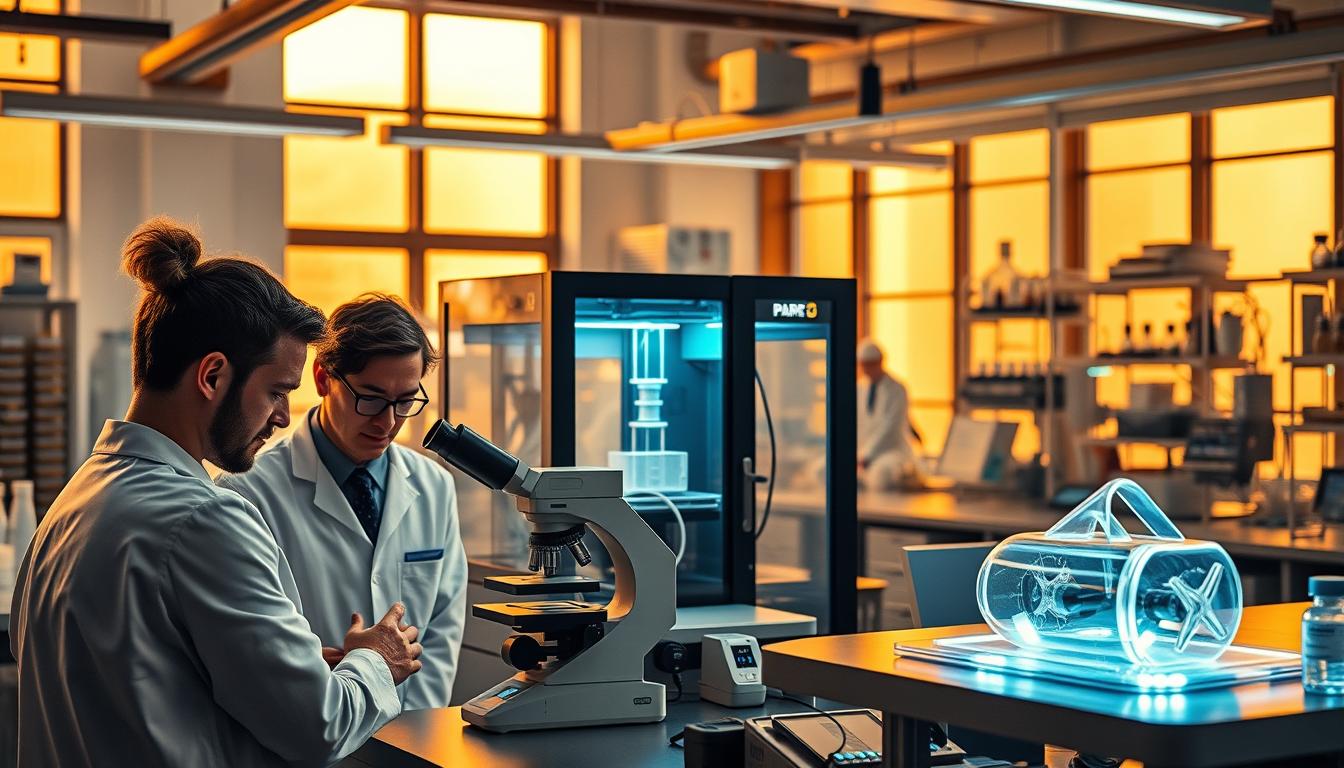
Medical breakthroughs like a groundbreaking Alzheimer’s blood test and FDA-approved over-the-counter birth control are reshaping healthcare. These healthcare innovations are changing lives. For example, a 90% accurate Alzheimer’s detection and expanded access to contraceptives are making a big difference.
Early diagnosis of Alzheimer’s means better disease management for one in nine seniors at risk. Innovations like rapid dual-virus tests and combined flu/COVID vaccines promise faster, more effective care.
Advances in gene therapy, 3D-printed prosthetics, and diabetes treatments now let type 1 patients live full lifespans. This is a huge improvement from the 1.5-year survival rate before insulin. Over the centuries, we’ve made huge progress in medicine, from eradicating smallpox to today’s antiseptic practices.
Now, cutting-edge therapies and diagnostic tools are making once-impossible treatments routine. These innovations, from pediatric heart valves to schizophrenia’s new drug Cobenfy, show how science is rewriting healthcare’s future. As we explore these life-changing treatments, discover how medical breakthroughs are turning hope into reality for millions worldwide.
Groundbreaking Innovations in Cancer Treatment
Recent cancer treatment breakthroughs are changing the game for patients. One key targeted cancer therapy uses PSMA-targeted drugs. These drugs bind to proteins on prostate cancer cells, making treatment more precise.
This prostate cancer treatment also improves imaging, allowing for earlier detection. Memorial Sloan Kettering Cancer Center played a big role in 2024. They helped develop 11 FDA-approved therapies, including these new approaches.
Personalized cancer vaccines are another exciting area. Trials show mRNA-based vaccines, like autogene cevumeran, can create lasting immune responses in pancreatic cancer patients. Early studies suggest vaccines targeting KRAS mutations can also boost the body’s cancer-fighting abilities.
AI tools, like Mia, are also making a difference. They can detect breast cancer 13% better than traditional methods. Noninvasive tests, like E-nose technology, can even identify lung cancer markers in breath samples.
Breakthroughs are also happening in hard-to-treat cancers. TIL therapy has shrunk tumors in 25% of lung cancer patients. FDA-approved drugs like tepotinib and zanidatamab target genetic mutations in lung and bile duct cancers.
As clinical trials grow, cancer treatment breakthroughs are changing survival odds. They combine genetics, AI, and personalized care to fight cancer more effectively.
Transformations in Cardiology
Recent cardiology breakthroughs are changing how we fight heart disease. A new treatment, inclisiran, is a twice-yearly injection for cholesterol management. It targets PCSK9, making it easier than daily pills. This helps lower LDL cholesterol, a big factor in heart disease treatments.
A big step forward in hypertrophic cardiomyopathy treatments is a new drug. It’s the first to tackle the condition’s root cause. Unlike old treatments that just managed symptoms, this one goes after the genetic causes. Also, new heart valve technology lets doctors implant living valves in babies. These valves grow with the child, avoiding the need for many surgeries.

Companies like Advanced NanoTherapies Inc. are working on new drug delivery systems. They’ve got $4M in funding for the SirPlux Duo. This uses biodegradable nanoparticles to save money and improve results. Mitria Medical’s Subvalvular Spacer also showed promise in early tests, helping with complex cases. These cardiovascular innovations match the American College of Cardiology’s goals for digital tools and global education, like their NCD Academy.
“These tools don’t just treat symptoms—they redefine care pathways,” says a leading cardiologist. AI-driven tools now aid diagnosis, while telehealth connects remote patients to specialists.
From smart implants to AI-assisted care, these changes point to a future where heart disease care is both precise and accessible. Patients and doctors are seeing results that were once thought impossible.
Revolutionary Developments in Diabetes Management
Diabetes treatment innovations are changing how millions manage their condition. A new injectable drug combines GIP and GLP-1 agonists. It helps control blood sugar and aids in weight loss.
Recent trials show it lowers hemoglobin A1C levels. This gives hope to those with type 2 diabetes.
Glucose monitoring technology is getting better. Now, continuous glucose monitors (CGMs) are part of insulin pumps. They give real-time data, making finger pricks less common.
The artificial pancreas takes it even further. It uses algorithms to adjust insulin delivery automatically. This aims to remove the need for manual adjustments.
Insulin delivery systems are also improving. Biosimilars like Admelog (insulin lispro) are more affordable. They make essential therapies more accessible.
Research into β-cell regeneration and genetic targets is ongoing. This could lead to personalized diabetes management. Early genetic testing for variants like TCF7L2 could prevent type 2 diabetes before symptoms appear.
With over 463 million people living with diabetes worldwide, these breakthroughs are vital. They address blood sugar control and the growing health crisis. These innovations aim to ease the daily burden of diabetes management and improve outcomes for patients globally.
Innovations in Mental Health Treatment
Breakthroughs in mental health are changing care for millions. The FDA approved a new treatment for postpartum depression in 2019. This treatment works fast, bringing relief in hours, unlike traditional antidepressants that take weeks.
For those who don’t respond to usual treatments, psychedelic medicine is showing promise. Studies with psilocybin and MDMA are showing good results for PTSD and anxiety. This signals a big change in how we treat mental health.

Digital mental health solutions are making care more accessible. Apps now offer cognitive behavioral therapy (CBT) and track symptoms with smartphone sensors. The FDA-approved EndeavorRx helps kids with ADHD through games.
Over 500 digital therapeutics trials have taken place, showing trust in tech care. The BRIGHTEN study shows apps can treat conditions and collect data at the same time.
Non-invasive brain stimulation and virtual reality (VR) therapies are also making progress. VR got FDA Breakthrough status for treating schizophrenia. TMS helped 47% of treatment-resistant depression patients in trials.
With 264 million people worldwide affected by depression, these new treatments offer hope. From new treatments for postpartum depression to psychedelic-assisted care, the field is growing fast. It’s providing options where none existed before.
Progress in Neurology and Alzheimer’s Research
Alzheimer’s breakthroughs are changing how we detect and treat dementia and cognitive decline. A new blood test from Swedish researchers can spot Alzheimer’s in older adults with 90% accuracy. This is a quicker, less painful option than spinal taps or brain scans.
This neurology advancements breakthrough could lead to earlier diagnosis. Early detection is key when treatments can make a big difference.
The FDA has approved two new drugs, Leqembi and donanemab. These drugs target amyloid plaques, slowing brain cell death in early-stage patients. Lecanemab is given every two weeks, and donanemab monthly, aiming to improve quality of life.
But, both drugs require genetic testing for the APOE e4 gene. This is to lower the risk of brain swelling or bleeding.
Researchers at the University of Texas Medical Branch have made a breakthrough. They’ve created a nasal spray using TCM2 antibodies. This brain research innovations method sends tau-targeting therapies straight to the brain, clearing toxic proteins in mice.
Early trials show it improves cognition, paving the way for human tests. On the other hand, beta-secretase inhibitors didn’t work out in trials. But they’ve led to new ideas like tau vaccines and immune-boosting drugs like sargramostim.
Neurological disorder therapies are also looking at lifestyle factors. Studies suggest heart-healthy habits like exercise and diet may delay Alzheimer’s onset. The FDA also recommends regular brain scans during new drug treatments to ensure safety.
These steps show how science and care are moving forward together in the field.
Remarkable Advances in Regenerative Medicine
Regenerative medicine is making huge strides. Trials have shown kidneys and livers from pigs can be used in humans. These organs are made safe by removing harmful genes and adding human DNA.
While some early patients faced issues, these steps are a big leap forward. They help solve the problem of not enough organs for transplants.

Now, scientists can create tissues like liver and cartilage with 3D printers. Cyfuse Biomedical’s method has made functional liver tissue that works for weeks. Graphene helps neural tissues last longer, but making them blood-rich is a big challenge.
Stem cell therapy is also getting better. It’s being used to fix spinal cords and heal burns faster than before.
The first lab-grown bladder was made in 2006, showing lab organs can last long. Today, over 80 diseases might be treated with stem cells. The market is growing fast, despite the high costs.
With 120,000 Americans waiting for transplants, these advances offer hope. Though there are many challenges, scientists are excited about the future. They hope to make donor lists a thing of the past with better technology.
Enhancements in Surgical Techniques
Modern surgical innovations are changing how surgeries are done. Robotic surgery systems, like the da Vinci Surgical System, give surgeons precision surgical tools. These tools improve dexterity and control in complex surgeries.
These systems use tiny instruments and high-resolution 3D imaging. This allows for smaller incisions and faster recoveries.
Minimally invasive techniques are now common in many surgeries. They reduce scarring and hospital stays. For example, 3D-printed titanium implants are used for bone deformities.
These custom implants are a result of surgical technology advancements. They offer tailored care, reducing the need for traditional surgeries.
Augmented reality is also a big change. Surgeons use augmented reality surgery tools to see real-time data. This helps them navigate delicate areas like the brain or spinal cord.
Such technology lowers the risk of nerve damage. It improves accuracy and patient safety in complex procedures.
These advancements lead to shorter recoveries and better outcomes. Patients experience less pain, faster healing, and reduced risks. As surgical innovations keep advancing, they make even the most complex operations safer and more accessible.
Breakthroughs in Vaccination and Infectious Disease
Messenger RNA (mRNA) technology is changing public health. It teaches cells to fight diseases, making vaccines like COVID-19’s possible fast. This is a big change from the old year-long vaccine-making days.
This mRNA tech is helping us get ready for future pandemics. It also opens new ways to fight diseases like cancer and malaria.

Combination vaccines, like Moderna’s flu/COVID-19 shot, are a big step forward. They need fewer shots but offer stronger protection. A quick test that can spot both viruses in 15 minutes also helps stop outbreaks fast.
“Moderna’s combination vaccine trials showed stronger immune responses than individual vaccines,” researchers reported, underscoring their potential.
Antibiotic alternatives, like phage therapy, are being looked at to fight antibiotic-resistant bacteria. These methods target how bacteria talk to each other. This could help us use fewer traditional antibiotics and fight resistance.
These advances, from mRNA tech to combination vaccines, show how science is improving health care. But making sure everyone can access these new tools is important. We need to make sure they help everyone, not just a few.
New Horizons in Genetic Research
Recent genetic medicine breakthroughs are changing how we treat inherited disorders. The FDA has approved Lyfgenia and Casgevy, big steps in hereditary disease treatments. These treatments use CRISPR innovations to tackle sickle cell disease at its source.
Lyfgenia brings a fetal hemoglobin gene through viral vectors. Casgevy edits DNA in stem cells. Both reduce severe symptoms, bringing hope to those with few options.
These advances show the power of genomic medicine. In Utah, the UPIN is leading in early precision genetic therapies for spinal muscular atrophy (SMA). Their work with Zolgensma shows early treatment can prevent lasting damage.
With 10 FDA-approved gene therapies now available, and 30-50 more expected by 2030, this field is growing fast.
Groups like the Innovative Genomics Institute are working to apply CRISPR innovations to hundreds of rare diseases. The NHGRI is also researching genetic factors in diseases like Alzheimer’s. This combines genetic medicine breakthroughs with environmental studies.
This means families can get treatments that fit their specific needs. What was once a death sentence is now a condition that can be managed.
As costs go down and trials grow, these precision genetic therapies will help more people. With over 30 million Americans affected by rare diseases, these advances are more than just scientific achievements—they are lifelines.
Evolution of Personalized Health Care
Healthcare is moving from one-size-fits-all treatments to personalized medicine advancements. Doctors now use genetic and lifestyle data to create patient-specific therapies. This approach is based on the EU’s 2015 guidelines for personalized medicine.
AI is leading this change. For example, IBM’s DataProbe tool found $41.5 million in Medicaid fraud. It shows AI’s role in making healthcare more efficient and precise.
AI also helps predict hypertension outcomes. It helps doctors choose the best drug combinations for patients. A breast cancer detection system, trained on 38,444 mammograms, is as accurate as humans.
But, there are challenges. Cost is a big issue, with some calling it “rich man’s medicine.” The HER-2 gene example shows promise, but small patient groups make trials hard. Also, 60% of health determinants are based on behavior, not just genetics.
Looking ahead, predictive healthcare could change everything. Tools analyzing genetic data might spot risks early. This could lead to preventive steps. The UK Biobank and Clinical Pharmacogenetics Implementation Consortium are building databases for customized medicine and drug dosing.
Advances in Pediatric Medicine
Pediatric medical breakthroughs are changing how we care for babies and kids. A vaccine for moms during pregnancy gives newborns antibodies for their first six months. Shots for babies under eight months also protect against a common virus, saving lives.
Omalizumab (Xolair) is a big win for kids with severe peanut allergies. It’s approved for kids over one and makes them safer around peanuts. Newborn care now includes gentler breathing help and food tailored just for them, helping preemies grow strong.
Telehealth and digital tools have improved access to behavioral health services by 50% in underserved areas.
The Children’s National Research Institute got $90 million for brain tumor research and AI tools in 2022-2023. These tools cut down wait times for diagnosis from months to days. They also focus on treatments made just for kids, not just for adults.
Hospitals are making safer spaces for young patients with special nutrition and AI monitoring. This ensures every child gets care that’s just right for them.
The Future of Telemedicine
Telemedicine is changing how we get care. It’s not just video calls anymore. Now, we have AI to analyze symptoms and track glucose levels in real time. Devices for remote monitoring let people with diabetes or heart conditions share health data quickly, helping doctors act fast.
Thanks to the pandemic, telemedicine has grown a lot. It’s now used 38 times more than before 2019 (McKinsey & Company). By 2020, 85% of doctors were using it (American Medical Association). Even mental health visits are as good as in-person ones (JAMA Psychiatry).
But, there are hurdles. Laws make it hard for doctors to work across states, and not everyone has good internet. Yet, telehealth keeps getting better. We have secure platforms and AI to help doctors make accurate diagnoses. The government is also paying more for virtual visits, showing a shift towards more online care.
The future looks bright. Telemedicine might include robots for surgeries and AI for care plans. Making telemedicine available everywhere is key to fair health care. As tech improves, we’ll get better at keeping care connected without losing the personal touch.