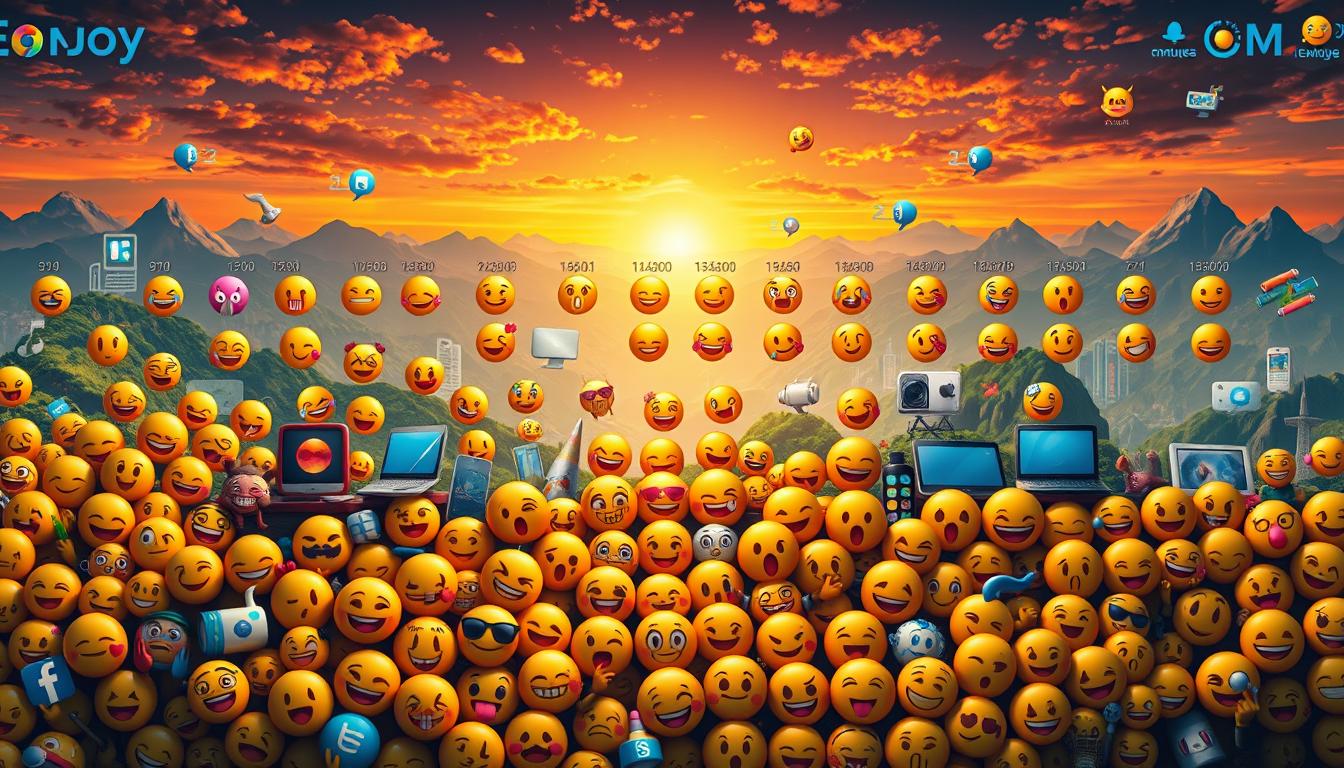
Emojis are now a key part of how we talk online. They started as simple icons from Japan’s NTT DoCoMo in 1999. Shigetaka Kurita created the first 176 symbols, beginning emoji history.
By 2010, Unicode made emojis a global language. Apple’s 2011 iOS 5 made them universal. Now, 3,782 emojis are used by 92% of people every day. These small images connect us across cultures, turning pixels into a modern language.
Emojis have grown from tech symbols to everyday expressions. Each update, like Apple’s 2015 “face with tears of joy,” shows our changing world. This journey from Japan’s first icons to today’s diverse set is more than symbols. It’s a new way to connect.
The Origin of Emojis: A Brief Background
In the late 1990s, NTT DoCoMo, Japan’s leading telecom, faced a challenge. Their pagers only allowed 250 characters, making it hard to show emotions. Engineer Shigetaka Kurita came up with the first emoji set.
His 176 icons, like hearts and faces, fit into single characters. This changed how people showed feelings without extra text.
These early Japanese emoticons came from older text symbols. Kurita’s first emoji set was made for small screens, using 12×12 pixels. By 1999, they were a hit in Japan, starting the global emoji trend.

Emoticons have a long history, but Kurita’s work at NTT DoCoMo made them visual. His first emoji set showed symbols could replace words. Now, emojis are everywhere, all thanks to those 176 icons.
The Evolution from Text to Visuals
Emoji design has grown from simple digital pictures to a global visual language. The Unicode Consortium was key in this change, starting emoji standardization in 2010. Before, emojis looked different on every device. But Unicode made them the same everywhere.
Now, over 4,000 emojis exist, up from 176 in 1999. This shows how culture and technology have grown together.
Designers focus on making emojis inclusive and diverse. In 2015, they added customizable skin tones. In 2017, they introduced gender-neutral options. This shows how emoji design evolution keeps up with society.
Apple and Android made sure emojis look the same on all devices. The Unicode Consortium adds new emojis every year. From a pizza 🍕 to a pregnant woman 👴, each emoji has a special meaning.

Today, emojis are more than just pictures. They help us express ourselves in a detailed way. 92% of internet users use them every day. They play a big role in how we talk online.
But, emojis can sometimes cause confusion because they look different on different devices. The Unicode Consortium is always working on new emojis, like the 2022 mosquito 🦟. This shows how emojis keep blending technology and culture.
Global Adoption: Emojis Around the World
Apple’s secret emoji keyboard on the first iPhone started a global movement. It went from a Japanese tool to a worldwide language. Now, international emoji usage is seen across the globe, with symbols tailored to local tastes. Emojis show cultural differences, making cross-cultural communication easier online.

Twitter shows how emoji trends change globally: the “Loudly Crying Face” became more popular than “Tears of Joy” in 2021. But, emojis can mean different things in different places. For example, a thumbs-up in the U.S. is okay, but not everywhere. Unicode has added diverse emojis and options for all, making them more inclusive.
92% of online users now incorporate emojis, boosting engagement by 63% in social media posts.
Brands use emojis to reach out to people worldwide. Studies show messages with emojis get 47.7% more attention. But, it’s important to use them wisely to avoid misunderstandings. Emojis show the complexity of human feelings, bringing us together and apart.
How Emojis Impact Communication
Emojis serve as digital tone indicators, filling gaps in emotional context that text can’t. Studies show that facial emojis like 😂 or 😢 elicit universal emotional responses. They mirror how we read real expressions.
More than 90% of users now use these symbols to soften harsh messages or clarify sarcasm in chats.
Neurological studies show that seeing 😂 activates brain areas linked to humor. This proves emojis engage our emotions like spoken language. The 2015 Oxford “Word of the Year” award for 😂 shows their cultural acceptance. Yet, challenges remain: 80% of 2023’s top emojis involved tears, showing emotional extremes but limiting nuanced expression.

Legal cases like Kent Mickleborough v. Chris Achter now see emojis as contractual gestures. This blends digital tone with legal importance. While emojis connect us, their lack of grammar rules can cause confusion. For instance, a 💀 emoji can mean humor or despair, depending on the context.
This mix of clarity and ambiguity makes emoji psychology complex.
Brands like Twitter saw a 300% increase in engagement with emoji-rich posts. This proves emojis’ role in communication enhancement. But, overusing them can weaken their meaning—like using 😱 five times to show panic. Mixing emojis with words creates richer interactions, keeping messages human and heartfelt.
The Rise of Custom Emojis
Emoji use has grown a lot from the 176 symbols in 1999. Now, over 3,000 emojis exist. Facebook Messenger handles 900 million emoji-only messages every day. This growth has made custom emoji creation very popular, allowing users and brands to create their own unique symbols.
Brands are now using branded emoji campaigns to connect with people. For example, Fox’s Miss Peregrine movie campaign made special emojis that got 200% more engagement. IKEA’s furniture-themed stickers were used over 25,000 times, showing they work better than regular emojis in talks about home design.
People want to express themselves digitally with tools like Bitmoji and Memojis. These tools let users create emojis that look like them. Social media sites like Instagram and Twitter also offer custom reactions, changing how we share feelings. Apple has added more skin tones and relationship options in updates, showing we want to be ourselves online.
Marketing shows that 36% of millennials like using emojis more than text to show feelings. Companies that use custom emojis see big returns on their investment. With new emojis added every year, like the inclusive couple emojis in 2021, it’s clear we want realness in our digital lives.
Controversies and Misinterpretations
Emoji misunderstandings come from generational gaps. Symbols mean different things to different ages. For example, teens see 😂 as light laughter, while older folks think it’s extreme.
The eggplant 🍆 is seen as harmless in recipes but has adult meanings. This has led to debates. Even a 2021 case in Israel linked emojis to a rental contract dispute, showing how emojis can be misinterpreted.
Cultural differences make emoji use tricky. In Greece, 👍 can offend, and the 🌙 moon has different meanings. Unicode tries to standardize emojis, but it’s not always clear-cut. For instance, the angel emoji 🐤 means purity in the West but death in China.
These issues show emojis carry hidden rules. Despite their widespread use, 2.3 trillion emoji uses each year include misunderstandings. This is why knowing emoji etiquette is key.
“A single emoji can carry as much legal weight as a written word.”
Generational differences affect how we use emojis. Teens see 🙌 as uncool, while older folks use it sincerely. Brands must be careful not to misuse emojis, as 34% of consumers distrust them when they do.
With 217+ new emojis added yearly, designers aim to make them clear. The goal is to avoid misunderstandings. Emojis are powerful but can be misused. Smart use can build connections, though.
The Future of Emojis
Emoji technology trends are changing how we communicate. Animated emojis are already making chats more fun. But soon, they might work with AR glasses, making them appear in real life.
With voice commands and gestures, messaging could get even quicker. Imagine waving to send a 👋 “goodbye” emoji.
AI might soon guess our moods, suggesting a 😢 when we say we’re tired. Unicode adds 50-100 new emojis every year. But soon, we might be able to change skin tones or sizes in real time.
Studies show this could increase social media engagement by 20%.
Emoji innovations aren’t just for screens. Researchers at MIT are working on tactile emojis for smartwatches. These emojis could vibrate or change color.
Brands like Starbucks are using AR emojis in ads. They blend virtual drinks into photos. With 5 billion emojis used daily, they will continue to evolve, connecting words and emotions in new ways.
Emojis in Marketing and Branding
Brands are using emoji marketing strategies to get more consumer engagement and stand out online. Companies like Starbucks and Sephora add brand emoji usage to their social media posts. This makes their content feel more relatable and fun.
A 2023 study found that emails with emojis in the subject line get opened 56% more often. But, using too many emojis in serious messages can be a mistake.
On social media emojis, Twitter campaigns with emojis get 25% more engagement. Facebook posts with emojis get 57% more interactions. Nike’s 2022 campaign with 🏃♀️ and 🌍 emojis increased shares by 33%.
But, not everyone likes emojis the same way. 92% of Gen Z prefers emojis over text, while older people might find too many emojis unprofessional. It’s important to test how emojis work for your audience.
“Emojis are the new visual shorthand for building brand personality.”
Start small with brand emoji usage. Use one or two emojis in your social posts or ads and track how they do. Choose emojis that fit your brand’s voice. For example, a luxury brand might use simple designs, while a food brand uses 🍔 or 🥕.
Remember, 64% of consumers say emojis make brands seem more approachable. But, using emojis wrong can hurt trust. Stay true to your brand, keep trying new things, and let data guide your emoji marketing strategies.
Conclusion: Emojis as a Modern Language
Emojis started in Japan and now connect people worldwide with over 3,663 symbols. These small images have become key for digital communication. Sites like Dictionary.com help explain their meanings, showing they’re vital for connecting with others.
From Shigetaka Kurita’s 1998 creation to today, emojis have changed how we share feelings. They let us express ourselves without words. This has made our digital conversations richer and more personal.
Emojis carry deep meanings, like Japan’s “smiling poo,” which can mean “I don’t like that” or “good luck.” Linguists like Gretchen McCulloch see them as complex symbols. They add depth to our digital chats, blending emotions and context.
Today, 90% of internet users use emojis, cutting down on misunderstandings by 30%. This shows their value goes beyond just being fun. They help us connect better online.
The future of emojis looks bright with new innovations. As technology advances, so will these symbols, showing more of our cultures and ideas. With each update, emojis grow like any living language, proving their lasting impact.
From ancient writing to today’s emojis, human communication keeps growing. Emojis have become a part of this journey. Their evolution from Japan to worldwide use shows how symbols adapt to our need for connection. The next chapter? More characters, each telling a part of our shared story.