
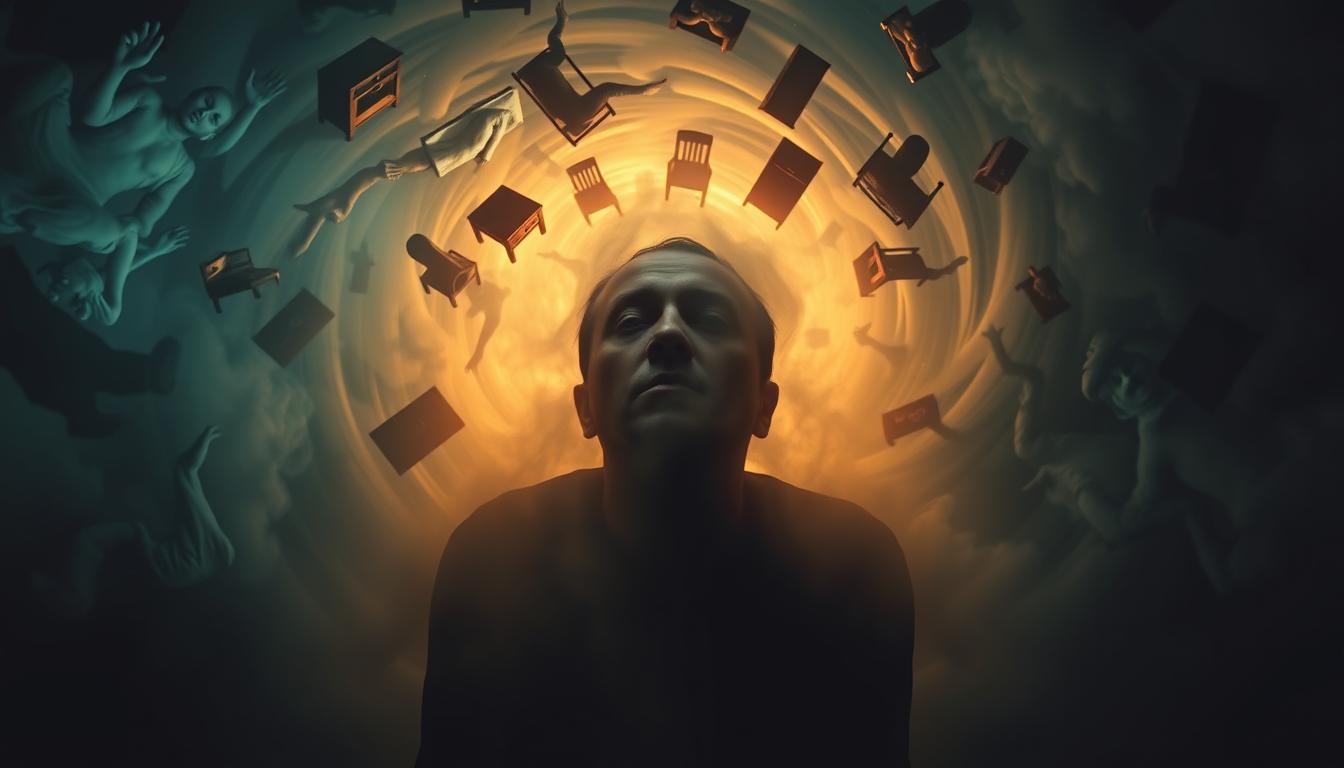
Ever wondered about unusual sleep disorders or rare sleep conditions? These issues disrupt normal sleep patterns, with over 80 types. Weird sleep phenomena like sleep paralysis and strange behaviors like nighttime eating binges challenge our understanding of rest.
Did you know up to 40 million Americans face chronic sleep disorders? Conditions like fatal familial insomnia, a genetic rarity found in only 40 families worldwide, show how deeply these issues can affect lives. Exploding head syndrome’s startling symptoms or narcolepsy’s sudden sleep episodes reveal the mysteries hidden in the realm of sleep science.
Understanding Sleep Disorders: An Overview
Sleep is a complex process where your brain and body work together to restore energy and maintain health. Sleep cycle disruptions can interfere with this process, leading to conditions affecting millions. Sleep medicine basics teach that sleep occurs in cycles, including REM (rapid eye movement) and non-REM stages. These cycles repeat throughout the night, and disruptions here can cause daytime fatigue or other symptoms.
Experts use sleep disorder classifications to group issues like insomnia, sleep apnea, or parasomnias. These categories help doctors diagnose problems like restless legs or night terrors. A third of adults report sleep cycle disruptions, with over 50 million Americans living with chronic sleep disorders. The body’s internal clock, or circadian rhythm, also plays a role—misalignment here can cause jet lag or shift work issues.
Sleep health fundamentals involve getting enough quality rest. Yet 34% of people rate their sleep as poor, and 40-50% with insomnia also face mental health struggles. Symptoms lasting three months or more signal possible disorders. Early stages often go unnoticed, specially in those with heart issues or neurological conditions. Recognizing these sleep disorder classifications early can improve outcomes.
From tossing and turning to vivid dreams, sleep isn’t one-size-fits-all. But when patterns persist, they signal deeper issues. Learning the sleep medicine basics helps you spot red flags. Small changes in routines or seeking care can restore balance, ensuring restorative rest isn’t just a dream.
Parasomnia: The Sleep Disturbances
Parasomnias are disruptions that cause unusual sleep behaviors. These can include physical actions like sleepwalking or vocalizations like sleep talking. The disorders are divided into two groups: REM sleep behavior disorder and non-REM parasomnias.
During REM sleep behavior disorder, people act out their dreams. This can include kicking or shouting. On the other hand, non-REM parasomnias include sleepwalking, which is common in children aged 2–6. About 15% of children experience sleepwalking episodes. Adults may also act out due to stress or fatigue.

REM sleep behavior disorder affects less than 1.5% of people but can cause injuries. Sleepwalking episodes might involve wandering or complex actions without memory of the event. Night terrors, a non-REM type, cause intense fear without waking fully.
Families often notice these behaviors, but the sleeper rarely recalls them. A child’s brain might stay partly asleep while parts wake. This can cause actions like shouting or sitting up abruptly.
Sleepwalking and sleep talking often run in families. Safety measures like locking doors are vital to prevent harm. Treatments range from behavioral changes to medications like melatonin.
Recognizing these conditions early can reduce risks and improve rest. If episodes persist, consulting a sleep specialist ensures proper care.
Narcolepsy: The Uncontrollable Sleep
Narcolepsy symptoms make daily life hard with sudden sleep attacks. Imagine falling asleep in the middle of a conversation or while driving. These episodes happen without warning and can last for minutes.
At its core, narcolepsy is caused by hypocretin deficiency. The brain’s hypocretin chemicals, which help us stay awake, drop sharply. This imbalance often leads to cataplexy attacks—brief muscle weakness triggered by laughter, surprise, or fear. Nearly all type 1 narcolepsy patients have very low hypocretin levels.
About 1 in 5,000 Americans have narcolepsy. Symptoms usually start between ages 10 and 30, with more males affected. Cataplexy attacks may start years after daytime sleepiness begins. Misdiagnosis is common, as symptoms can look like fatigue or depression.
Managing narcolepsy involves medication, scheduled naps, and lifestyle changes. Sodium oxybate is effective but needs careful monitoring due to risks. Researchers link the HLA-DQB1 gene variant to higher risk, often after flu pandemics like H1N1. Studies are exploring gene therapy and better diagnostics.
Living with narcolepsy means facing a world that sees sudden naps as laziness. But with treatment, many find stability. Awareness is growing as science learns more about this lifelong condition’s origins and impacts.
Kleine-Levin Syndrome: The Sleeping Beauty Syndrome
Imagine waking up feeling tired again. Kleine-Levin Syndrome, also known as Sleeping Beauty Syndrome, causes deep sleep that stops daily life. It affects 1 in 1,000,000 people, mostly males around 15 years old. During episodes, they sleep 18–20 hours a day, waking up confused.

It’s not just about being tired. People with KLS also experience hypersexuality, eat a lot, and speak like children. They often can’t recognize their loved ones. “Patients feel trapped between worlds,” says a researcher.
“Hypersexuality in KLS isn’t just unusual—it’s a hallmark symptom,” noted experts studying 186 cases. Episodes also bring drastic weight gain due to binge eating, even when not hungry.
Getting a diagnosis can take 4 years because it’s hard to tell from mental health issues. While some treatments can shorten episodes, there’s no cure. Most people recover by 30, but it affects their education and work. Families face a long-lasting mystery.
Exploding Head Syndrome: The Unexpected Awakenings
Imagine waking to a sudden bang or crash in your head—like fireworks without the pain. This startling experience defines exploding head syndrome, a non-painful sleep condition affecting up to 1 in 6 college students. Despite its dramatic name, it causes no physical harm, only fleeting auditory sleep hallucinations.
These episodes strike during the sleep transition disorder phase—when drifting off or waking up. Sufferers describe gunshots, cymbals, or explosions, often followed by racing hearts. Though classified as a parasomnia, it shares links with parasomnia symptoms like sleep paralysis. Studies show 37% of those with sleep paralysis also report EHS.
Researchers trace EHS back to 1876, but it wasn’t officially recognized until 2005. Episodes last fractions of a second but can recur nightly. A 2021 study of 1,820 participants found EHS sufferers often face higher anxiety, insomnia, and fatigue. Women over 50 report it more frequently, though causes remain unclear.
Triggers include stress, poor sleep hygiene, and irregular schedules. Reassurance and stress management often reduce episodes. Medications like clomipramine may help in severe cases. Most people find symptoms fade over years without treatment.
Though alarming, EHS isn’t dangerous. If you experience these sounds, know you’re not alone. Prioritizing rest and talking to a doctor can ease the surprise—and the worry.
Chronotype-Related Disorders: The Body Clock
Your natural sleep rhythm isn’t just a preference—it’s biology. Chronotype mismatch happens when your internal clock doesn’t match daily routines. For example, “night owl syndrome” affects those who prefer staying up late. On the other hand, “morning lark disorder” is for early risers who find it hard to stay active after dusk. These chronobiology disorders can harm both mental and physical health.

About 15% of people are evening types, facing higher risks of anxiety, insomnia, and metabolic issues. Morning larks, making up 55% of “bear” chronotypes, fit better with traditional schedules. Yet, evening types often have more sleep debt, averaging 5–9 hours less each week. Studies show evening chronotypes are 94% more likely to face psychological disorders than morning types.
Social jetlag—a gap between work hours and natural rhythms—hits teens hardest. Evening teens often sleep 2+ hours less on school nights, raising depression risks. Even small changes, like using bright light in the morning or dimming screens at night, can help reset rhythms. Understanding your chronotype isn’t just about sleep—it’s about aligning life with your body’s innate clock.
Circadian Rhythm Disorders: Disruption of the Body Clock
Circadian misalignment messes up the natural sleep and wake cycle. Up to 10% of people deal with these issues, making it hard to sleep when they want. For instance, teens with delayed sleep phase syndrome might stay up until 3 a.m. On the other hand, older adults with advanced sleep phase disorder might wake up by 4 a.m.
Non-24-hour sleep-wake disorder often hits blind people, whose body clocks get out of sync with daylight. Shift workers are at a higher risk—30% develop sleep problems due to their irregular schedules. They often feel tired during the day and struggle to fall asleep when they need to.
“Light exposure and darkness cues are vital for resetting the biological clock,” according to sleep science experts.
Delayed sleep phase affects 4.6% of adolescents, making them stay up hours later. Advanced sleep phase impacts 7% of adults, making them go to bed earlier each night. Misaligned rhythms can double the risk of mood disorders, leading to anxiety and depression. Light therapy (70% improvement rate), melatonin supplements (adding 30 minutes of sleep onset), and strict sleep schedules help. Reducing screen time before bed also helps avoid blue light interference.
Sleep Apnea: The Lurking Breathing Disorder
Millions of Americans have sleep disordered breathing without realizing it. Symptoms like gasping or snoring during sleep are often overlooked. Yet, this condition affects over 22 million people in the U.S. alone.
Obstructive sleep apnea (OSA) happens when throat muscles relax, blocking airflow. Central sleep apnea occurs when the brain fails to signal breathing muscles.

Ignoring sleep apnea can lead to serious health problems. It can increase heart disease risk by 2-3 times and stroke risk by 2-4 times. High blood pressure and type 2 diabetes are also common in those with sleep apnea, affecting 50% of sufferers.
Even small drops in oxygen during sleep can harm the heart. This can lead to long-term damage and stress hormone increases.
Diagnosing sleep apnea involves sleep studies to measure AHI levels. Mild cases might start with lifestyle changes or oral devices. For severe cases, CPAP machines or the iNAP system offer relief.
The iNAP’s app tracks treatment progress and lasts up to six days on a charge.
Over 80% of severe sleep apnea cases go undiagnosed, masking risks like personality changes and daytime fatigue.
Don’t ignore persistent snoring or morning headaches. Early treatment can prevent complications from sleep apnea, improving both rest and overall health.
Sleep Paralysis: The Chilling Experience
Sleep paralysis occurs when your muscles can’t move while you’re awake. This happens because of REM atonia disorder. You feel trapped and helpless, unable to move your body.
Up to 75% of people who experience it see or hear things that aren’t there. They might see shadowy figures or hear whispers. Some even feel like a heavy weight is on their chest.
Many cultures have myths to explain these strange feelings. In Europe, people believed in sleep paralysis demons like incubi. In Japan, there’s the myth of kanashibari, which says spirits can paralyze you.
These stories show how sleep paralysis affects people all over the world.
Episodes usually happen when you’re falling asleep or waking up. Stress, poor sleep, and family history can increase your risk. Most episodes last only seconds to minutes, but they can feel much longer.
To reduce episodes, try to sleep at the same time every night and avoid sleeping on your back. About 8% of people experience sleep paralysis at least once. But most episodes are harmless. Learning about REM atonia disorder can help you feel less scared.
Hypersomnia: More Than Just Being Tired
Excessive daytime sleepiness isn’t just about not sleeping well. Hypersomnia disorders make people want to sleep a lot, even after sleeping for 10+ hours. It’s not just feeling tired; it’s a constant fight to stay awake.
Idiopathic hypersomnia is a rare condition that puzzles doctors. People with it sleep 11+ hours a night but don’t feel refreshed. Long naps don’t help, leaving them feeling groggy all day. They might even fall asleep suddenly, like while driving.
Doctors use sleep studies to diagnose chronic oversleeping. They check for other issues like sleep apnea or depression. The Multiple Sleep Latency Test helps measure daytime sleepiness.
Treatment aims to manage symptoms. Some people take stimulant medications. Others find relief in avoiding alcohol and sticking to a sleep schedule. Support groups and therapy offer ways to cope.
Living with hypersomnia means making big changes. People might need flexible work hours or naps. It’s important to see a specialist early. Don’t think of constant tiredness as laziness. Early help can make a big difference in someone’s life.
Nocturnal Enuresis: A Sleep-Related Challenge
Nocturnal enuresis, or bedwetting, affects 1% to 2% of adults in the U.S. It’s not true that everyone grows out of it. Adult bedwetting can disrupt sleep cycles, leading to nighttime urination problems.
Doctors have found several reasons for nocturnal enuresis. Family history is a big factor: kids with two affected parents have a 77% risk. The size of the bladder and how much urine is made at night also play a part. Many people with this condition make more urine than their bladder can hold.
Emotional struggles are common. Over 20% of affected children face mental health issues like low self-esteem. Sleep disruptions, like waking up often, can make symptoms worse. Research shows a link between enuresis and sleep apnea in 68.5% of cases, showing how sleep quality affects control.
Treatment options are available. Alarms that wake users at first wetness help 60% achieve dry nights. Medications like desmopressin reduce urine production. Fixing sleep apnea or constipation can also help. Early treatment can reduce long-term stress.
Adults and teens shouldn’t suffer in silence. Modern treatments work. Talking openly with healthcare providers can lead to personalized plans. With the right care, many find relief.
Conclusion: Embracing the Unusual in Sleep Disorders
Strange sleep conditions affect millions worldwide. Thanks to new treatments and medicines, there’s hope for those dealing with them. Recognizing symptoms and getting help is the first step in managing sleep disorders.
Doctors use medical histories and sleep studies to diagnose issues like narcolepsy or sleep apnea. Early treatment can greatly improve life quality.
The DSM-5 updates show we’re learning more about these disorders. For instance, restless legs syndrome now has clear criteria. In the U.S., over 60 million people struggle with sleep, costing $16 billion a year. Yet, many cases go unnoticed, showing the need for better education.
Public efforts like National Sleep Awareness Week and the CDC’s initiatives aim to help. They aim to educate more people about sleep health.
New research and technologies are changing how we treat sleep disorders. For example, CPAP devices help with sleep apnea, and therapies are improving for insomnia. Programs like the NHLBI’s curriculum teach students about sleep health.
There are many ways to improve sleep quality, from adjusting schedules to using medical devices. Good sleep is key to overall health. By staying informed and seeking help early, we can face sleep challenges with the support of medical advancements.