
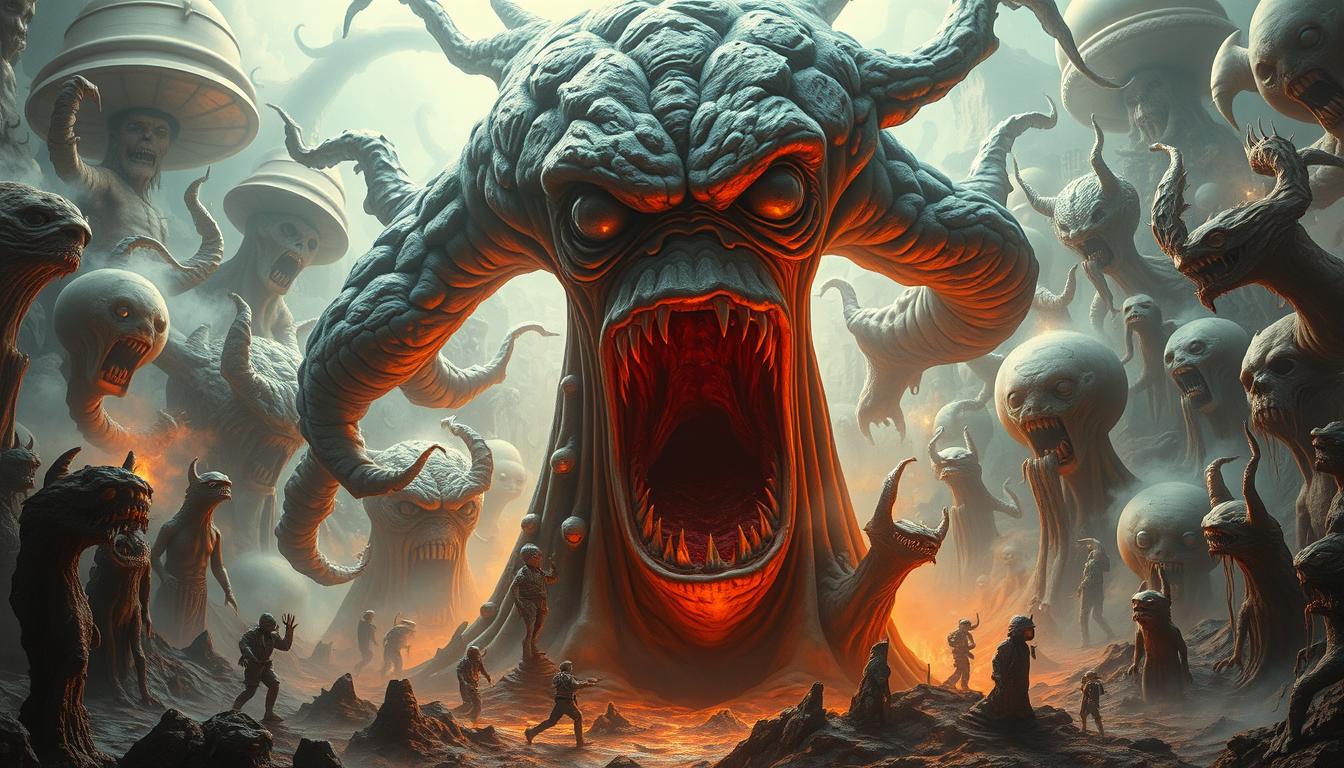
Unusual phobias might sound like something from a horror movie, but they’re real and deeply personal struggles. People fear things like peanut butter sticking to their mouth (arachibutyrophobia) or making calls (telephobia). These fears can really disrupt daily life.
Strange fears like mageirocophobia (fear of cooking) or globophobia (dread of balloons popping) show how the mind twists harmless things into triggers. Even simple things like bathing (ablutophobia) or sitting (kathisophobia) can cause panic. These phobias are not just quirks; they are diagnosable conditions rooted in trauma or anxiety.
This article looks at fears like nomophobia (fear of losing a phone) to xanthophobia (avoiding the color yellow). We explore how these irrational fears shape lives. We see why even the weirdest fears matter, from social anxiety to health risks like somniphobia (fear of sleep). Let’s explore the unexpected world where everyday objects become phobia triggers.
Understanding Phobias: A Quick Overview
A phobia is a strong fear that gets in the way of daily life. It’s often seen as an anxiety disorder. When someone has a phobia, they might sweat, tremble, or have panic attacks.
These symptoms can make simple tasks hard. People with phobias might avoid things they used to do easily.
In the U.S., about 30% of adults deal with anxiety disorders. Specific phobias affect 3-15% of people. Symptoms can include a fast heartbeat or feeling sick.
The brain’s amygdala gets too excited. This makes people feel like they’re in danger, even when they’re not.
Therapy can really help people manage their phobias. Starting treatment early can make a big difference. It helps people do more in their lives and work.
The Most Common Phobias
Many people struggle with common fears like arachnophobia and acrophobia. Arachnophobia, or the fear of spiders, is very common. About 12.5% of U.S. adults will face a specific phobia at some point, with women more likely to have these fears than men.
Acrophobia, or the fear of heights, causes panic in open spaces. Claustrophobia, on the other hand, makes tight spaces unbearable. Social phobia, often linked to glossophobia, makes public speaking a huge stress for 77% of people.

Some fears have evolutionary roots. Early humans were wary of venomous spiders and dangerous cliffs, which helped them survive. Social phobia comes from the fear of being judged in public.
Symptoms can range from sweating to full panic attacks. Yet, many people avoid seeking help. Therapies like exposure therapy or CBT can help, but only a few seek them out.
Cultural differences also play a role in which fears are more common. For example, blood phobias are common in some areas, while supernatural fears are more prevalent in others. Knowing about these common phobias is a good starting point before diving into rarer fears.
Exploring Weird Fears
Imagine fearing something as simple as peanut butter sticking to your mouth or seeing a string. These bizarre phobias might seem silly, but they’re serious for those who have them. For example, arachibutyrophobia makes people panic at the feel of peanut butter. On the other hand, linonophobia causes strange anxieties just by thinking about string. These unusual fears show how our brains can turn everyday things into sources of intense fear.

These weird phobic responses often come from past traumas or overly sensitive fear systems. For instance, someone with linonophobia might stay away from crafts or even friends who wear scarves. Those with arachibutyrophobia might struggle with food choices, making meals with others stressful. These phobias might seem odd, but they really affect people’s lives, showing that fear can be very broad.
Mental health experts say these unusual fears have the same roots as more common ones. Understanding this can help reduce stigma, making those affected feel less judged and more supported.
Today, treatments like exposure therapy or CBT can help change these fears. But first, we need to show compassion for even the most unusual fears. Remember, a fear of string or sticky snacks is not just a joke—it’s a real challenge for some.
Uncommon But Real Phobias
Everyday things can cause intense fear in people with rare phobias. For example, omphalophobia makes belly buttons terrifying. People might even cover their own belly button to avoid seeing it.
Chaetophobia makes hair, human or animal, a source of fear. Even mirrors can be terrifying for those with eisoptrophobia. They fear their reflections might show something scary.

Ablutophobia makes showering impossible, causing social problems. Nomophobia is the fear of losing a phone, showing how modern life creates new fears. These strange phobia examples show how common items can trigger fear.
Trypophobia, for instance, causes a strong fear of clustered holes. It’s not just dislike; it’s a fight-or-flight response. Over 19 million Americans face such phobias, proving they’re not rare.
Phobias like globophobia (fear of balloons) or rhytiphobia (fear of wrinkles) can disrupt daily life. Cognitive-behavioral therapy helps many, but stigma often delays treatment. These conditions remind us that even the strangest fears deserve understanding, not judgment.
The Impact of Phobias on Daily Life
Phobias affect every part of life, making simple tasks hard. For example, ergophobia, or the fear of work, can stop people from going to meetings or getting promotions. This fear isn’t just in their heads; it changes their careers, relationships, and health.
In the U.S., over 9% of adults deal with phobias every year. Half of them say it really messes with their work or school life.

Even small phobias can be big problems. Emetophobia, or the fear of vomiting, might keep someone from going to parties. Amaxophobia, or the fear of cars, can stop someone from traveling. And globophobia, or the fear of balloons, might mean missing out on birthday celebrations.
These fears make people change their lives, often by staying alone. It’s hard to keep friendships when fear tells you what to do.
Getting help for phobias is key. Cognitive-behavioral therapy (CBT) works for 60-80% of people. But if not treated, phobias can last a long time. The National Institute of Mental Health says 19% of adults will face a phobia at some point.
Phobias also affect families, workplaces, and communities. A 2023 study found 30% of people with phobias also have depression. But there’s hope. Early treatment can help reduce panic and get routines back on track. The first step is to understand how phobias affect us.
Strange Fears From Around the World
Cultural phobias show how different societies fear things in unique ways. In Japan, Taijin Kyofusho makes people anxious about offending others. This fear comes from a culture that values harmony and modesty.
In Southeast Asia, Koro is a fear of genital retraction. It reflects historical or environmental worries specific to the area.
Global phobias also vary due to cultural anxieties. For example, some Indigenous cultures fear spirits tied to nature. Modern cities might worry about technology failures.
These differences show how beliefs and traditions shape our fears. Religious practices or past traumas can make certain fears more common in certain places.
Learning about these fears can help reduce stigma. Phobias like Haphephobia (fear of touch) or Pogonophobia (fear of beards) might seem strange elsewhere. But they make sense in certain cultures.
It’s important to have mental health approaches that understand these cultural differences. Exploring these stories teaches us that fear is a shared human experience. It’s shaped by our environment and values.
Famous Personalities and Their Phobias
Even stars face celebrity phobias that surprise fans. Oprah Winfrey, for example, has a fear of balloons. She told O Magazine in 2013, “They remind me of gunfire.” This shows that no one is immune to fear, no matter their success.
“I can’t handle the noise or the way they move,” Oprah explained about balloons.
Kylie Jenner avoids cups with dust because of a famous people fears of contamination. She also has a fear of butterflies, which is ironic given her boyfriend once gave her a butterfly necklace. Dax Shepard’s wife is afraid of touching pool water, fearing pruney fingertips. These star phobic disorders are both bizarre and deeply personal.
Morgan Freeman avoids avocados because he fears choking on their pits. Tyra Banks panics near dolphins, and DJ Khaled avoided flying for a decade. Celebrities like Kim Kardashian won’t touch belly buttons, and Justin Timberlake sweats around spiders. Even actors like Nicole Kidman can’t enter rooms with dead butterflies.
These stories show that public figure anxieties are as real as everyday worries. Stars like Jennifer Aniston (fear of flying) and Keanu Reeves (fear of darkness) share their struggles. By doing so, they help reduce stigma and show courage is about moving forward despite fear.
Overcoming Phobias: Methods and Treatments
Phobia treatment offers hope for those struggling with overwhelming fears. Athena Care in Tennessee provides therapy for phobias. They help individuals address their fears through proven methods.
Cognitive-behavioral therapy (CBT) and exposure therapy are top choices. CBT reduces symptoms in 70% of cases. These approaches teach tools to manage anxiety and reframe negative thoughts.
Exposure therapy gradually exposes people to feared situations. For example, facing public speaking or spiders in controlled settings. Virtual reality is now used to simulate scenarios, making practice safe and effective.
Medications like citalopram may help alongside therapy. Though they’re often a short-term solution.
Overcoming fears doesn’t require waiting for a crisis. Mindfulness and breathing exercises can calm panic during moments of distress. Support groups also provide community and strategies to build confidence.
The American Psychological Association recommends limiting news exposure. Seeking trusted connections can ease uncertainty-related stress.
Self-help groups and online resources offer guidance. But professional help ensures personalized plans. Avoid relying on alcohol or drugs—studies show 20-30% of anxiety sufferers misuse substances, worsening mental and physical health. Therapists guide clients toward lasting change.
“Facing fears step by step can rebuild control over daily life.”
Modern techniques like VR exposure therapy show strong results. Even longstanding phobias, like scopophobia (fear of being watched), improve with tailored therapy. Early intervention prevents avoidance habits from taking root, protecting relationships and work performance.
Conclusion: Accepting and Understanding Phobias
Accepting phobias starts with seeing things from others’ perspectives. Phobias like the fear of fears themselves show how anxiety can be endless. Understanding these fears helps break the cycle of shame.
Compassion begins with recognizing that even rare phobias, like the fear of peanut butter sticking to the mouth, affect people. This shows that phobias are real and impact lives.
Some phobias have funny names, like the fear of long words. But their effects are serious. Phobia compassion means we can laugh at our quirks without making fun of others’ pain.
Support groups and therapy, like CBT, offer real help for those struggling. They help people overcome avoidance behaviors.
Mental health awareness shows that 10% of Americans fear the number 13. This data highlights how common anxiety disorders are. Even the fear of losing phones shows how phobias change with modern life.
Sharing stories or discussing DSM-5 classifications can help reduce stigma. This shows that phobias are treatable conditions, not weaknesses.
By valuing phobia acceptance, we can support those managing symptoms. Together, we can create a world where fear sparks kindness, not control.