Human body oddities often surprise us. A storm might make your knees ache, or a smell remind you of childhood. These are clues to abilities far beyond the ordinary.
From sensing weather shifts to rare traits like seeing 100 million colors, your body hides secrets. Scientists are just starting to uncover them.
Take the 1% of people who thrive on just six hours of sleep due to a DEC2 gene mutation. Tetrachromats, with four color receptors, see ten times more shades than most. Even common sensations like a sudden chill before rain or a scent unlocking memories are proof of strange body abilities we rarely notice.
A 2012 study showed wet hands improve grip on damp objects—proof of built-in survival tricks. While 90 million Americans snore, proving everyday oddities mix with rare talents. This article explores these amazing body functions, revealing how evolution shaped abilities like the Bajau’s deep diving or Tibetan high-altitude survival.
Your body’s unusual human capabilities are closer than you think.
The Body’s Incredible Adaptability
Your joints aching before a storm isn’t just a myth. Environmental bodily responses like joint pain signal the body’s built-in weather forecast system. Orthopedic surgeon Robert Tait explains, “When a storm front moves in, the atmospheric pressure drops. Major joints’ sensory nerve endings register a relative increase in joint fluid pressure, resulting in increased pain.”
“This isn’t just a myth—it it’s a real adaptive body function,” says Tait. “It shows how our bodies sense and react to invisible environmental shifts.”
From skin to skeleton, your body constantly evolves. Skin sheds 1.5 pounds yearly, renewing entirely every month—a physical adaptation to stay protected. Babies start with 350 bones but fuse into 206 by adulthood, optimizing movement through growth. Even the 23-foot small intestine’s length? A structural body adaptation mechanism to maximize nutrient absorption.
At high altitudes, red blood cells multiply to carry oxygen better. Sweating glands in feet release up to a pint daily, cooling you in heat. These changes aren’t just random—they’re survival strategies honed over millennia. Next time your knees ache before rain, remember: your body’s been quietly adapting long before the weather app.
Uncommon Sensory Abilities
Unusual human senses often surprise us. Think about how a scent can instantly bring back a vivid memory. Scientists call this the “Proustian phenomenon.” Maria Larsson, a neuroscientist, says our noses act as time machines. They link smells to emotional memories through brain pathways.

About 4% of people have strange sensory abilities like synesthesia. This is when senses blend, like hearing colors or tasting words. Research shows this might come from more connected brain pathways. Blind individuals can even “see” shapes through echolocation, using sound reflections to navigate.
Experts like Daniel Kish can detect objects up to 30 meters away. This skill shows how sound can help us sense our surroundings.
Some people’s bodies react in unique ways. For example, light sensitivity during migraines is linked to healthy ganglion neurons. This shows how pain and sight are connected. Even infants under four months can link colors to shapes, a unique bodily sensation that fades as they grow.
These abilities show the brain’s hidden power. Every sniff, sound, or sensory mix opens up a world beyond what we see. It’s a reminder of human complexity.
The Fascinating World of Reflexes
Our bodies have special ways to protect us without us even thinking about it. When danger comes, our body acts fast with the “fight or flight” response. This response sends adrenaline, stopping digestion to power our muscles.
This is why some parents can lift cars in emergencies. It shows how our body puts survival first.
Some reflexes can even surprise scientists. For example, the diving reflex slows a child’s heart when their face touches cold water. It helps save oxygen.
The hypnic jerk, a sudden muscle spasm during sleep, also alerts us to danger. These reflexes show how evolution has protected us.
Newborns hold onto objects because of the palmar grasp reflex. This reflex is a leftover from our ancestors’ survival needs. Even the knee-jerk test in doctor’s offices has a long history.
It started in 1875 with Wilhelm Erb’s reflex hammer. His work showed how these reactions can reveal health problems, like spinal cord issues.
From ancient survival to modern medicine, our body’s automatic responses are amazing. They show how nature has designed us to be efficient and safe.
Unique Skin Characteristics
Your skin does more than just protect you—it’s a master of strange skin phenomena. Take those pruney fingers after a swim. This wrinkling is a clever skin adaptation. Scientists believe it helps us grip wet surfaces, like tire treads channeling water.
It’s a survival trait from our ancestors who needed steady footing on slick terrain.

Unusual skin reactions also reveal hidden biology. Goosebumps, for instance, are leftovers from when humans had thicker fur. When cold or startled, muscles tighten, making hairs stand up—a reflex to trap air for insulation.
Even rarer traits like dermatographia exist, where skin reacts to touch by swelling into raised lines, like invisible handwriting.
Emotions leave their mark too. Flushing cheeks when embarrassed or pale skin under stress show how skin mirrors inner states. These unique dermatological features aren’t just quirks—they’re clues to our evolutionary past.
Consider how some people’s skin darkens in sunlight, a natural sunscreen, or the 1,000 nerve endings per square inch that let you sense a mosquito’s landing.
Even everyday details matter: your skin sheds 30,000 cells a minute, yet regenerates every 28 days. These strange skin phenomena remind us that every wrinkle, blush, or shiver tells a story about how your body adapts, communicates, and endures.
Your Mind-Body Connection
Researchers at Northwestern University found something amazing. They discovered your heart can react to things before they happen. When people saw random images, their heart rates went up before they saw the pictures.
This shows there’s a secret link between our minds and bodies. Scientists are working hard to understand it.
Things like blushing or getting the chills show how our thoughts affect our bodies. Anxiety can make our muscles tight, while relaxing can lower blood pressure. This is a way our minds control our bodies.
Biofeedback therapy helps people control their heart rate or stress hormones. It shows our brains can even control things we think are automatic.
The placebo effect also shows how our minds and bodies are connected. Thinking a sugar pill is medicine can really help us heal. It can lower inflammation or reduce pain.
On the other hand, stress can cause stomachaches or headaches. This shows how our emotions can affect our health. It proves our minds and bodies are connected in a big way.
Learning about this connection can help us get healthier. Practices like meditation or deep breathing can calm our nerves or boost our immune system. The study of how our minds and bodies work together is ongoing. But one thing is clear: our thoughts and bodies are always working together.
Strange Medical Conditions
Human bodies sometimes act in ways that defy explanation. Unusual medical conditions like Arnold’s Cough Syndrome prove this. This rare bodily disorder triggers violent coughing when ears are touched. Medical experts are unsure of its cause, but suspect nerve pathways between the ear and throat.
“I’ve been diagnosed with fibromyalgia and am on a heavy dose of gabapentin… the coughs aren’t nearly as bad now.”

Foreign Accent Syndrome (FAS) changes how people speak overnight. A stroke or brain injury can cause this. Rare bodily disorders like this often affect women, usually between 25–49 years old. One case saw a Japanese speaker suddenly using Korean intonations.
Strange syndromes like Alice in Wonderland Syndrome warp how we see things. Sufferers see objects as shrunken or enlarged, often linked to migraines. Other bizarre health phenomena include trimethylaminuria, where the body smells like fish due to a faulty gene. This can lead to isolation, causing anxiety and depression.
Proteus syndrome causes bones and tissues to grow too much. Historical figures like Joseph Carey Merrick (the Elephant Man) had this. Even rarer is fatal familial insomnia, where sufferers can’t sleep, leading to organ failure. These cases show how fragile our bodies are and how much science has to learn.
Bizarre Body Functions
Brain freeze—a sudden headache after biting into an ice cream cone—is a common yet puzzling strange body processes. This weird bodily functions occurs when cold triggers blood vessels in the roof of the mouth to rapidly expand, sending pain signals to the brain. Scientists are unsure of the exact cause, but it shows how our bodies can adapt.
Another unusual physical reactions is the hypnic jerk: that sudden jolt as you drift to sleep. Up to 70% of people experience this odd physiological responses, possibly due to the brain misfiring signals during relaxation. Hiccups, too, remain a mystery—spasms of the diaphragm that may have evolutionary roots in fetal breathing practice.
“I woke up speaking Mandarin fluently after my coma,” said Ben McMahon, a teen who baffled doctors with his sudden linguistic ability. Such rare cases highlight how little we understand about the brain’s hidden capacities.
Even everyday functions like daily gas (13–21 releases) or 1,000 species of skin bacteria are part of the body’s normal but weird bodily functions. These quirks, from eye floaters (strings in eye fluid) to sleep paralysis (awakening paralyzed), affecting 8% of people), show how the body’s systems work—and sometimes malfunction—in surprising ways. While unsettling at times, they’re proof of life’s complex design.
The Myths and Realities of Human Strength
When danger strikes, our bodies can tap into crisis strength responses beyond what we normally do. Stories of parents lifting cars or breaking free from restraints show how superhuman strength can appear in emergencies. It’s not magic—it’s our body’s response to adrenaline.
Adrenaline surges in emergencies, disabling non-essential functions like digestion. It redirects energy to our muscles. But these moments are rare, as our brain usually limits extreme physical abilities to avoid muscle damage.
Despite science, myths linger. Police reports and court cases show instances of superhuman strength during arrests. In Phoenix, 2017, a man named Muhammad Muhaymin died after officers claimed he resisted with “superhuman strength,” leading to a $5M settlement.
Studies show these claims often reflect racial biases. Research found white participants more likely to associate untapped bodily power with Black individuals. This echoes historical stereotypes from films like *The Birth of a Nation*. These stories ignore biology and amplify harmful prejudices.
While we can’t maintain extreme physical abilities every day, our bodies have hidden reserves. Crisis situations briefly unlock these limits, but myths distort these rare events. Understanding this balance—science vs. stereotype—shows how our strength is shaped by biology and perception.
The Body’s Natural Regeneration Powers
Did you know your body fixes itself every day using natural healing powers? Cells replace old parts without you noticing. For example, the liver can grow back up to 25% of its size after injury. This shows how the liver’s
Skin is another example of self-repair mechanisms. It sheds and rebuilds itself every 27 days. Even bones can heal after a break, following a blueprint inside your body. While we can’t grow back limbs like some animals, our bodies work hard to repair damage.
Children under 12 can even grow back fingertip tissue, a skill we lose as we get older. Scientists study animals like flatworms to learn more about human healing. They’ve made progress, like growing bladders and windpipes in labs. What you eat and how much you sleep also helps your body heal.
Unusual Body Experiences
Ever felt your joints throb before a storm or heard a bang as you fell asleep? These strange body sensations aren’t just tricks of the mind. Science reveals they come from how our brains handle signals.
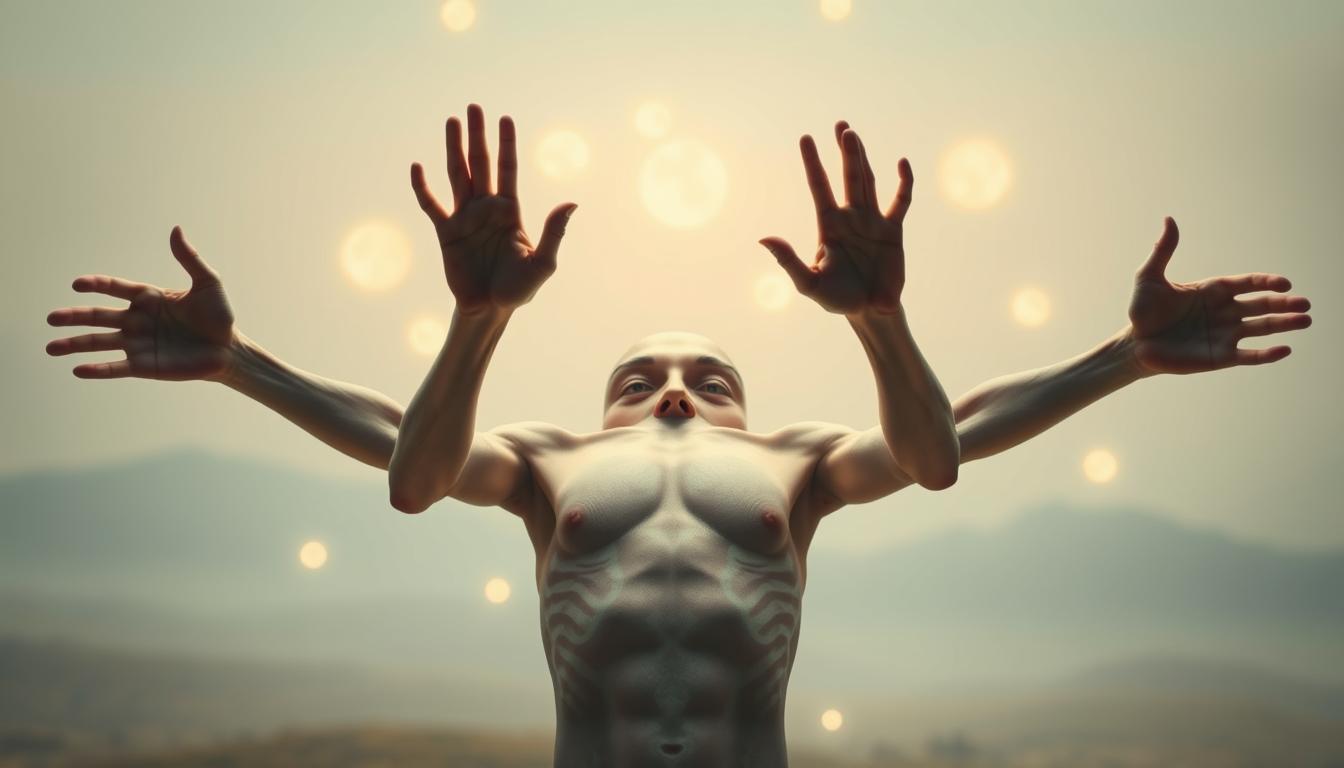
Out-of-body experiences (OBEs) are when people feel like they’re floating or flying. Neuroscientists say this is linked to the brain’s temporoparietal junction (TPJ). Damage here can cause illusions, like seeing a “double” of yourself or feeling like you’re sinking into the ground.

In the 1950s, scientists did experiments that made patients feel like they were flying or leaving their bodies. One person even described a two-stage OBE where their “double” hovered before disappearing. These unusual physical feelings also include phantom phone vibrations or the creepy crawl of formication—a sensation of bugs on skin with no cause. Even déjà vu, that eerie “been here before” moment, may result from brief brain misfires.
About half of us have eyelash mites, but that’s just one of many quirks. While most weird bodily experiences are harmless, persistent symptoms like unexplained numbness or sudden weakness should prompt a check-up. The brain’s complexity means some odd physical phenomena remain unexplained, yet most are proof of our nervous system’s remarkable adaptability. Next time your body acts odd, remember—it’s often just your brain doing what it does best, puzzling you while keeping you alive.
Human Body Oddities in Pop Culture
From movies to museums, body oddities in media have long fascinated us. Shows like Breaking Bad and Westworld often show unusual human abilities in entertainment. They mix real facts with fiction.
For example, synesthesia, where senses mix, is real and affects 5% of people. But stories often make it more dramatic. The Mütter Museum shows real oddities, like an eight-foot colon or hairballs from teens. It turns pop culture body phenomena into real history.
Human curiosities have drawn crowds for centuries. Joice Heth’s 1835 exhibit and performers like General Tom Thumb were global stars. By the 1940s, strange human capabilities in fiction started to outshine live shows with TV and films.
Even today, movies like The Fantastic Mr. Fox and books like Frankenstein use rare traits for exciting stories. Reality and myth meet here. While 1 in 2,000 births have unique conditions, media often exaggerates.
The Mütter’s tapeworm, longer than a giraffe, or the Vrolik Museum’s cyclopes specimens show truth is stranger than fiction. Next time you watch a thriller or visit a museum, remember: our bodies hold wonders—and warnings—beyond the screen.