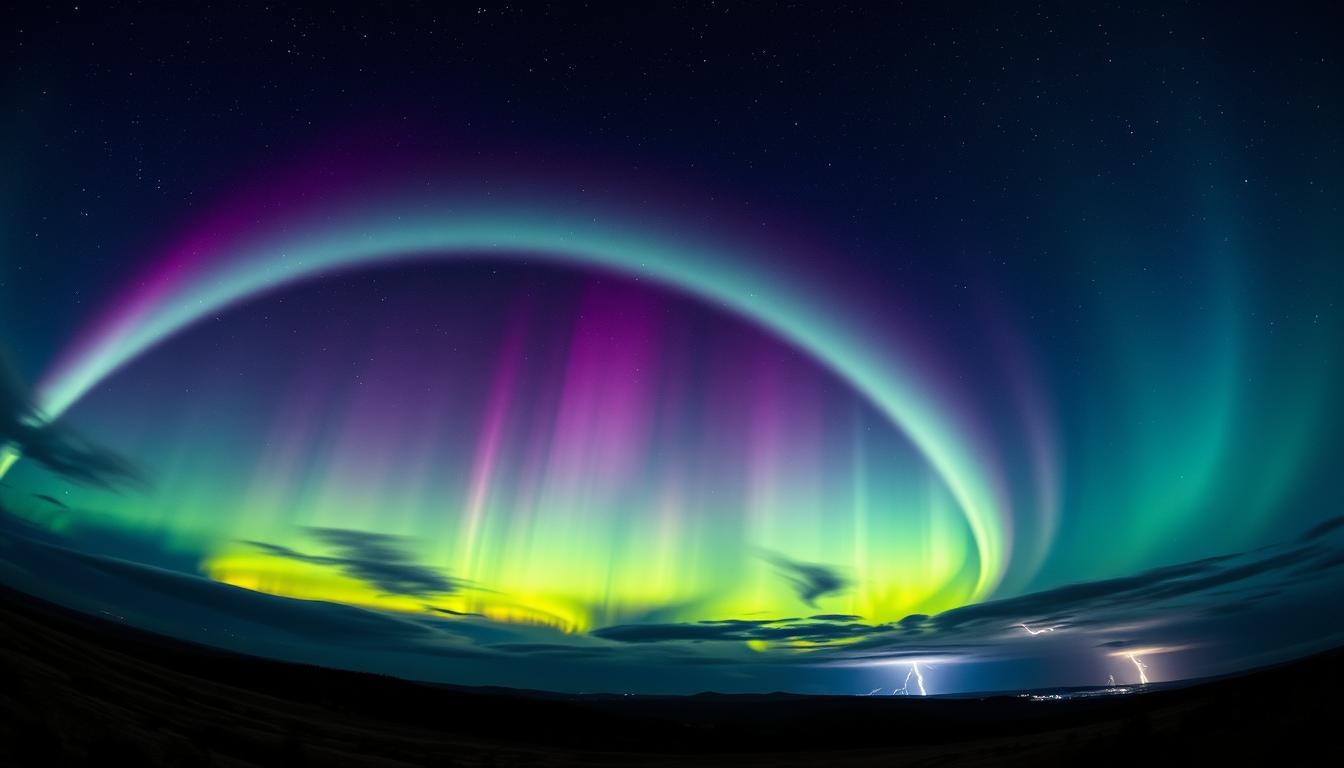
Imagine seeing neon-green auroras in Finnish Lapland or fire rainbows in Los Angeles. These rare phenomena in the sky are real and happen all over the world. From glowing clouds near the poles to lightning in Venezuela, unusual weather events make every day special.
In the U.S., there are wonders too. Like the huge hailstone in Vivian, South Dakota, or the supercells of Tornado Alley.
These atmospheric spectacles don’t need telescopes or space trips. A clear view or a lucky sunset can show you a green flash or a double rainbow. Whether it’s frost flowers in Hokkaido or fogbows near water, these sky wonders are waiting for you.
From the U.S. Great Plains to Arctic regions, every place has its own marvels. They’re just waiting to be found.
Understanding Rare Atmospheric Phenomena
Rare sky events like the Firefall at Yosemite’s Horsetail Fall or the glowing St. Elmo’s Fire during storms form under precise atmospheric conditions. These unique sky displays rely on factors such as sunlight angles, ice crystal formations, and temperature layers in the atmosphere. Scientists study these interactions to decode how fleeting wonders like moonbows or the green flash at sunset emerge.
Horsetail Fall’s fiery glow each February depends on clear skies and the sun’s exact angle melting winter ice. St. Elmo’s Fire appears when storm clouds generate electrical fields, ionizing air near tall structures. These weather phenomena causes vary, from seasonal shifts to localized atmospheric changes. For example, moonbows form when moonlight refracts through mist, mirroring rainbows but with fainter hues.
NOAA’s weather balloons—launched twice daily—reach 20 miles high to track atmospheric conditions. Data from these flights explain how hole punch clouds form when aircraft disrupt supercooled droplets. Even lightning sprites, seen above thunderstorms, stem from charged interactions in the mesosphere. Each event reveals how Earth’s atmosphere bends light, freezes vapor, or electrifies air to create these marvels.
Spotting rare sky events means watching for clues like storm activity or seasonal timing. From ball lightning’s mysterious bursts to green flashes at dawn, these displays remind us how atmospheric science turns ordinary skies into extraordinary moments.
Types of Rare Sky Events
Nature’s sky shows come in three main types. Unusual cloud formations like mammatus clouds—those pouch-like clouds hanging below storm clouds—often signal dramatic weather. Lenticular clouds, shaped like flying saucers, form near mountains and are easy to mistake for UFOs. Look up: the sky’s canvas holds wonders like these.

Light refraction in sky creates dazzling displays. Sun dogs—bright spots near the sun—form when ice crystals bend sunlight. Rainbows aren’t the only show; fogbows (rain’s ghostly cousin) or green flashes at sunset are rare treats. Atmospheric optical phenomena like these turn ordinary light into extraordinary art.
Electric sky events light up the night. Auroras paint the Arctic with ribbons of green and purple. Sprites—jagged red flashes above thunderstorms—are visible only in remote areas. These electric displays remind us the sky isn’t just silent—it crackles with energy.
Spotting these events takes patience. Apps like SkySafari can guide you to the right time and place. Remember, even rare phenomena follow patterns. Keep your eyes peeled—next time storm clouds gather, you might glimpse a cloud formation no camera could fully capture.
The Science Behind Atmospheric Spectacles
Light refraction science reveals the magic of rainbows and halos. Sunlight breaks into colors as it bends through raindrops, creating rainbows at 42-degree angles. Ice crystals in thin clouds refract light into 22° halos or sun dogs, showing how weather physics brings beauty to life. These wonders aren’t magic; they’re physics in action.
“Sky phenomena explanations often start with light’s journey through air and particles,” researchers say. This dance of optics explains why sunsets turn red. Rayleigh scattering filters blue light, leaving red hues dominant at dusk.
Temperature gradients in weather physics create mirages or the Novaya Zemlya effect. Sunlight bends over cold air, making the sun “rise” early. Pollution or dust changes colors too—smoke tints sunsets red, while Sahara dust turns skies hazy white. These effects depend on light interacting with particles at precise angles.
Ice crystal orientation determines halo size. Small crystals make 22° halos; larger ones create 46° rings. Even green thunderclouds hint at storm severity, though their exact cause is debated. Every shimmer or hue is a clue to atmospheric science, blending light refraction science with Earth’s ever-shifting air.
Historical Sightings of Rare Sky Events
For thousands of years, humans have documented historical atmospheric phenomena. They turned the sky into a canvas for both wonder and fear. From ancient scrolls to 19th-century diaries, famous sky event sightings show how weather history sparked human curiosity.
The Brocken spectre, named after Germany’s Harz Mountains, was first seen in the 17th century. Alexander of Aphrodisias described a dark band between rainbows in AD 200.
Some events left lasting impressions. The Great Comet of 1882 was so bright, it could be seen in daylight. A century later, the 1913 Great Meteoric Procession lit up Canadian skies with fireballs, leaving astronomers puzzled.
Cultural interpretations of these events varied. Northern lights were seen as spirits in Norse lore. Medieval Europeans believed sun dogs were omens. Even the 1950 Chinchaga wildfire turned the Moon purple, linking weather history to optical marvels.
Today, science tries to understand these mysteries. Halley’s Comet, last seen in 1986, will return in 2061. This reminds us that historical atmospheric phenomena connect ancient skies to today’s telescopes. Each event, from eclipses to comet tails, reflects humanity’s ongoing quest to grasp the heavens.
Navigating Your Viewing Experience
Timing is everything when it comes to rare sky events. Noctilucent clouds shine brightest in summer. Green flashes appear at sunrise or sunset, needing a clear horizon. Keep an eye on seasonal sky events calendars for auroras and meteor showers.
Plan your trips during the best times. Winter is great for diamond dust halos, and spring for lenticular clouds near mountains.
Find the best spots for atmospheric wonders. Alaska or Maine are perfect for auroras. Mountain areas like Colorado have lenticular clouds. Coastal spots are great for mirages.
Polar regions are best for nacreous clouds during twilight. Even city parks can have sundogs or moonbows if it’s dark.
Use apps like SkyView to track events. Dress warmly for winter and use red flashlights to keep your night vision. Check out NASA’s Night Sky Network for local astronomy events. Remember, patience is key for rare sightings.
Seasonal events like summer’s circumhorizontal arcs or winter’s sun dogs happen regularly. Don’t miss the 2024 Standard Chartered Weather Photographer of Year deadline (June 18). Every season has its own sky wonders to discover.
Technology and Sky Phenomena
Modern tech makes rare sky wonders easy to see. Sky phenomena apps like Aurora Forecast and My Aurora Alerts alert you to auroras. They use solar wind data to predict when to watch.
Use weather prediction tools like NOAA’s Space Weather Prediction Center. It tracks solar activity and cloud cover. This helps you find the best time to see the sky.
Smartphones with night modes can now take photos as good as DSLRs for northern lights. For static scenes, use long exposures (15-30 seconds). For quick events, take rapid bursts. Apps like Star Walk 2 help find and capture celestial events.

“The grey patches in auroras, linked to STEVE’s unique light signatures, reveal chemical reactions we’re studying,” researchers say.
Rare weather tracking tools like AllSky cameras and NASA’s Global Lightning Dataset find hard-to-spot events. Apps like Dark Sky help find clear skies. These tools let you capture sky wonders from home.
Cultural Significance of Sky Wonders
For thousands of years, humans have linked sky wonders to sky phenomena in culture. The Brocken spectre, a shadow magnified by sunlight, might have inspired Bigfoot or Yeti stories. Indigenous tales, like those from the Inuit or ancient Greeks, saw northern lights as divine bridges or omens.
These weather events in mythology influenced rituals and art. They made celestial events a part of our shared memory.
Now, sky events in art spark paintings, films, and digital works. The aurora’s colors, from green to red, show up in Viking tapestries and modern movies. Social media also shares timelapses and photos of light pillars, mixing science with wonder.
Today, atmospheric wonders impact goes beyond art. Indigenous groups, like the Navajo, close Monument Valley during eclipses to honor traditions. They also guide safe viewing. Philosophies like “two-eyed seeing” blend ancestral wisdom with science, showing sky wonders connect past and present.
Safety Considerations When Observing
Safe weather observation starts with awareness. Thunderstorms often come with events like mammatus clouds or sprites. Always check forecasts before you go out.
When watching the sky, stay away from storm centers. Avoid open fields during lightning. Keep an eye on weather apps for updates.

Eye protection is key for sky events. Never look directly at the sun without ISO 12312-2 filters. For the April 8, 2024, solar eclipse, use special glasses, not regular sunglasses.
Over 30,000 cases of solar retinopathy happen each year from bad viewing. Check your glasses for cracks and throw away broken ones.
“Only ISO-certified solar filters provide life-long eye safety,” says the American Astronomical Society. Kids’ eyes are extra sensitive. Make sure their glasses fit well.
During totality, only remove glasses when the sun is fully hidden. Go back to filtered viewing right after.
For the 2024 event, places like Niagara will see over three minutes of totality. But drive carefully—distracted driving is a big risk. Bring layers for sudden cold during events like diamond dust displays. Stay informed, stay safe, and enjoy nature’s wonders.
Documenting Your Observations
Recording what you see in the sky is easy. Start a weather journaling habit by noting date, time, and location. Sketch clouds, note colors, or describe shapes—even without photos. These sky event documentation practices help spot patterns and improve future viewing chances.
“Every observation adds to the story of our atmosphere,” says Marko Riikonen, who documented rare Brocken Spectres. “Your notes could become part of atmospheric phenomena records shaping scientific knowledge.”
Join citizen science projects like the Weather Photographer of the Year. Submitting citizen science sky watching data through apps helps track cloud cover, contrails, or aerosols. Apps let users log observations anytime, with badges for 100+ submissions. Timing matters: reports within 15 minutes of satellite flyovers aid climate research.
Share photos in all directions—north, south, east, west—to help classify clouds. Even obscured skies (visibility under 75%) count. By logging surface conditions like snow or calm lakes, you support studies on phenomena like reflection glories. Your entries might help classify new cloud types, like asperitas, which gained recognition through crowdsourced data.
Influences on Climate and Weather
Watching the sky isn’t just about spotting beauty—it’s a window to Earth’s climate. Climate indicators in sky like noctilucent clouds hint at shifts in the mesosphere. These glowing night clouds, visible in summer, grow brighter as greenhouse gases rise. This shows how human actions affect atmospheric chemistry.
Polar stratospheric clouds speed up ozone hole formation by aiding chemical reactions that destroy ozone.

Atmospheric phenomena changes also reflect broader trends. The IPCC’s 2021 report links rising greenhouse gases to more extreme weather. Events like heatwaves or hurricanes now occur more often, altering weather patterns and rare events.
NASA satellites track these shifts, providing data to predict future changes. Even small particles, like those in haze or dust storms, affect how heat moves through the atmosphere.
Scientists use climate monitoring through sky events to track global shifts. Rain, snow, or squalls aren’t just weather—they’re clues. For example, increasing hail sizes in thunderstorms might signal warming temperatures altering storm dynamics.
Citizen scientists can help by reporting rare sightings to organizations like NOAA, aiding climate research. Every cloud type or storm holds a story about Earth’s changing skies.
Preparing for the Ultimate Sky Adventure
Begin your sky phenomena bucket list with sights like the Northern Lights in Norway or Puerto Rico’s glowing Mosquito Bay. These atmospheric wonders travel spots are waiting for you. Each event, from chasing the green flash to exploring New Zealand’s glowworm caves, needs careful planning for rare sky events.
Look for the best times to see these wonders. For example, winter in Iceland is perfect for auroras, and September in Australia is great for Morning Glory clouds. Booking your trip during these times can make all the difference.
Find the best destinations for sky phenomena that match your interests. For volcanic lightning, head to Kilauea in Hawaii. Stargazers should visit Ladakh or Shark Bay. Always check local guides for what you need, like tripods for photos or warm clothes for cold places.
Apps like SkyView can help you track events like the Perseids in August. Adventure is not just about luck. Plan, pack smart, and let your curiosity guide you. From Iceland’s swirling skies to Namibia’s fiery fairy circles, these moments connect us to Earth’s beauty.
Mark your calendar, pack your gear, and let the cosmos inspire your next adventure. The universe is full of secrets, waiting for you to look up and discover them.