
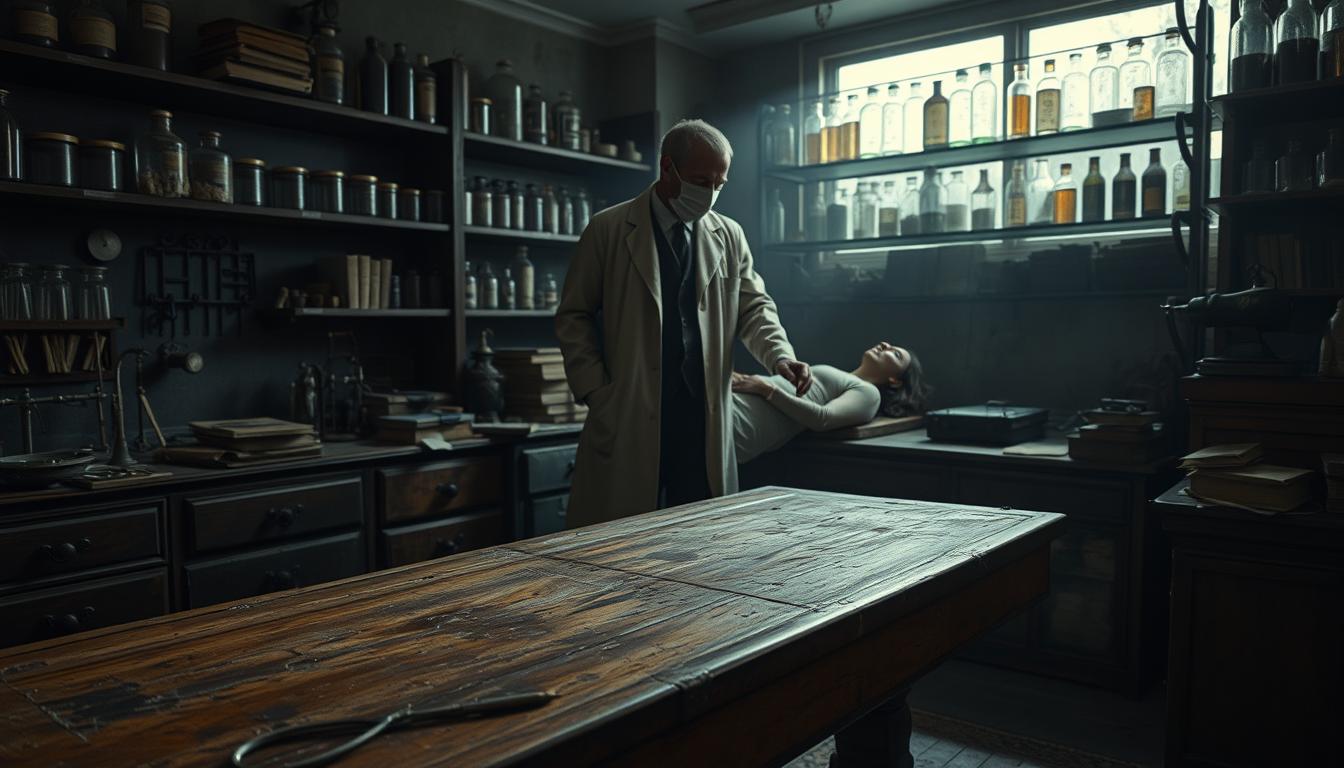
In the 1800s, doctors tried something weird: milk transfusions. They thought replacing blood with milk could help patients. But, it often ended in disaster. For example, one patient’s heart rate dropped so low, they only lived ten days after the treatment.
Looking back, some treatments seem crazy. Like using tobacco smoke enemas for cholera or putting patients in whale carcass “hotels” for arthritis. Even medicines like Mrs. Winslow’s Soothing Syrup, which had morphine and alcohol, were dangerous. And cocaine was once used for hay fever by doctors.
These medical oddities show how far we’ve come. They remind us of the risks of not knowing enough. From the 1839 England teething deaths to the Nobel Prize-winning malaria treatments, history teaches us about both progress and the dangers of incomplete knowledge.
The Role of Ancient Medicine in Society
Historical healers in ancient societies were both spiritual leaders and scientists. They used texts from Mesopotamia and papyri from Egypt to guide their work. These systems passed down knowledge through generations, combining rituals with practical treatments.
Disease theories varied greatly. Some believed in evil spirits or divine punishment, while others, like the Greeks, thought of natural causes. Hippocrates’ humoral theory, which linked health to balance, shaped Western medicine for centuries.
“Prayers were useless against plagues.” – Thucydides, 5th century BCE
Ancient Egyptian healers used honey for wounds, a method backed by modern science. They also had advanced surgical tools like bronze scalpels. Greek medical schools set standards for training, influencing today’s education.
Despite not having microscopes, ancient healers solved problems we face today. Their work shows how societies balanced tradition and innovation. Every time a surgeon uses a scalpel or a herbal remedy is proven, we honor these pioneers.
Ancient Egyptian Medical Innovations
Ancient Egyptian medicine mixed practical skills with spiritual beliefs over 3,000 years. The Edwin Smith and Ebers Papyri show their advanced techniques. They used surgery for fractures and tumors.
The Edwin Smith Papyrus is the oldest known surgical text. It talks about brain injuries and cancer, including breast cancer. It lists 62 medical cases with detailed procedures.
Pharaonic healing used tools like scalpels and forceps, seen in tomb paintings. A 4,000-year-old skull study showed early cancer treatment. Dentists used drills, and prosthetic toes made of leather worked well.
They also used herbal remedies, mixing juniper berries and honey in over 700 treatments. The Ebers Papyrus lists these.
Medical papyri covered gynecology, contraception, and pregnancy tests using barley growth in urine. They had specialized practitioners, like Peseshet, who led midwifery. Some treatments, like using moldy bread for wounds, showed early scientific ideas. But, they also used magic, like incantations, in treatments.

Egyptian medicine’s impact is seen in their anatomy studies from mummification and surgical insights. Their herbal knowledge influenced later Greek and Roman medicine. They were true pioneers in organized medical science.
Greek Medicine: Hippocrates and Beyond
Ancient Greek physicians like Hippocrates changed medicine by focusing on observation over myths. Greek medicine started around 800 BCE, focusing on proven practices. The humoral theory, key to this approach, said health came from balancing four fluids: blood, phlegm, yellow bile, and black bile.
Hippocrates’ works in the Hippocratic Corpus are valued today. He emphasized recording patient details like diet and lifestyle. Terms like diabetes and epilepsy first showed up in his writings, showing his lasting impact.
The Hippocratic Oath, focusing on ethics, is a key part of medical practice. Physical fitness was also key in Hippocratic medicine. Athletes used olive oil for flexibility and figs for energy, showing the importance of a healthy body and mind.
These early doctors moved medicine from rituals to science. Their work on clinical observation and ethics is seen in today’s medicine. Even though some ideas like bloodletting are outdated, their spirit of inquiry lives on.
Traditional Chinese Medicine Practices
For over 2,000 years, ancient Chinese healing has used yin-yang medicine and the meridian system. At its core, TCM history believes health comes from balancing qi (life energy). This balance is achieved through natural forces like earth, fire, and water.
These ideas have shaped practices we study today, like acupuncture.
Acupuncture needles aim at specific points along the meridian system. This system is thought to channel qi. Moxibustion, which burns mugwort near the skin, warms these points to boost energy flow.
The Huangdi Neijing, written in the 3rd century BCE, explains these methods. Li Shizhen’s 16th-century Bencao Gangmu lists thousands of herbal remedies that are used today.

TCM’s medicine includes ingredients like ginseng and ginger. These are stored in pharmacies with hundreds of drawers. Modern science has shown that acupuncture can help with pain relief.
But, some herbal formulas can be dangerous when mixed with Western drugs. Organizations like the ACAOM now train practitioners in this ancient tradition. They blend old wisdom with modern care.
Medieval Medicine and Herbalism
Monastic medicine flourished in medieval Europe. Monasteries became centers for healing. Monks grew herb gardens and copied ancient texts.
These places were early hospitals, helping the sick and poor. They believed in the doctrine of signatures. This meant using herbs based on their shape and appearance.
Herbal remedies grew through texts like the Saxon Leech Book of Bald. Written in AD 900, it listed plant-based treatments. Hildegard of Bingen combined herbal knowledge with humoral theory, shaping healthcare in the Middle Ages.
By the 1300s, universities like Salerno adopted Islamic medical knowledge. This expanded medical education beyond monasteries.
The Black Death hit in 1347, leading medieval healers to use herbal infusions and quarantines. Despite bloodletting, some herbal treatments worked, like honey-soaked bandages. Over 20 million died in Europe in five years.
Yet, these efforts paved the way for future scientific discoveries. Today, modern medicine values ancient herbal traditions. This shows medieval innovations had a lasting impact.
Bloodletting: A Common Practice
For over 3,000 years, bloodletting was a key part of medicine. Doctors believed it could cure many illnesses by balancing body humors. They used tools like fleams and leeches, thinking removing blood would heal.

In the 1800s, leech therapy was big, with France getting 40 million leeches a year. Famous figures like George Washington suffered from it. He lost nearly 11 pints of blood in 1799, which might have killed him. These methods lasted until studies showed they were harmful, like Dr. Pierre Louis’s work in the 1830s.
Today, we use controlled blood removal for conditions like hemochromatosis. This shows some old ideas can work if done right. Even though bloodletting seems extreme now, it has a place in modern medicine.
The Strange World of Trepanation
Imagine a time when skull boring was a lifesaver. Trepanation, the oldest known surgery, involves drilling holes in skulls. It has been practiced for 7,000 years, found in places like Neolithic Europe and pre-Columbian Peru.
These ancient surgeries left scars that show many patients lived. They used tools like flint, obsidian, or metal to treat injuries or release evil spirits. Skulls from Peru show up to 90% of patients survived, showing the skill of ancient doctors.
The trepanation history shows it was not just a local practice. It spread worldwide, even mentioned by Hippocrates and Galen. They used it to relieve brain pressure.
By the 18th century, European surgeons brought back trepanation, calling it the “trepan century.” During the American Civil War, doctors used it to clear skull fractures. Today, neurosurgeons use advanced tools, but the idea of accessing the skull remains.
Ancient doctors, without anesthesia, achieved amazing results. They showed a deep understanding of medicine, even without modern tools.
Mummification and Its Medical Insights
Egyptian anatomy discoveries started long before modern medicine. The ancient embalming process involved removing and studying organs. This gave them detailed knowledge of human biology.
By removing the liver, lungs, stomach, and intestines, embalmers honed skills that modern mummification techniques study. The 70-day process used natron salt and resins. It preserved bodies so well that today’s medical archaeology can analyze ancient health patterns.
CT scans show surprising details: arthritis, cardiovascular issues, and even tumors in mummies. A study of 21 child mummies showed how Egyptian anatomy expertise evolved over time. Younger mummies often kept organs intact, while older children underwent full evisceration.
Sites like Western Thebes and Fayoum Oasis provided clues about diseases in ancient populations. They found evidence of bone tumors or plasmacytoma.
Even tumors have ancient roots. Research on 905 Egyptian remains found malignant tumors dating back 4,000 years. The Ebers Papyrus shows they used plant-based remedies for growths—like honey and willow bark.
Though mummification aimed to prepare bodies for the afterlife, its precision preserved data about health trends. From bone sarcomas to dental abscesses, these preserved bodies are medical time capsules.
Modern scans reveal King Tut’s bone fractures, while X-rays show how priests adapted tools for precise organ removal. This blend of ritual and science highlights how mummification techniques unintentionally advanced anatomy studies. Even moldy bread applied to wounds hinted at antibacterial practices predating penicillin.
Ancient practices teach us about human biology’s timeless struggles.
Shamanism and Indigenous Healing
For thousands of years, shamanic medicine has been a cornerstone of cultures worldwide. It combines herbal remedies with spiritual healing, passed down through generations. Shamans, found in places like Siberia and the Amazon, have connected the physical and spirit worlds for over 40,000 years, as shown in ancient cave art.
Shamanic medicine uses rituals like plant ceremonies and journeys to different worlds. Indigenous healers identified plants like Ayahuasca, now studied by science. Almost 70% of those who try shamanic rituals report life-changing experiences, showing its lasting appeal.
Modern wellness trends now incorporate these ancient traditions. The Foundation for Shamanic Studies certifies practitioners blending shamanic techniques with therapies like psychotherapy. This fusion addresses mental health challenges often overlooked by conventional medicine.
Despite its long history, shamanic practices face challenges. Only 25% of academic research on the topic dates before 1950, leaving gaps in understanding. Yet, interest grows: workshops on shamanic journeying have surged, with 45% of attendees seeking solutions beyond traditional healthcare.
Today’s pharmaceuticals, like quinine from cinchona bark, reflect indigenous wisdom. As global health evolves, shamanic medicine offers holistic care—honoring mind, body, and spirit—that complements modern approaches. This ancient practice continues shaping wellness, proving timeless knowledge holds transformative power.
The Impact of Ancient Medicine on Modern Practices
Modern medicine often looks to ancient ideas for solutions. The use of willow bark for pain relief, now known as aspirin, is a prime example. Honey’s antibacterial properties, noted in ancient texts, are now used in hospitals to aid wound care. These examples highlight how ancient wisdom remains a cornerstone of progress.

When science backs up ancient treatments, we see traditional treatments validation in action. Artemisinin, a compound from Chinese herbal remedies, was discovered after 240,000 tests. Today, the WHO recommends it for malaria treatment. Yoga, used for centuries, has over 20 clinical trials confirming its benefits for back pain. These successes underscore the importance of both past and present in medical history evolution.
Over 170 WHO member states report traditional medicine’s role in healthcare. This reflects a global shift toward blending old and new.
Nature’s importance in medicine is undeniable: 40% of modern drugs come from plants studied in ancient times. The Madagascar periwinkle, once used in folk remedies, now provides life-saving cancer drugs. Hippocrates’ focus on whole-person care also resurfaces in today’s integrative medicine.
Modern labs confirm ancient insights, showing that medical history evolution is not linear. From herbal drugs to mindfulness practices, ancient methods guide today’s treatments. By honoring tradition and advancing science, healthcare becomes wiser and more effective.
Bizarre and Unusual Remedies from History
History’s medicine cabinets were filled with strange cures. Tobacco smoke enemas were used to revive drowning victims. The whale cure involved placing patients in rotting carcasses to treat rheumatism. Sir Kenelm Digby’s “Powder of Sympathy,” made from earthworms and mummy dust, was promoted to heal wounds. This shows how strange medical history often mixed myth with medicine.
Mercury was used to treat syphilis, and arsenic was in patent medicines like Fowler’s Solution. Cocaine was sold as a cure for children’s hay fever, and heroin was marketed as a “non-addictive” cough remedy. There were even remedies like crocodile dung contraceptives and mouse paste for toothaches. Ancient Romans used urine to whiten teeth, and medieval doctors prescribed “powdered mouse” for ailments. This shows how strange medical history often blurred science and superstition.
These treatments were not only ineffective but also dangerous. Mrs. Winslow’s Soothing Syrup, laced with morphine, killed infants. John Brinkley’s goat testicle implants caused fatal infections. Even Sigmund Freud praised cocaine’s “benefits,” ignoring its risks. Yet, some ancient ideas, like moldy bread’s antibacterial effects, foreshadowed modern medicine. Snake oil, once seen as useless, now has real benefits in skincare.
As modern medicine advances, these stories remind us that progress is a journey. What cures we trust today might seem odd in the future. By studying these outlandish remedies, we honor past struggles and stay humble about the science of tomorrow.