
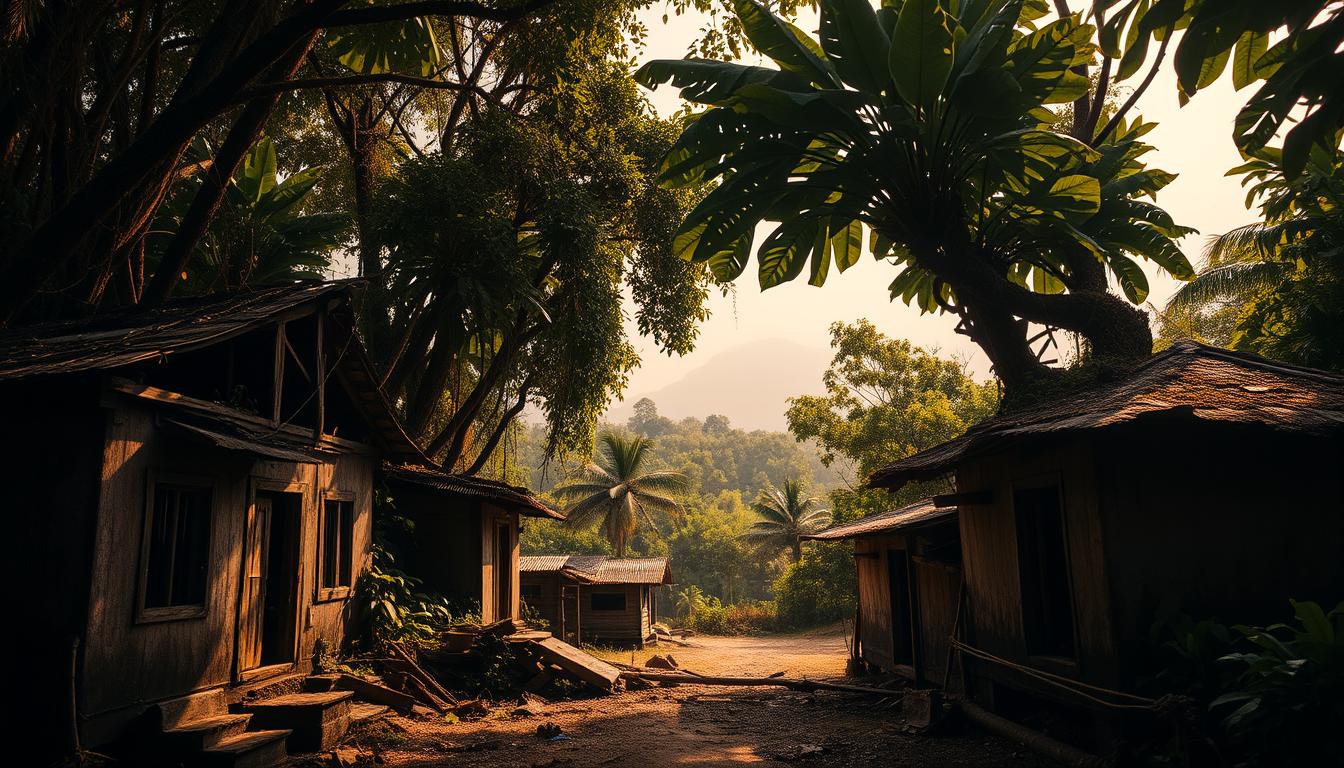
For centuries, the vanishing of ancient societies and uncontacted groups has puzzled historians and scientists. The Maya, Easter Island communities, and the Anasazi left behind grand structures but their disappearance remains a mystery. Today, over 100 isolated tribes exist worldwide, with most in Brazil, Colombia, and Peru. They face threats like deforestation and disease, showing how fragile even advanced cultures can be.
In South America, up to 200 uncontacted groups live, including the Sentinelese who reject outsiders. Brazil’s Vale do Javari reserve, covering 32,990 square miles, is home to dozens of tribes. Yet, contact often leads to disaster, like the Panará, where 250 members died within a year after first encounters. Even modern protections, like Brazil’s Funai agency, struggle to keep these groups safe from loggers and drug traffickers.
The collapse of ancient societies, like Cahokia’s 20,000 residents vanishing by 1350, often results from droughts, wars, or environmental shifts. The Easter Island population dropped to just 100 by the 1870s due to ecological collapse. Today, tribes like the Ayoreo in Paraguay face extinction as cattle ranches encroach. This article explores how these unexplained vanishings—whether ancient or modern—teach us about resilience, isolation, and the hidden histories shaping our world.
The Mysterious Disappearance of the Ancestral Puebloans
In the ancient Southwest, the Ancestral Puebloans built amazing cliff dwellings like Mesa Verde’s Balcony House. These huge stone structures were built into canyon walls. They housed hundreds in places like Pueblo Bonito. But by 1300 CE, these pueblo civilization homes were left empty, leaving a big mystery.
The Ancestral Puebloans were at their best when they had advanced irrigation and trade. But a 50-year drought starting in 1130 CE led to their downfall. By the late 1200s, a major Anasazi disappearance began. Tree rings show severe dry spells after 1276, and volcanic ash from 1257 made things even worse.
Starvation and fighting followed. Excavations at Castle Rock found skulls with signs of violence, showing a society in chaos.
“The scale of violence suggests societal breakdown,” note researchers studying mass graves with butchered bones.
As things got worse, the Ancestral Puebloans moved south to modern New Mexico and Arizona. Today, the Hopi and Zuni peoples are their descendants. But many questions remain: Did their religious rituals fail to end the drought? Why did they leave behind sacred objects? The cliff dwellings stand as silent witnesses to a civilization’s sudden end.
The Vanishing of the Roanoke Colony
In 1587, 115 English settlers arrived on Roanoke Island, part of the Roanoke Colony’s second attempt. Led by John White, they included men, women, and children. They hoped to start a new life. But when White returned in 1590, the colony was gone.
The only clue was the word Croatan carved into a post. This left behind a haunting early American mystery.
Historians think the lost colonists might have left due to hunger or conflict with local tribes. Croatan Island, 50 miles southeast of Roanoke, might have been their destination. Modern theories suggest they might have joined the Croatan or Hatteras tribes.
Excavations near Cape Creek found a 16th-century gold ring and English pottery. These finds hint at the settlers’ presence.

DNA tests started in 2007 to find ties to the colonists. Digs continue near Hatteras. The mystery remains unsolved, with clues like the Croatan clue and artifacts. Each new find brings hope, but the Roanoke Colony’s fate is America’s oldest unsolved mystery.
The Lost Cities of the Maya Civilization
The Maya civilization was a pre-Columbian civilization in ancient Mesoamerica. They built lost Maya cities like Tikal and Palenque. Their jungle ruins show a society that excelled in astronomy, math, and architecture.
But by 900 AD, the cities were empty. This left behind many Maya collapse theories. People are trying to figure out why this happened.
Lidar technology has found a lost Maya city in Guatemala’s forests. It’s called Valeriana and covers 16.6 square kilometers. It had over 6,764 structures, like plazas and pyramids.
This discovery shows how ancient Mesoamerica was once home to many people. But deforestation and drought might have made life hard for the Maya. This is similar to today’s environmental problems.
Today, deforestation is a threat to these jungle ruins. It could destroy history and ecosystems. Archaeologists say the forest could disappear in a decade if we don’t act.
The Maya collapse teaches us a lesson. Even advanced societies can collapse if their environment fails. The Maya’s story is a warning, written in stone and shadow.
The Fate of the Inuit during the 19th Century
The Fate of the Inuit during the 19th Century
The 19th century Arctic was a time of great change for the Inuit. They faced a decline in their population due to diseases brought by Europeans. This led to the disappearance of some Inuit groups from their coastal homes.

Whaling activities and diseases like smallpox put a strain on the Inuit’s way of life. The cold of the Little Ice Age made things even harder. By the end of the century, many Inuit had to adapt to new ways of living.
Today, the Inuit Circumpolar Council brings together over 180,000 people. They work to keep their culture alive despite the challenges of the past. Their story is one of survival and adaptation in the face of adversity.
The Enigma of the Taino People
The Taino were the main Caribbean indigenous peoples when Columbus encounter first brought Europeans to their lands in 1492. Their pre-colonial societies thrived for centuries. They made ceramics, farmed cassava, and had chiefs called chieftains.
Their native Caribbean culture included rituals for nature and harvests. These rituals honored gods linked to the earth.
Within decades of contact, Taino extinction loomed. Forced labor, epidemics like smallpox, and violence cut their numbers. By the 1550s, over 85% of the population had perished.
Spanish records said they “disappeared,” but modern science disputes this. It shows their culture was more complex than thought.
“The Taíno language is referred to as ‘poorly-attested’ by Wikipedia and ‘now-extinct’ by Encyclopedia Britannica.”
Despite this, Taino identity lives on. Genetic studies show 15-18% of Dominicans carry their DNA. Words like hammock and canoe came from their language.
In 2010, nearly 20,000 Puerto Ricans said they were Indigenous. They revived their culture through music and art. Their story is one of loss and hidden resilience.
The Taino’s legacy, though broken, is part of Caribbean identity today.
The Disappearance of the Bantu Tribes of Southern Africa
For centuries, Bantu migrations changed African tribal history in southern Africa. Early Bantu-speaking farmers came from the north 1,800 years ago. They mixed with or pushed out indigenous San and Khoekhoe communities.
By the 1800s, many groups had merged into bigger ethnic identities. Their unique names were lost in broader classifications. Environmental pressures and wars scattered populations, leaving only mixed-ancestry DNA behind.

Colonial disruption in the 1600s sped up this change. Dutch settlers took land from Khoikhoi herders, causing violence and a big drop in their numbers. By 1950, only a few San were left near Lake Chrissie.
Apartheid policies later forced more relocations, erasing traditional identities. Today, indigenous displacement continues: South Africa’s 2017 land reforms ignore many Khoisan claims. Their heritage is tied to “coloured” classifications, showing their struggle.
Modern efforts show resilience. Though southern African peoples like the Korana broke apart after 19th-century wars, cultural revival is underway. Genetic studies show Khoe-San lineages go back 35,000 years. Yet, legal hurdles and poverty block land restitution.
Activists fight for recognition, echoing the broader African tribal history. Their story is one of survival against shifting borders and forgotten pasts.
The Vanished Tribes of the Amazon Rainforest
Deep in the Amazon, Amazon tribes like the Kawahiva and Flecheiros live in secret. They choose indigenous isolation to survive. Brazil’s FUNAI agency says over 100 uncontacted peoples exist there.
These Brazilian indigenous groups face many dangers. Logging, mining, and diseases like measles threaten them. Measles killed 50% of the rainforest natives after contact.
Efforts to protect them include Brazil’s Puré National Park. It has “intangible zones” off-limits to outsiders. Colombia’s National Parks System has watched over isolated communities for over 20 years.
But challenges remain. Deforestation destroyed 144,000 Amazon hectares in 2017. This encroached on their ancestral lands. Now, guidelines focus on non-contact approaches to avoid disaster.
Survival International reports that many uncontacted peoples have fled threats for over 200 years. They have traveled over 700+ kilometers to stay hidden. While some, like the Yuris and Passés, briefly emerged in 1969, most prefer to stay hidden forever.
The Conundrum of the Tsimshian Tribe
The Tsimshian people once thrived in British Columbia and Alaska. Their history is filled with potlatch ceremonies, art, and a strong bond with nature. But, they faced big challenges like epidemics, forced moves, and policies that erased their culture.

Now, the Tsimshian are fighting back. They’re teaching their language, Sm’algyax, and bringing back traditional ways. Artists are using old carving methods, and they’re fighting for their land rights.
Books like Read, Listen, Tell show how stories are changing. It has 410 pages of stories from many Indigenous voices. This book helps Tsimshian activists connect with their heritage.
They’re keeping alive their number symbols and ceremonies. This shows their culture is strong and alive, proving they didn’t disappear. Their story is a global lesson: Indigenous cultures can adapt, survive, and flourish despite hard times.
The Mystery of the Hohokam Culture
For over a thousand years, the Hohokam civilization flourished in the ancient Southwest. They turned harsh deserts into fertile lands with desert irrigation. Their water engineering skills built over 1,000 miles of canals, covering 25,000 acres and supporting nearly 40,000 people.
These pre-Columbian cultures left behind ballcourts for games, detailed pottery, and adobe homes. These signs show a society that was far ahead of its time.
But by 1450 CE, the Hohokam left their cities. Reasons include archaeological mysteries like droughts, floods, and soil damage from too much water. Tree-ring data shows a big drop in rainfall after 1100 CE, and canals got clogged with silt.
By 1375, towns like Pueblo Grande had shrunk to small groups of homes.
Today, researchers study bones and soil to learn more. The Tohono O’odham and Pima peoples believe they are descendants of the Hohokam. They see the Hohokam as ancestors who adapted, not disappeared. Ancient canals in the desert sands whisper of a culture that thrived in one of Earth’s toughest places.
Lessons from Vanished Tribes: What Can We Learn?
Historical lessons from vanished tribes show us patterns of decline and survival. Archaeology teaches us that droughts and poor resource use led to their downfall. This mirrors today’s climate issues, urging us to adopt sustainable farming and water saving.
Modern industrialization risks making the same mistakes, harming ecosystems and losing traditional knowledge. This is a warning to us all.
Cultural preservation is key to survival. Tribes like the Maya and Tsimshian adapted by changing their traditions. This shows that cultural identity can survive even when politics fail.
Indigenous innovations, like Native American farming or quinine use, solve today’s problems. But, modernization often erases these systems. This threatens languages, rituals, and the balance of nature.
Today, we face similar challenges: environmental strain, social inequality, and cultural loss. Learning from vanished tribes means valuing sustainable living and protecting marginalized communities. Their stories teach us to live in harmony with nature and respect our ancestors’ wisdom.
As global challenges intensify, these lessons guide us. They help us avoid past errors and honor the heritage of those who came before.