
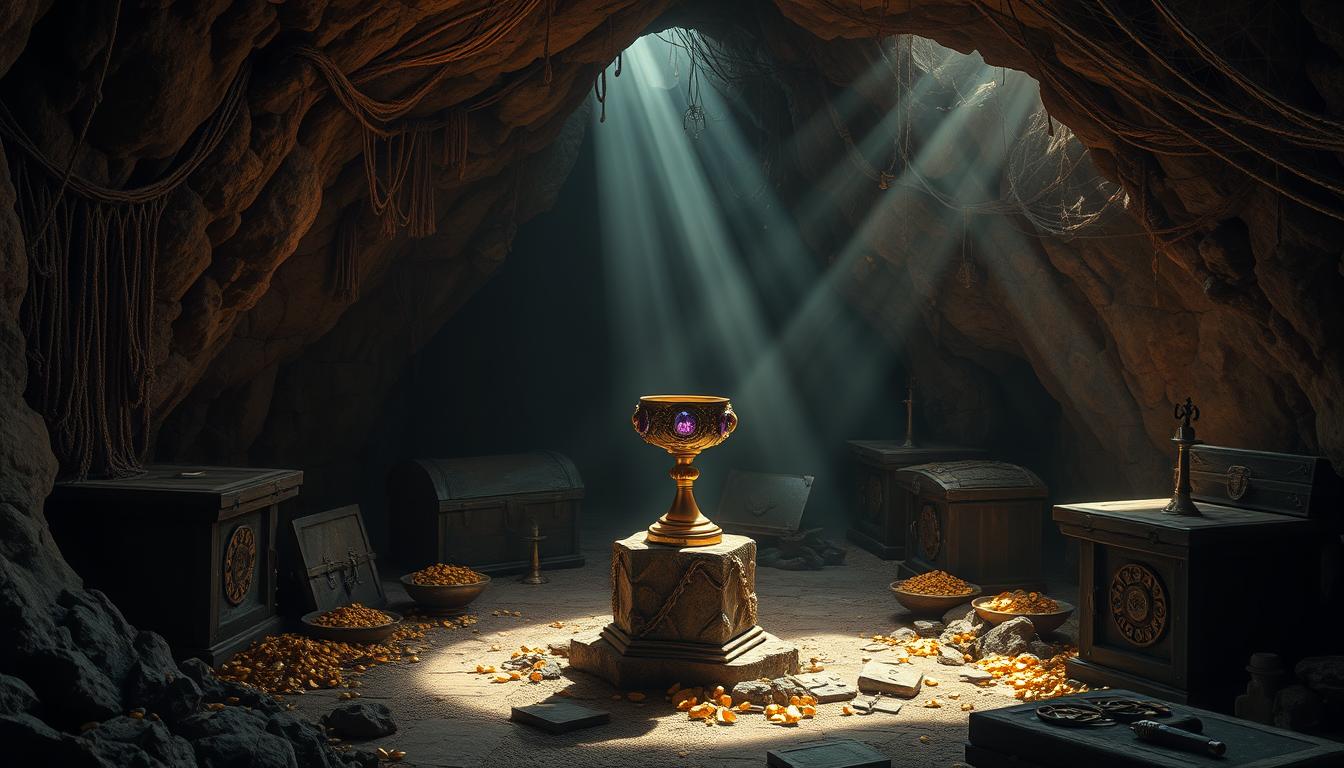
For centuries, lost treasures have fascinated people worldwide. The Menorah, taken by Romans in 70 AD, has been missing for 1,950 years. The Imperial Seal of China, made in 221 BC, vanished after the 10th century, erasing over a thousand years of history.
The Crown Jewels of England, lost in 1216, and the Scepter of Dagobert, missing after 1795, are also part of this mystery. Each treasure has its own story of hidden wealth, stolen or lost at sea.
Today, treasure hunting is more popular than ever, thanks to clues like Forrest Fenn’s buried treasure. There’s also the $5.6 billion in stolen gold said to be hidden in Lake Toplitz. The San Miguel galleon, worth $2 billion, is underwater, and the Amber Room’s billion-dollar art is missing after WWII.
From Confederate gold to Fabergé eggs, these treasures invite us into a world of mystery. Every clue is a chance to discover what’s been lost for centuries. This article dives into the enduring enigmas, blending history with the excitement of finding what’s been lost.
The Allure of Lost Treasures
From the treasure myths of El Dorado to today’s gold hunting adventures, the quest for lost wealth is timeless. Tales of valuable artifacts hidden in deserts, mountains, or at sea excite people everywhere. Each of the 50 U.S. states has its own treasure legend, from Confederate gold in Virginia to pirate treasures in Florida’s waters.
These stories are more than just tales; they shape our cultures. Movies like Raiders of the Lost Ark and books like King Solomon’s Mines show their lasting impact on our imagination.
Legends like the Lost Dutchman’s Gold Mine and the Atocha’s sunken jewels highlight our drive for discovery. Unsolved puzzles, like Thomas Beale’s ciphers or Oak Island’s booby traps, keep us searching for answers. With over 300 shipwrecks off Florida’s coast, the allure of hidden riches is undeniable.
“And some things that should not have been forgotten were lost. History became legend. Legend became myth.” — J.R.R. Tolkien
From Civil War-era gold to vanished Fabergé eggs, these mysteries capture our love for adventure and discovery. Whether it’s greed or a desire to uncover history, the quest for lost treasures connects us to our past and fuels our curiosity about the unknown.
Historical Background of Lost Treasures
From ancient times to modern conflicts, historical treasures have vanished. This happened through war, disaster, and theft. The Amber Room, stolen by Nazi forces in 1941, is a prime example of wartime looting.
Its glittering panels, now worth $142 million, were last seen during WWII. This has left a trail of mystery. The Ark of the Covenant, lost in 587 BCE, shows how ancient treasures often vanish during upheaval.

Natural disasters and human conflict often erase records of ancient treasures. The Spanish treasure fleet of 1715 sank off Florida, scattering gold worth billions today. The Gold of Tolosa, a Roman treasure from 106 BCE, was buried to evade invaders but never recovered.
Even deliberate hiding can fail. King John’s 1216 English treasure sank in a river, leaving no trace.
Political chaos also leads to loss. During WWII, up to 300 tons of Nazi gold were sunk in Lake Toplitz, Austria. Stolen artifacts like Fabergé eggs vanished during revolutions. The Knights Templar’s 1307 suppression erased clues to their legendary hoard. These stories show how war, greed, and poor documentation erase clues, turning historical treasures into enduring puzzles.
Iconic Lost Treasures in American Folklore
America’s landscapes are filled with stories of American treasures waiting to be found. The Confederate gold is one of the most famous, lost during the Civil War. Legends say it’s worth millions today and is hidden across Southern states.
The Old West treasures include the Beale Ciphers, three coded letters that hint at a mine’s riches. Only one has been solved, leaving the others as puzzles over 200 years old.
In New York’s Catskill Mountains, buried loot from gangster Dutch Schultz is the focus of modern searches. His alleged $7 million stash (now worth over $130 million) remains undiscovered. The treasure folklore of the West also includes the San Saba Mine, a Spanish treasure site near Texas, and Jesse James’s rumored $1 million in stolen gold.

Stories like John Singleton Mosby’s 1863 $350,000 gold haul or the Confederate gold from 1865 robberies blend fact and fiction. Even today, groups scour deserts and forests, driven by tales of silver mines and coded maps. Whether real or legendary, these American treasures keep dreamers chasing clues, proving folklore stays alive in every generation’s imagination.
Noteworthy Shipwrecks and Their Treasures
Spain’s Spanish galleons once carried vast fortunes across the Atlantic. Now, many lie as shipwreck treasures on the ocean floor. The 1715 Treasure Fleet, for example, lost eleven ships off Florida’s coast. This event sparked a modern boom in underwater archaeology.
Divers continue to find sunken gold and artifacts along what’s now called the “Treasure Coast.”

The San José, a Spanish warship sunk in 1708, may hold over 200 tons of gold and silver. Today, this treasure is valued at up to $20 billion. In 1989, the SS Central America yielded three tons of gold, showing maritime discoveries can change history.
Modern tools like sonar and remotely operated vehicles now help in these searches. They are changing how shipwreck treasures are found and preserved.
Efforts to find the Flor de la Mar, lost in 1511 with $2 billion in loot, show the risks and rewards. In 2008, the discovery of the Bom Jesus revealed 22 tons of copper and rare 16th-century coins. These finds remind us that shipwrecks are more than gold. They are time capsules of global trade and human ambition.
Modern-Day Treasure Hunting
Treasure hunting has changed with treasure hunting technology. Now, we use drones, LiDAR, and satellite imaging. In 2021, divers found gold coins worth millions off Florida’s coast using sonar.

Forrest Fenn’s $1 million chest story shows the risks and rewards today. Over 300,000 people searched for it, spending years and money. Technology helps find treasures, but laws are a big challenge.
Laws around the world decide who gets to keep found treasures. In the U.S., you need a permit to explore underwater in protected areas.
New tools like metal detectors and drones let more people join the hunt. Apps like TG$ use GPS and clues for a global treasure hunt. But, there are debates about respecting historical sites and Indigenous rights.
Today, treasure hunting is both exciting and responsible. As technology grows, so does the effort to protect history while discovering new things. Whether with drones or spades, the adventure is a mix of science, history, and curiosity.
Legends and Myths Surrounding Lost Treasures
Stories of treasure myths and folklore treasures mix fact and fantasy. Think of the Ark of the Covenant, lost in 586 BC, or Japan’s Kusanagi sword, lost in 1185. These tales are not just puzzles but also historical legends that shape cultures.
“History became legend. Legend became myth.” — J.R.R. Tolkien
The Amber Room, stolen in 1941, is now worth $140 million. The Beale ciphers suggest a treasure worth over $43 million, sparking debates for 182 years. The stories of Yamashita’s gold or the Montezuma hoard ($3 billion) show how greed and stories are linked.
Some myths last because of our curiosity. The lost Imperial Easter eggs, with eight missing, tell of Russia’s past. Searches for Sappho’s poems, with only 1/50th found, show how folklore treasures reflect cultural loss. Movies like National Treasure keep these stories alive, showing treasures are about identity and memory.
While treasure hunters seek mythical wealth, these tales teach us some mysteries are meant to stay. As long as stories like the lost treasure of the Incas or the Knights Templar’s gold exist, history and myth will always be intertwined.
Famous Treasure Hunters
From daring adventurers to methodical experts, treasure hunters have shaped history. Exploration pioneers like Mel Fisher changed underwater recovery. His team found the 1715 Spanish galleon Nuestra Señora de Atocha in 1985, uncovering 40 tons of gold and silver worth $450 million.
His work set standards for modern salvage experts. They now balance profit with preservation.
Robert F. Marx, a treasure recovery specialist, found 37 wrecks in the Dominican Republic and 5 near Cape Canaveral. He showed patience and technology unlock secrets. Barry Clifford found the Whydah Galley, Black Sam Bellamy’s pirate ship, in 1984. This discovery yielded 200,000 artifacts valued at over $100 million.
Such archaeological discoveries blend history and science. They reshape how exploration pioneers operate today.
Modern treasure hunters like John Chatterton dive deep, like over 160 times into Andrea Doria. They work with institutions to ensure artifacts go to museums, not private collections. This shift shows growing ethical standards in the field. It turns myths into documented history.
As these explorers reveal sunken stories, their legacy bridges adventure with academic rigor. They prove treasure hunting’s evolution into a respected discipline.
Recent Discoveries of Lost Treasures
Recent finds in treasure recovery have changed history books. In 2022, divers found 350 gold coins worth $4.5 million from the 1715 Spanish treasure fleet. Now, advanced tools like sonar help find sunken riches, revealing secrets from the deep.
The Nuestra Senora de Atocha was a major find, with 40 tons of gold and 114,000 coins recovered. These finds give us clues about ancient trade and economies. The Black Swan’s 2007 recovery, worth over $500 million, changed how we see maritime history.
Today, treasure recovery focuses on preserving finds. Museums display treasures like the SS Central America’s 1857 gold, making them accessible to everyone. Tools like magnetometers help find sites, and laws ensure artifacts are kept for the public. These steps protect our cultural heritage and honor its stories.
With $60 billion to $100 billion left to find, the search goes on. Each discovery, from Caribbean shipwrecks to Arctic expeditions, connects us to the past. These finds show that lost treasures are real, waiting to be found.
The Future of Treasure Hunting
Advanced technology is changing treasure hunting. Digital mapping and AI help find lost treasures quickly. Jon Collins-Black’s 2024 hunt is a great example, using modern clues instead of old methods.
Clues for his Lion’s Share box, worth six figures, don’t need metal detectors. They involve solving puzzles at real locations.
Deep-sea trenches and remote forests are full of secrets. The $25,000 gold from Project Skydrop and Forrest Fenn’s Olympic medal show hidden treasures. New tools like satellite imaging could uncover more sites.
Preserving finds is becoming more important. The 2022 recovery of Dresden Green Vault items shows the need for careful methods. Treasure hunts now balance profit with preservation, protecting ecosystems and cultural sites.
From $25,000 gold to Civil War chests, each find sparks curiosity. Technology will help us explore safely and responsibly. The mix of tech and tradition keeps the mystery alive. The next big find could be just a puzzle away, proving treasure hunting’s allure will last for generations.