
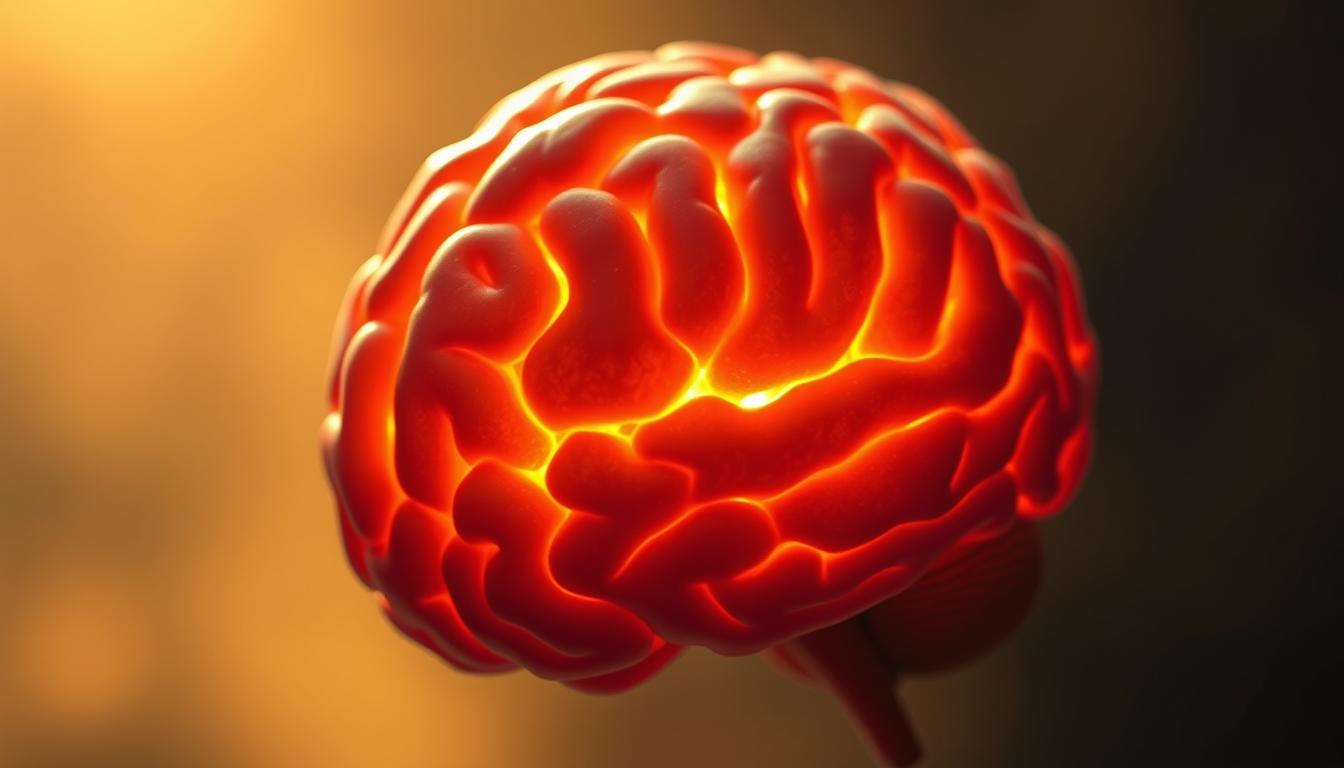
The human brain weighs about 3 pounds, similar to a half-gallon of milk or a cantaloupe. It’s soft and jelly-like but holds incredible wonders. It’s the body’s fattiest organ, made of 60% fat, and powers our thinking through billions of neurons.
These 86 billion neurons make up to 1 quadrillion connections. Scientists are constantly learning more about this complexity.
The brain runs on just 20 watts, like a small lightbulb. It uses 20% of our body’s oxygen. A tiny piece of the brain has 100,000 neurons and 1 billion synapses.
This tiny part stores 2.5 million gigabytes of information. That’s enough for 300 years of TV shows. Yet, there are many mysteries, like why cold treats cause brain freeze pain. Keep exploring—there’s much more to learn about the brain.
The Marvel of the Human Brain
The human brain weighs only 1.2 to 1.5 kg, which is 2% of our body weight. Yet, its brain structure defines who we are. The cerebrum, making up 85% of its mass, controls everything from solving problems to feeling emotions. This links directly to our human cognition.
A tiny piece of brain tissue is like a grain of sand. It has 100,000 neurons and a billion synapses. With 100 billion neurons in total, the brain’s network is incredibly vast. It’s more creative and adaptable than supercomputers.
These neurons connect in trillions of ways, allowing us to learn languages and create art. Babies are born with all the neurons they’ll ever have. As they grow, unused pathways are pruned, shaping our individuality.
Every synapse is a doorway to learning, memory, and how we see the world. This complex system changes from birth, refining our minds. Despite its fragility in early life, the brain’s architecture holds vast possibilities.
How the Brain Communicates
The brain’s brain communication system is incredibly fast. Neural signals can travel at speeds of up to 350 mph. These electrical pulses move through neurons, which are like biological wires.
Neurons connect to form highways called neural tracts. These highways link different brain regions for tasks like reading or running.
At synapses, electrical signals turn into chemicals. Neurotransmitters like dopamine or serotonin help bridge the gap between neurons. This chemical-electrical dance lets your brain process thoughts or react to danger quickly.

Each synaptic connection is like a handshake between cells. With 100 billion neurons and trillions of synapses, the brain’s network is as complex as the internet. A 2023 study in Science Advances showed these connections are always active, even when we’re resting.
“The brain never truly powers down,” researchers explain. They note how even simple actions rely on billions of synchronized signals.
Glial cells, though fewer in number, keep the system running smoothly. They repair synapses and clear waste, ensuring brain communication stays sharp. Without them, neurons would be overwhelmed, like traffic in a gridlocked city.
Brain Plasticity: The Power to Adapt
Neuroplasticity changes our minds well into adulthood. London taxi drivers, for example, have thicker brain areas for spatial memory than bus drivers. This brain adaptation shows how experiences change our brain paths. Norman Doidge’s book The Brain That Changes Itself is a bestseller that explores these changes.
Learning a new skill, like playing the guitar or a language, rewires our brain. Brain scans of musicians show their auditory cortexes are bigger. This shows how our brain changes with new skills.
Exercise boosts a protein called BDNF, which helps our brain stay flexible. Activities like brisk walks or yoga help grow new neurons, even in our 60s. Programs like FastForWord use this science to help kids focus better.
Even after injuries, our brain can find new ways to work. This shows the power of neuroplasticity in helping us recover. It gives us hope for healing.
Myth-busting: Our brains don’t stop growing at 25. Studies show our brain connections stay adaptable for decades. This means we can keep learning and growing our brain all our lives.
With neuroplasticity, every challenge is a chance to change our mind. Our brain’s ability to grow? It’s endless.
The Brain’s Energy Consumption
Your brain is tiny, making up just 2% of your body weight. Yet, it eats up 20% of your energy, like a 12–25 watt lightbulb. It needs constant glucose and oxygen to keep your thoughts clear.
Every minute, a liter of blood flows through your brain. This brings vital brain fuel to keep your mind sharp.

When you think hard, your brain’s energy use can jump by up to 50%. Neurons need to reset after firing, a process called repolarization. This process drains most of the brain’s energy.
Poor blood flow or low glucose can slow down this cognitive metabolism. This leads to mental fog. Even a 5-minute drop in blood flow can drain 90% of ATP, causing damage.
Exercise boosts blood flow, improving neural power consumption and focus. Eating foods rich in omega-3s and antioxidants also helps. Make sure to move and eat well to keep your brain running smoothly.
Senses and Perception
Your brain makes the world you see and feel. Sensory processing begins when light hits your eyes or sound reaches your ears. These signals go to specific brain areas for neural interpretation.
The brain perception of sight happens in the occipital lobe. A bump there can make you see stars because neurons misfire.
Visual information splits at the optic chiasm. Right-brain areas handle left-eye input, and vice versa. Each millimeter of your retina has 125 million light-sensitive cells. Their signals merge into pathways heading to the visual cortex.
This sensory integration takes milliseconds. It blends data from both eyes to form a single image.
Smell is closely tied to memory. Unlike other senses, smell signals bypass early processing stages. They directly link to emotion centers like the amygdala.
A whiff of coffee might instantly recall childhood mornings. Touch works the same way. Nerve endings send touch data to the somatosensory cortex.
“Vision overrides body signals when conflicting—like feeling you’re falling on a steep road but seeing a flat horizon.”
Brain pathways prioritize novelty. New scenes activate more neurons than familiar ones, boosting engagement. This neural interpretation system ensures you notice changes while filtering routine details.
Even minor injuries to the parietal lobe can disrupt spatial understanding. This shows how fragile this sensory integration really is.
Emotions and the Brain

The limbic system is the brain’s center for emotions. It includes the amygdala, which triggers fear, and the hippocampus, which links memories to feelings. These neurological emotions guide how we face life’s ups and downs.
Every day, we think 12,000 to 60,000 thoughts. But 95% are the same, with 80% being negative. This cycle can make us stuck in stress loops. The amygdala keeps us in these loops, making stress worse.
Negative moods can make us less empathetic. Studies show people in bad moods have less brain activity in empathy areas. This hurts our social bonds, making us less generous. But, learning to be kind can change brain feelings, improving connections.
Science shows empathy can grow. Doing good deeds or practicing mindfulness can calm aggression. Over time, this changes how we handle emotions, showing our limbic system adapts with kindness. Small actions, like deep breathing or being thankful, can improve our mental health.
The Connection Between Brain and Gut
The gut-brain connection is a two-way highway. The enteric nervous system in the gut sends signals to the brain. This microbiome brain link affects mood, stress, and even memory.
A healthy microbiome, the community of gut microbes, produces short-chain fatty acids (SCFAs). These SCFAs reduce brain inflammation. Studies show mice with older microbiomes had 50% better stroke survival when given younger gut bacteria.
Research links gut health to mental sharpness. A study tracking 14,542 nurses found long-term antibiotic use tied to lower cognitive scores. Prebiotics boosted focus in people with psychosis, improving digestive cognition.
Dietary fiber and fermented foods fuel beneficial microbes. For example, Faecalibacterium, which declines in depression.
High secondary bile acids in Alzheimer’s patients’ brains suggest gut imbalances may drive cognitive decline. The Alzheimer’s Gut Microbiome Project, involving 40 labs, explores how gut health could prevent dementia. Choosing foods rich in omega-3s, fiber, and probiotics nurtures this vital gut-brain connection. It supports clear thinking and emotional balance.
Sleep’s Role in Brain Function
Ever wonder why your brain feels foggy after a poor night’s rest? Sleep cognition depends on your brain’s nightly cleanup and repair. Every 90-minute sleep cycle includes phases like REM (rapid eye movement) and NREM (non-REM). During REM, your mind processes emotions and dreams—up to 4-7 times per night. This is when neural pathways linked to creativity and memory storage become active.
On the other hand, NREM stages promote neural restoration, repairing tissues and clearing waste from brain cells.

Quality brain rest isn’t just downtime. It’s when the glymphatic system flushes toxins like beta-amyloid, a protein linked to Alzheimer’s. Skipping sleep weakens this process, leaving harmful buildup. Studies show even one bad night can spike stress hormones like cortisol, blurring focus and slowing reaction times.
Consistent sleep cycles matter. Irregular schedules disrupt circadian rhythms, affecting mood and decision-making. Prioritize a dark, cool room and avoid screens before bed to support natural cycles. Your brain works overtime while you snooze—so give it the time it needs to stay sharp and healthy.
Exploring Memory Formation
Memory formation is key to how we learn and remember. The brain uses complex systems for cognitive retention. Short-term memory can hold up to seven items, like phone numbers, before they disappear. But long-term memories can last forever, thanks to neural pathways strengthened by repetition and emotion.
Scientists at Cedars-Sinai Medical Center and Children’s Hospital Boston studied brain recall. They found two main cell types: boundary cells and event cells. Boundary cells mark time, while event cells connect memories to specific moments. This explains why some memories are easier to recall than others.
Eric Kandel’s research with marine snails, like Aplysia, shed light on memory. These creatures’ neurons showed how serotonin boosts protein synthesis, making synapses stronger. Humans have similar processes, where learning strengthens neural connections over time.
“Memory is the diary we all carry about ourselves.” — Oscar Wilde
Improving memory starts with science-backed habits. Spaced repetition and active recall tests help. Sleep and exercise also boost memory by strengthening neural pathways. Even as we age, mental exercises and stress reduction can protect our memory.
By understanding these processes, we can improve our memory. Using research-backed techniques, we can enhance our brain’s recall and build stronger mental frameworks.
The Brain and Creativity
Ever wonder where great ideas come from? Your brain’s creative cognition is a team effort, not just one spot. Daydreaming is not laziness; it’s your brain imagination hard at work. Studies show that when we’re not busy, our brain’s default mode network lights up, leading to insights.
This network is key to solving problems when we take a break. It shows that taking time off can actually help us think more creatively.
Jazz musicians give us a clue. When they improvise, their brain’s prefrontal cortex quiets down. This lets new ideas flow freely. It’s a shift in neural creativity that helps them be more original.
But multitasking is a different story. Harvard research shows it slows us down and increases errors. To let your brain work best, focus on one thing at a time.
Want to boost your creativity? Mindfulness can grow gray matter in areas linked to decision-making. Exercise can spark new neurons in memory areas. Even small habits, like walking or brainstorming with others, can change your brain over time.
The key is to let your mind wander sometimes. That’s when breakthroughs start.
Debunking Myths About the Brain
Many brain myths are hard to shake off, like the 10% usage claim. But neuroscience facts tell a different story. Scans show the brain is always at work, even when we sleep. This myth has stuck around, thanks to movies, but science says no brain parts are idle.
Another myth says our personality is set by being “left-” or “right-brained.” But, in truth, both sides work together for everything. The idea that listening to Mozart boosts IQ is also debunked. While music can lift our mood, it doesn’t directly raise our IQ.
There’s no truth to the idea that we learn best in one way (visual, auditory). People absorb information through many senses. And, brain size doesn’t determine how smart we are. Einstein’s brain was smaller but had more complex connections, showing size isn’t everything.
Learning these neural truths helps us see the brain’s true abilities. It’s always active, flexible, and way more powerful than myths make it out to be. Stay curious—your brain is full of untapped possibilities, and science is always revealing more!