
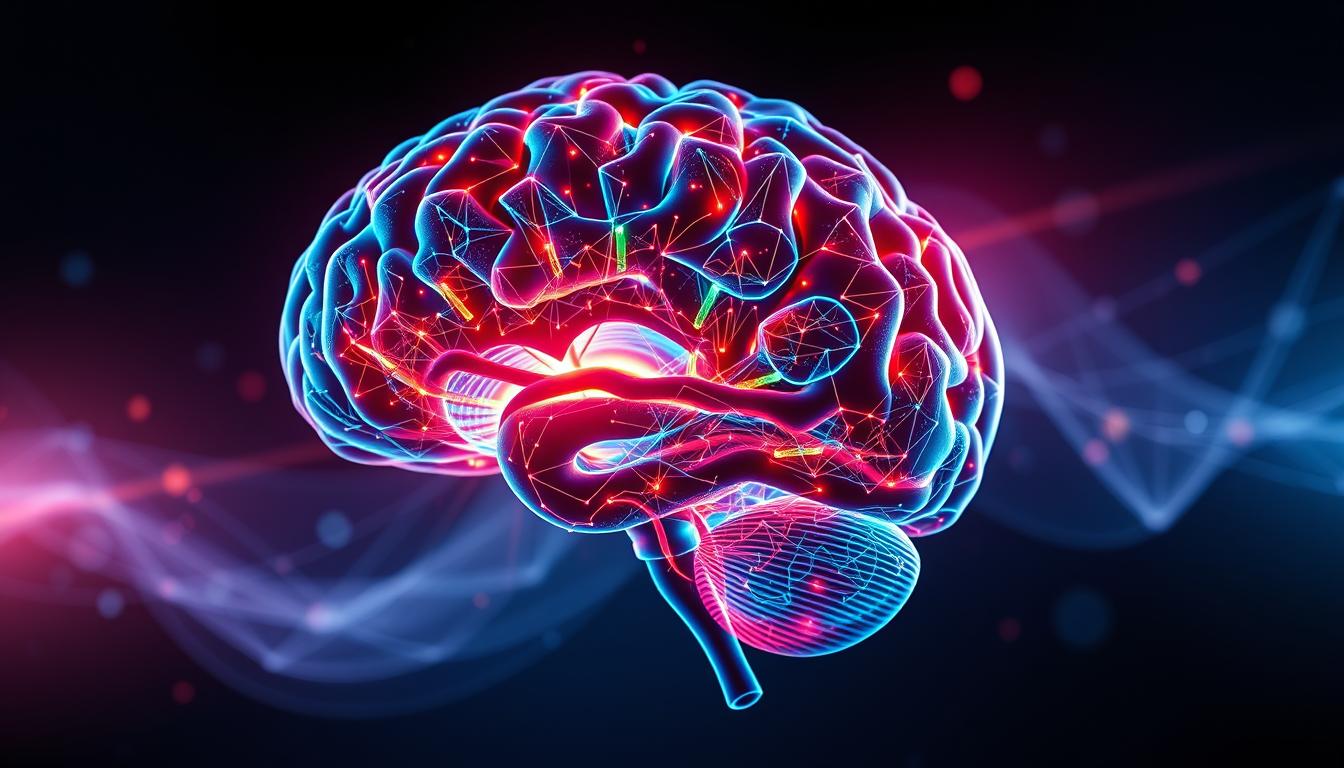
Neuroplasticity lets your brain change and grow with new experiences. It shows that your brain can adapt and recover at any age. For example, MIT studies show that habits like phone checking are quicker to form than patient habits like exercise.
But, with mindfulness and a structured plan, you can guide this change. This means you can shape your brain’s pathways to better habits.
Learning something new, like playing an instrument, creates new brain connections. Even after injuries, like strokes, the brain can find new ways to work. This means you can always change and grow.
By focusing on what your brain likes, you can build healthier habits. This shows that your brain is always ready to adapt and learn.
Understanding how your brain changes is powerful. It helps you face challenges and learn new things. Small, regular efforts, like daily practice or reflection, help your brain stay flexible. This flexibility is a key to growth at any age.
Understanding Brain Plasticity
Neuroplasticity, or brain malleability, lets our brains adapt constantly. Each person has about 100 billion neurons connected by synapses. These connections grow and fade based on daily experiences.
Babies start with 2,500 synapses per neuron at birth. By age three, that number jumps to 15,000—a peak that highlights synaptic plasticity in early life.
There are two main types of this process. Structural plasticity involves physical changes, like new neuron growth. Functional reorganization lets the brain reroute functions after injury.
For instance, stroke survivors often regain movement by creating new neural pathways. This proves the brain’s lifelong adaptability.
Scientists once believed adult brains were unchangeable. Now, studies show the opposite. Blind individuals often develop sharper hearing or touch abilities due to functional reorganization.
Recent experiments with mice used optogenetics to track synapse activity. They showed how active synapses strengthen while inactive ones weaken—a process vital to learning.
“Physical exercise boosts brain plasticity through BDNF,” reported a 2021 study. Exercise and mindfulness practices further fuel these changes, making our brains more flexible.
These discoveries reveal how structural plasticity and functional reorganization work together. Even into adulthood, the brain reshapes itself through experiences and challenges. This shows its inherent flexibility.
This adaptability opens doors to recovery and lifelong learning opportunities.
The Science Behind Brain Changes
Scientists can now see the tiny processes behind the brain’s ability to change. Neural networks are always changing through synaptic pruning and axonal sprouting. These changes are not random but are influenced by our experiences. In the 1960s, studies on sea slugs showed how neurons adapt with learning.

Today, tools like functional MRI and TMS help us brain map live brain activity. These scans show how neurogenesis helps with memory in the hippocampus. Synaptic pruning also peaks in adolescence, making brain circuits more efficient.
Research has shown how the brain changes over time. For example, toddlers have many more synapses than adults. Breakthroughs like spike-timing-dependent plasticity in 1997 showed the importance of timing in connection strength. Even in older brains, studies show that sensory stimulation can spark new changes, proving the brain’s adaptability is real.
Factors Influencing Brain Plasticity
Brain development is shaped by critical periods where experiences create strong neural pathways. These times, like when we learn a new language, are important but not the only time for neuroplasticity. Even as adults, we can change our brains, but it might take more effort.
Epigenetics is key, as genes and life experiences interact. A 2020 study showed that stress in pregnancy can shrink a baby’s hippocampus. On the other hand, activities like London taxi drivers learning routes can grow their hippocampi, showing how good environments help our brains.
Age and injury change how our brains adapt. Kids quickly adjust to new senses, while adults can regain motor skills after a stroke with therapy. Even preterm babies benefit from music therapy, showing that early interventions are important.
Our genes and lifestyle choices also affect our brains. Eating foods full of polyphenols helps our brain’s ability to change, while stress or drugs can harm it. Finding the right balance lets our brains stay adaptable throughout our lives.
How Learning Affects Your Brain
Learning is more than just memorizing facts. It changes your brain’s structure. When you learn new skills, like playing music or a language, your brain makes new paths. For example, playing music makes the motor cortex bigger, as seen in pianists.
This cognitive flexibility lets your mind adapt. It helps in mastering sports or solving complex problems.

Research shows that even adults can change their brains through learning. London taxi drivers, for instance, have a bigger hippocampus after years of learning routes. Juggling for just three months also makes areas of the brain handling visual motion bigger.
This shows that brain training through practice strengthens brain connections. Donald Hebb’s principle explains why repetition makes knowledge stick.
Even small habits can make a big difference. Students who believe they can get better through effort do better than those who think intelligence is fixed. This deliberate practice mindset boosts motivation and changes the brain.
Whether it’s learning chess or a new language, your brain gets stronger. This proves that lifelong learning makes your mind more adaptable.
The Role of Physical Exercise
Physical activity is more than just for building muscle. It’s a key player in brain health. When you exercise, your body releases BDNF, a protein that feeds your brain cells. This boost helps create new brain cells, improving memory.
Studies show that regular aerobic exercise makes your brain bigger. It grows in areas important for learning and controlling emotions.
Research with older adults found that 6 months of exercise can reverse brain shrinkage. It even improves spatial memory. Just 30 minutes of cycling can boost focus and planning skills.
Combining aerobic and strength training makes your brain even more adaptable. Animal studies show that long runs can make brain connections stronger. This improves how your brain works.
Exercise also protects against brain decline. Studies show it can lower dementia risk by 28% and Alzheimer’s by 45%. The secret? Keep moving regularly. Walking, dancing, or swimming are all good options. Your brain will thank you by getting stronger and faster.
Emotional Well-being and Brain Plasticity
Chronic stress harms brain plasticity by releasing cortisol, which shrinks areas like the hippocampus. It also lowers BDNF, important for nerve growth. Stress reduction methods like meditation help, growing gray matter in areas linked to emotional regulation.
Daily mindfulness boosts the prefrontal cortex and calms the amygdala, reducing fear.

Social connections help reduce stress naturally. Positive interactions lower cortisol and improve neural flexibility. Even short talks can make the social brain stronger, boosting empathy and resilience.
Research shows lonely people have smaller prefrontal cortex volumes. This shows how much the brain needs social bonds.
Meditation changes the brain’s structure. Long-term meditators have thicker prefrontal cortices, helping with focus and mood. Simple daily activities like deep breathing or keeping a gratitude journal can change brain paths in weeks.
Combining these with social activities gives a big boost to brain flexibility.
Early life stress can leave lasting effects, but adult interventions can help. Exercise, therapy, and mindfulness can reduce amygdala activity. The brain can adapt, and small, consistent steps can change even deep patterns.
Diet’s Impact on Brain Health
Your brain works best when you eat the right foods. Foods like omega-3 fatty acids and antioxidants help your brain stay sharp. But, eating too much saturated fat can slow it down.
Omega-3 fatty acids are key for brain health. They can’t be made by our bodies. So, eating foods like fatty fish, walnuts, and flaxseeds is important. Antioxidants in berries, spinach, and dark chocolate protect brain cells from damage.
The Mediterranean diet is known for its benefits. A study showed it improves memory and focus in older adults. Adding exercise to this diet makes it even better for the brain.
A Mediterranean-style diet cuts dementia risk by 53% compared to low-quality diets.
Our gut and brain are connected. Foods like yogurt or kimchi can help this connection. But, eating too much processed food can harm it.
Making small changes in your diet can help a lot. Try eating walnuts instead of chips or adding turmeric to your meals. Eating whole foods is the best way to keep your brain healthy.
The Power of Sleep
Sleep isn’t just downtime—it’s when your brain rewires itself. REM sleep makes skills like playing guitar or riding a bike stronger. Memory consolidation during deep sleep helps keep facts and events in long-term memory. Think of your brain as a library: sleep quality keeps books organized, not scattered.

Your circadian rhythm is like a clock, telling you when to sleep. Mess with it, and sleep hygiene habits like regular bedtimes help. Research shows good sleep can improve problem-solving by 20% compared to not sleeping well. Deep sleep fixes brain connections, and REM sleep sharpens motor skills by replaying the day.
“After sleep, brain regions activated during learning fire again, reinforcing connections.”
Not getting enough sleep can harm your brain. Rats can go weeks without food but die from lack of sleep. For humans, bad sleep can shrink the hippocampus, which is vital for memory. Make your bedroom dark, avoid screens, and have a calming bedtime routine to improve REM sleep. Your brain’s nightly work is essential for survival.
Practical Ways to Enhance Brain Plasticity
Building your cognitive reserve begins with daily brain exercises that challenge you. Try writing with your non-dominant hand or learning a new language. These activities stimulate your brain’s pathways. Novelty seeking is a powerful tool. A 2012 study found that language learners grew new brain cells, showing how mental challenges can change the brain.
Small changes can lead to big improvements. To build new habits, link them to things you already do. Keep a journal by your bed to record your thoughts each morning. Even small mental challenges, like solving puzzles or playing chess, are beneficial. Chess players, for example, have more gray matter in areas linked to focus, studies show.
Playing 3D adventure games daily can boost memory and problem-solving skills, as shown in a 2019 study.
Add variety to your daily life. Try a new route to work or cook a different dish each week. Exercise, like aerobic activities, also boosts brain flexibility. Studies show it can grow the hippocampus. Combine this with mindfulness, like group meditation at work, to improve team focus and resilience. Even a 20-minute nap can help grow new brain connections.
Begin with small steps. Learning one word a day or playing Tetris after therapy can reduce stress and increase brain size. By facing mental challenges and sticking to routines, you’re not just keeping your brain sharp—you’re rewiring it. Every choice to seek novelty today helps you think sharper tomorrow.
The Future of Brain Research
Scientists are working on new tools like neuromodulation and transcranial stimulation to help the brain heal. They’re also creating brain-computer interfaces that could let paralyzed people control prosthetics with their minds. These tools aim to find new ways to heal after injuries or diseases.
Neurofeedback training and personalized medicine might soon lead to customized brain-boosting plans. Imagine using genetic data to create workouts or learning programs that fit your brain perfectly. Early results show these methods could improve focus or memory in ways we’ve never seen before.
But, there are big questions ahead. Will everyone get to use neuromodulation therapies? How will we see what’s normal in brains if we start using enhancements? Researchers are also looking into how aging affects the brain, hoping to slow down decline.
For now, keeping your brain sharp involves learning, moving, and socializing. As new technology comes along, these habits will remain important for brain health.